
Urban Travel vs. Remote Travel: How Safety Planning Differs Between the Two
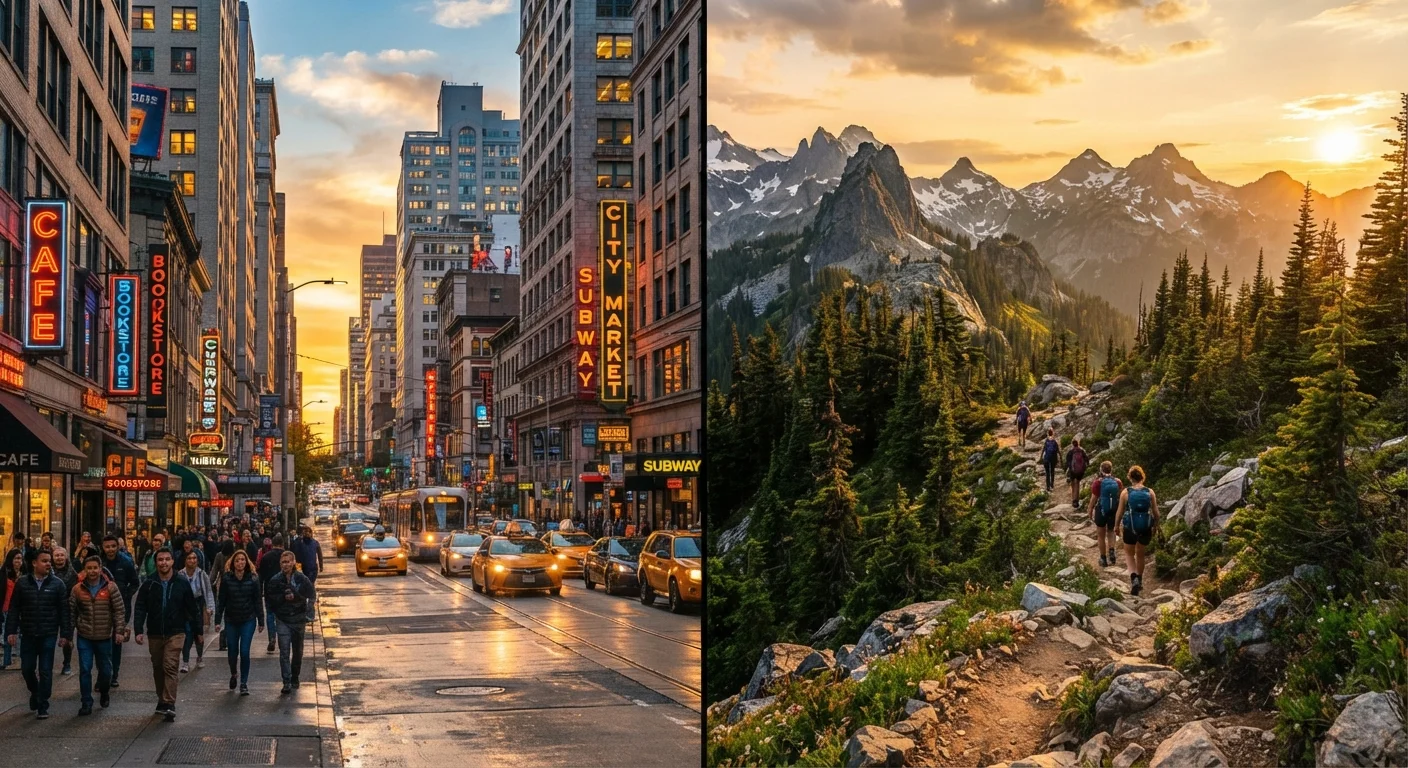
Photo credit: QuickInsights.net
In this article
City travel and off-the-grid adventures carry very different risk profiles. Here's how safety preparation changes depending on where you're headed.
Key Takeaways
- Urban travel risks are often social and situational; remote travel risks are environmental and logistical.
- City travelers should prioritize digital security, crowd awareness, and emergency access.
- Remote travelers must plan for communication blackouts, medical self-reliance, and evacuation routes.
- Both settings reward thorough pre-trip research, but the research focus differs significantly.
- Knowing which type of destination you're visiting changes what goes in your bag and on your itinerary.
Why the Destination Type Changes Everything
When most people think about travel safety, they picture one scenario: pickpockets in a crowded market, or a wrong turn into an unfamiliar neighborhood. That framing captures real urban risks - but it misses the equally important world of remote travel, where the dangers look entirely different.
Core safety principles apply everywhere, but the emphasis shifts dramatically depending on whether you're navigating a megacity or a backcountry trail. Understanding how they differ is the first step toward preparing for either.
Urban destinations concentrate risk around people - dense crowds, opportunistic theft, traffic, and localized political or social tensions. Remote destinations shift the risk to environment and logistics - unpredictable weather, physical injury, communication dead zones, and limited rescue access. Each category has blind spots that catch travelers off guard when they've prepared for the wrong type of trip.
Safety Risks in Urban Environments
Cities offer built-in safety infrastructure that many travelers take for granted: hospitals within minutes, police presence, functioning mobile networks, and a dense web of transit options. That access is a genuine advantage - but it coexists with social risks that require constant situational awareness.
- Theft and scams: Crowded transit hubs, tourist areas, and markets are prime environments for pickpockets and distraction-based theft. Travelers should carry minimal valuables, keep bags in front, and treat unsolicited help with measured caution.
- Digital exposure: Public Wi-Fi in cafes, airports, and hotels creates real vulnerability. Protecting your data while traveling is a distinct preparedness step that urban travelers often overlook.
- Traffic and navigation: Unfamiliar road rules, aggressive drivers, and complex pedestrian environments cause a surprising number of traveler injuries. Always cross at marked crossings and research local driving norms before renting a vehicle.
- Civil unrest and crowd dynamics: Protests or large public gatherings can escalate unpredictably. Monitoring local conditions before and during your trip helps you avoid being caught in a fast-moving situation.
| Urban Travel | Remote Travel | |
|---|---|---|
| Primary risk category | Social and situational | Environmental and logistical |
| Emergency response access | Generally fast (minutes) | Often slow or unavailable (hours/days) |
| Communication reliability | High - cell networks usually available | Low - dead zones common; satellite recommended |
| Medical preparation level | Basic first aid kit sufficient | Advanced kit; self-treatment skills essential |
| Navigation approach | Phone maps and transit apps adequate | Paper maps and compass recommended |
| Key pre-trip research focus | Local laws, scam patterns, transport safety | Terrain, weather, wildlife, evacuation routes |
| Physical fitness requirement | Moderate - walking and transit | Higher - terrain, altitude, or endurance demands |
Safety Risks in Remote Environments
Remote travel - whether that means a national park in a foreign country, a backcountry hiking region, or a rural destination with limited infrastructure - demands a fundamentally different safety mindset. The risks are less social and more environmental, and outside help may be hours or days away.
Always Leave a Trip Plan Behind
For any remote trip, give a trusted contact your full itinerary: trailheads, campsites, planned routes, and expected return date. Include the name of the nearest ranger station or local emergency service. This single step dramatically improves rescue response time if something goes wrong and you can't call for help yourself.
- Medical self-reliance: The nearest hospital may be a long drive or a helicopter flight away. Travelers should carry a well-stocked first-aid kit, know how to use it, and understand the signs of altitude sickness, dehydration, hypothermia, or other region-specific conditions.
- Communication gaps: Cell service is often nonexistent in remote areas. Satellite communicators or personal locator beacons (PLBs) are worth serious consideration for wilderness travel. Always leave a detailed trip plan with someone at home.
- Navigation and terrain: GPS apps can fail when offline. Carrying a paper map and compass, and knowing how to use them, remains a practical skill for remote travel. Trails can be unmarked, washed out, or misrepresented on apps.
- Wildlife and environmental hazards: Region-specific risks - bear country, snake habitat, flash flood corridors - require destination-specific research. Evaluating environmental and seasonal risks before departure is especially important for remote destinations.
For a thorough pre-departure checklist, this remote destination reality check covers infrastructure, access, and logistics in practical detail.
Tailoring Your Preparation to the Destination
The comparison below illustrates how preparation priorities shift between urban and remote settings. Neither list is exhaustive, but understanding the core divergence helps you allocate your planning time and packing decisions more effectively.
For urban trips, the preparation emphasis is on social awareness, document security, emergency contacts, and knowing how to use local transit or emergency services. For remote trips, the emphasis is on physical conditioning, gear sufficiency, communication redundancy, and evacuation planning.
Both trip types benefit from understanding the difference between official advisories and on-the-ground risk. An advisory level tells you something - but it doesn't tell you everything. Whether you're heading into a city or a wilderness, your own research adds essential context.
Solo travelers face amplified versions of these risks in both settings. The habits that reduce solo travel vulnerability apply whether you're navigating a metro system or a mountain trail - but the specific habits differ depending on where you are.
Finally, your planning style - whether you prefer a structured itinerary or an open-ended approach - interacts with destination type in important ways. Choosing the right planning style for your destination can affect both your flexibility and your safety margin, particularly in remote settings where improvisation carries higher stakes.

Author
Travel Editorial Team
Travel Editorial Team is the collective byline for our editorial team and contributor network. Articles published under this byline or an editorial pen name are researched, written, and reviewed according to our editorial standards for clarity, consistency, and independence before publication.
View all articles →