
A Week of Nutritionally Balanced Eating: What It Looks Like in Practice
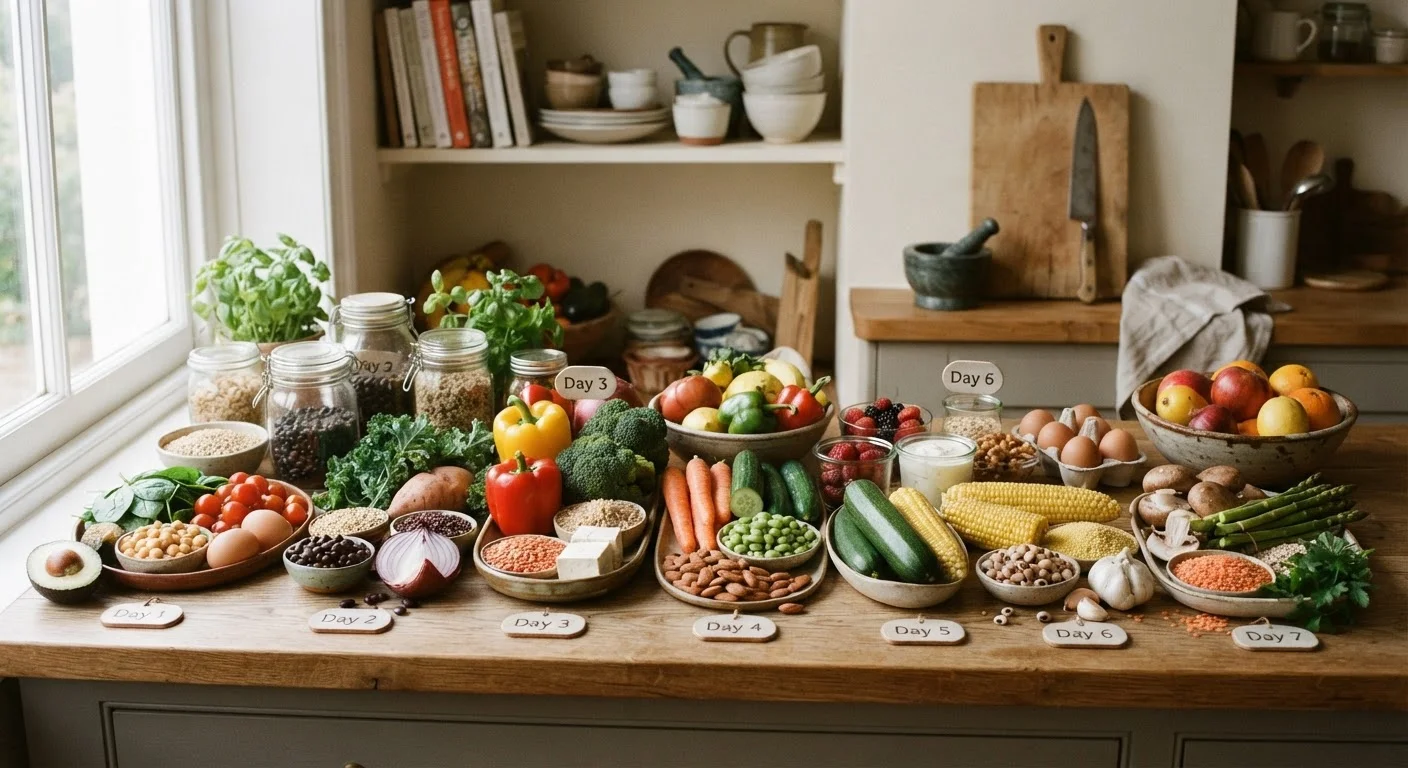
Photo credit: QuickInsights.net
In this article
An illustrative look at what a week of balanced, varied meals can look like using ordinary, affordable ingredients.
Key Takeaways
- Balanced eating across a week matters more than perfection at any single meal.
- Most nutritional goals can be met using affordable, widely available whole foods.
- Rotating protein sources, vegetables, and whole grains naturally builds variety and coverage.
- Meal prep on one or two days significantly reduces daily cooking burden.
- Individual nutritional needs vary by age, health status, and activity level - consult a professional for personalized guidance.
What 'Balanced Eating' Actually Means
Nutritional balance isn't a rigid formula - it's a pattern. Across any given week, a broadly balanced diet generally includes adequate protein, a range of vegetables and fruits, whole-grain carbohydrates, healthy fats, and sufficient hydration. Dietary guidelines developed by organizations such as the USDA and the National Academies of Sciences emphasize variety and moderation over elimination or obsession with individual meals.
The goal of this article is practical: to show what a week of balanced eating can look like using ordinary, accessible ingredients - the kind found in any American grocery store. These are illustrative examples, not prescriptions. Calorie counts and portion sizes vary significantly by individual, and a registered dietitian is the best resource for personalized guidance. For readers curious about how different dietary approaches compare, our overview of plant-based eating offers useful context.
Aim for Pattern, Not Perfection
Nutritional balance is best evaluated over days and weeks, not individual meals. A lunch that skews heavier on carbohydrates is easily balanced by a protein- and vegetable-rich dinner. Rigid adherence to any single day's plan is less important than returning to the overall pattern consistently. Give yourself flexibility - it's a sustainable strategy, not a strict rulebook.
Before You Start: Tools and Mindset
Getting a nutritionally varied week underway doesn't require special equipment or expensive ingredients. A few practical tools make the process smoother, and a realistic attitude matters more than any single product.
What you will need
Sheet pan or baking tray
Used for roasting vegetables and proteins in bulk, reducing daily cooking time.
Large pot or Dutch oven
Useful for cooking grains, legumes, and soups in batches.
Food storage containers
Keeps prepped ingredients and meals fresh in the refrigerator for the week ahead.
Kitchen scale
Helps with portion awareness, particularly for grains and proteins.
Blender or food processor
Useful for smoothies, sauces, and hummus - expanding meal variety quickly.
If budget is a concern, the principles in our guide to healthy eating on a tight budget align directly with the approach outlined here. Nutritional needs also shift across life stages - something worth keeping in mind when adapting any sample plan; see Nutrition Through Every Life Stage for more detail.
A Seven-Day Illustrative Meal Framework
The steps below outline a structured but flexible approach for building seven days of balanced meals. Each day rotates protein sources, produce colors, and grain types to provide broad micronutrient coverage without repetition. For a deeper look at how animal and plant proteins compare nutritionally, see Protein Sources Compared.
Plan your week with variety in mind
Before shopping, sketch out your seven days using a simple grid: breakfast, lunch, dinner, and one or two snacks. Aim for at least three different protein sources across the week (e.g., eggs, legumes, fish, poultry, tofu), five or more distinct vegetable types, and a mix of whole grains such as brown rice, oats, quinoa, and whole-wheat bread. Rotating colors in your produce choices - leafy greens, orange and red vegetables, cruciferous varieties - helps cover a broad spectrum of vitamins and minerals.
Shop once with a structured list
Group your shopping list by category: produce, proteins, whole grains, dairy or dairy alternatives, and pantry staples. A sample weekly list might include oats, brown rice, canned or dried lentils, eggs, a whole chicken or canned salmon, a bag of frozen spinach, sweet potatoes, broccoli, canned tomatoes, plain Greek yogurt, olive oil, and a variety of fresh fruit. Frozen vegetables and canned legumes are nutritionally comparable to fresh and significantly reduce cost and prep time.
Dedicate one session to batch cooking
On Sunday - or whichever day works best - cook a large batch of whole grains (e.g., a pot of brown rice or farro), roast two sheet pans of mixed vegetables, hard-boil a half-dozen eggs, and prepare one protein in bulk (such as baked chicken thighs or a pot of lentil soup). These components become the building blocks for lunches and dinners throughout the week, requiring only assembly or brief reheating on busy days.
Build breakfasts around whole foods
Rotate between two or three breakfast options across the week to avoid monotony while keeping preparation simple. Examples include overnight oats topped with fruit and a tablespoon of nut butter; scrambled eggs with sautéed vegetables and a slice of whole-grain toast; or plain Greek yogurt with fresh berries and a sprinkle of seeds. Each option provides protein, fiber, and micronutrients without requiring significant morning effort.
Assemble lunches from your batch-cooked components
Lunches are where batch cooking pays off most directly. Combine your pre-cooked grains, roasted vegetables, and a protein into grain bowls, wraps, or simple salads. A grain bowl might feature brown rice, roasted sweet potato, lentils, a handful of spinach, and a drizzle of tahini or olive oil and lemon. Swapping components day to day keeps meals interesting while drawing from the same core prep.
Plan dinners that introduce a fresh element
Even with batch-cooked staples on hand, dinners benefit from one freshly cooked item to add variety. This might be a pan-seared salmon fillet on Wednesday, a stir-fry using whatever vegetables are freshest, or a simple bean-and-vegetable soup on Thursday. Anchoring dinners to a lean protein, a whole grain or starchy vegetable, and at least one non-starchy vegetable covers the broad nutritional bases recommended by most dietary guidelines.
Choose snacks that contribute nutrients, not just calories
Snacks bridge the nutritional gap between meals and help maintain energy levels. Useful options include a small handful of unsalted mixed nuts, an apple with nut butter, hummus with sliced raw vegetables, or a hard-boiled egg. These combine protein, fiber, or healthy fat - nutrients that support satiety more reliably than processed snacks high in refined carbohydrates and added sugar.
Pairing this eating framework with regular physical activity amplifies its benefits. Our weekly movement plan guide offers a complementary starting point for building an exercise routine alongside your nutrition habits.
This article is for general informational and educational purposes only and does not constitute medical or dietary advice. Individual nutritional needs vary. Please consult a qualified healthcare professional or registered dietitian before making significant changes to your diet.

Author
Health & Wellness Editorial Team
Health & Wellness Editorial Team is the collective byline for our editorial team and contributor network. Articles published under this byline or an editorial pen name are researched, written, and reviewed according to our editorial standards for clarity, consistency, and independence before publication.
View all articles →