
Protein Sources Compared: Animal vs. Plant Options Across Key Nutrients
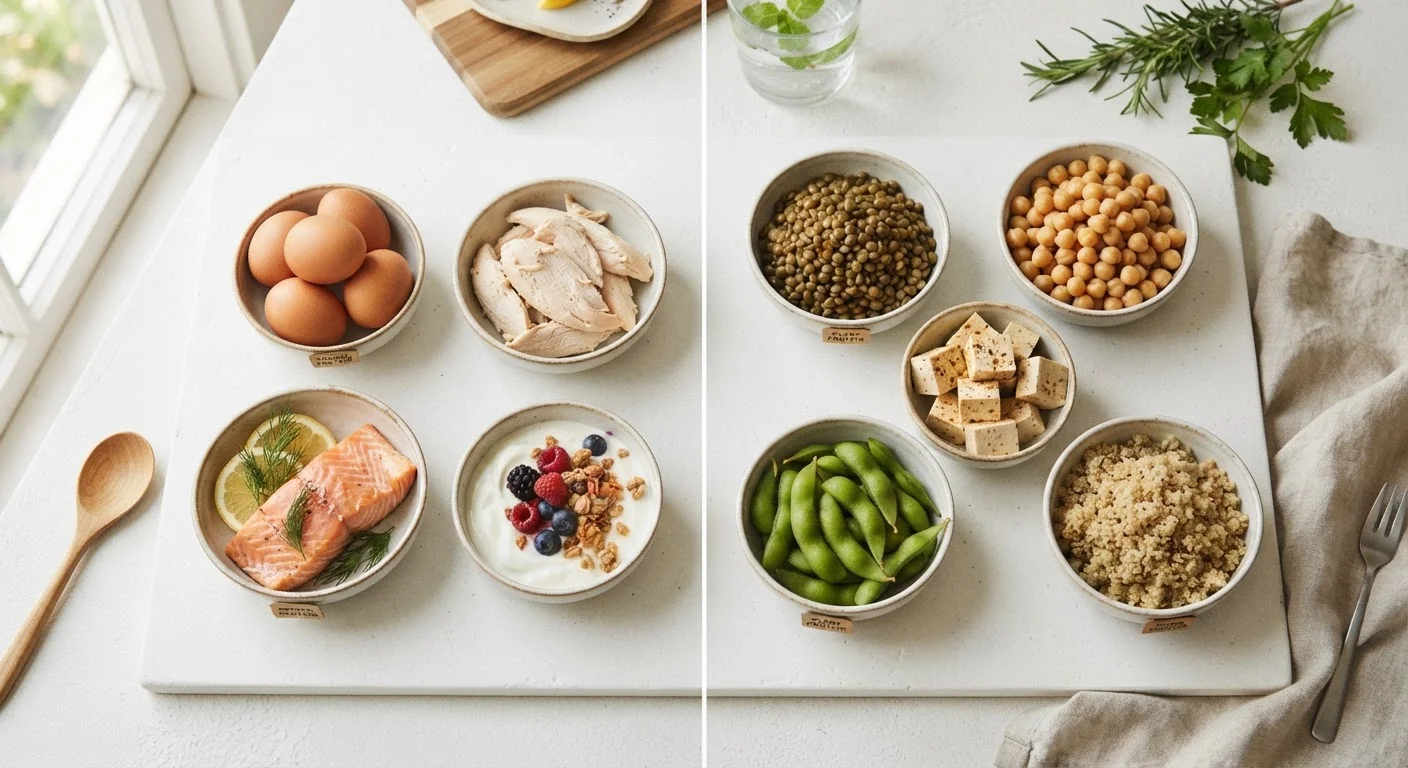
Photo credit: QuickInsights.net
In this article
How do animal and plant proteins stack up nutritionally? A side-by-side look at quality, completeness, and practical use.
Key Takeaways
- Animal proteins are generally 'complete,' containing all nine essential amino acids in adequate amounts.
- Most plant proteins are 'incomplete' individually, but strategic food combinations cover all essential amino acids.
- Plant proteins often deliver beneficial fiber and phytonutrients that animal sources lack.
- Animal sources provide certain nutrients - like heme iron and B12 - that are harder to obtain from plants alone.
- A mixed or well-planned plant-forward diet can meet protein and nutrient needs for most healthy adults.
- Individual protein needs vary by age, health status, and activity level - consult a healthcare professional for personal guidance.
What Makes a Protein Source 'High Quality'?
Protein quality is typically judged by two factors: amino acid completeness and digestibility. Proteins are built from 20 amino acids, nine of which are considered essential - meaning the body cannot produce them and must obtain them from food. A protein source containing all nine in sufficient quantities is called complete.
Digestibility refers to how efficiently the body breaks down and absorbs a protein. Animal proteins generally score high on both counts. The DIAAS, the current gold standard for measuring protein quality, consistently rates eggs, dairy, and meat at or above 1.0 - indicating excellent amino acid delivery. Most plant proteins score below 1.0, partly due to lower digestibility and the presence of anti-nutrients like phytates that can interfere with absorption.
That said, digestibility differences are often smaller in practice than the scores suggest, especially when plant foods are cooked, fermented, or soaked - processes that reduce anti-nutrient content significantly.
Animal Proteins: Strengths and Considerations
Common animal protein sources - chicken, beef, fish, eggs, and dairy - deliver complete amino acid profiles alongside several micronutrients that are difficult to obtain from plants. Key advantages include:
- Vitamin B12: Found almost exclusively in animal foods; essential for nerve function and red blood cell production.
- Heme iron: The form of iron in meat is absorbed 2-3 times more efficiently than the non-heme iron in plants.
- Zinc and selenium: Present in bioavailable forms that the body uses readily.
- Creatine and carnosine: Compounds found only in animal muscle that support energy metabolism and cellular function.
On the other hand, some animal protein sources - particularly processed meats and high-fat red meats - are associated in observational research with elevated cardiovascular risk when consumed in large amounts. Lean options like fish, poultry, eggs, and low-fat dairy carry a more favorable nutritional profile overall.
Processed Meats Are a Separate Category
Research on processed meats - bacon, hot dogs, deli meats - shows stronger associations with health risks than unprocessed animal proteins. When comparing animal to plant proteins, it's important to look at the specific food, not just the broad category. Limiting processed meats is a consistent recommendation across major dietary guidelines.
Plant Proteins: Strengths and Considerations
Legumes, tofu, tempeh, edamame, quinoa, nuts, seeds, and whole grains are among the most protein-dense plant foods. While most are individually incomplete proteins, eating a variety throughout the day - not necessarily at every meal - ensures all essential amino acids are covered. Soy is a notable exception: it is one of the few plant-based complete proteins with a high DIAAS score comparable to many animal sources.
Plant proteins bring several nutritional advantages of their own:
- Dietary fiber: Absent from animal foods; supports gut health, blood sugar regulation, and satiety.
- Phytonutrients: Compounds like polyphenols and flavonoids associated with reduced chronic disease risk in population studies.
- Lower saturated fat: Most plant protein sources are low in saturated fat and contain beneficial unsaturated fats.
The primary nutritional considerations for plant-forward eaters are B12 (supplementation is generally necessary), vitamin D, long-chain omega-3s, calcium, zinc, and iron - nutrients that require deliberate planning. See our overview of plant-based eating for a deeper look at the research and planning strategies.
| Animal Protein | Plant Protein | |
|---|---|---|
| Amino acid completeness | Complete (all 9 essential amino acids) | Often incomplete; soy is a key exception |
| Digestibility (DIAAS) | Generally high (≥1.0) | Generally moderate (<1.0); improves with cooking |
| Vitamin B12 | Naturally abundant | Essentially absent; supplement needed |
| Iron type | Heme iron (highly absorbable) | Non-heme iron (lower absorption) |
| Dietary fiber | None | Significant amounts in legumes, grains, seeds |
| Saturated fat | Varies; higher in red/processed meat | Generally low |
| Phytonutrients | Minimal | Rich in polyphenols and antioxidants |
| Meal planning complexity | Low - single sources are complete | Moderate - variety needed for completeness |
Putting It Together: Practical Guidance
For most healthy adults, the research suggests that both animal and plant proteins can support good health when chosen thoughtfully. A useful approach is to think of protein variety - cycling through fish, legumes, eggs, dairy, and whole grains across the week - rather than optimizing any single source.
Practical starting points:
- Include a protein source at each meal to support satiety and muscle maintenance.
- If eating primarily plant-based, pair complementary sources (e.g., rice and beans, hummus and whole grain bread) and consider a B12 supplement.
- Favor less-processed options within each category - grilled fish over deli meat, lentils over protein isolate powders.
- Adjust for life stage: older adults, for example, may benefit from higher protein intake to counter age-related muscle loss. Our article on nutrition through every life stage explores how requirements evolve.
For help structuring these choices into daily meals, see our guide to building a balanced plate.
This article is for general informational and educational purposes only and is not a substitute for professional medical or dietary advice. Consult a registered dietitian or qualified healthcare provider before making significant changes to your diet, especially if you have an existing health condition.

Author
Health & Wellness Editorial Team
Health & Wellness Editorial Team is the collective byline for our editorial team and contributor network. Articles published under this byline or an editorial pen name are researched, written, and reviewed according to our editorial standards for clarity, consistency, and independence before publication.
View all articles →