
Building a Balanced Plate: A Practical Framework for Everyday Meals
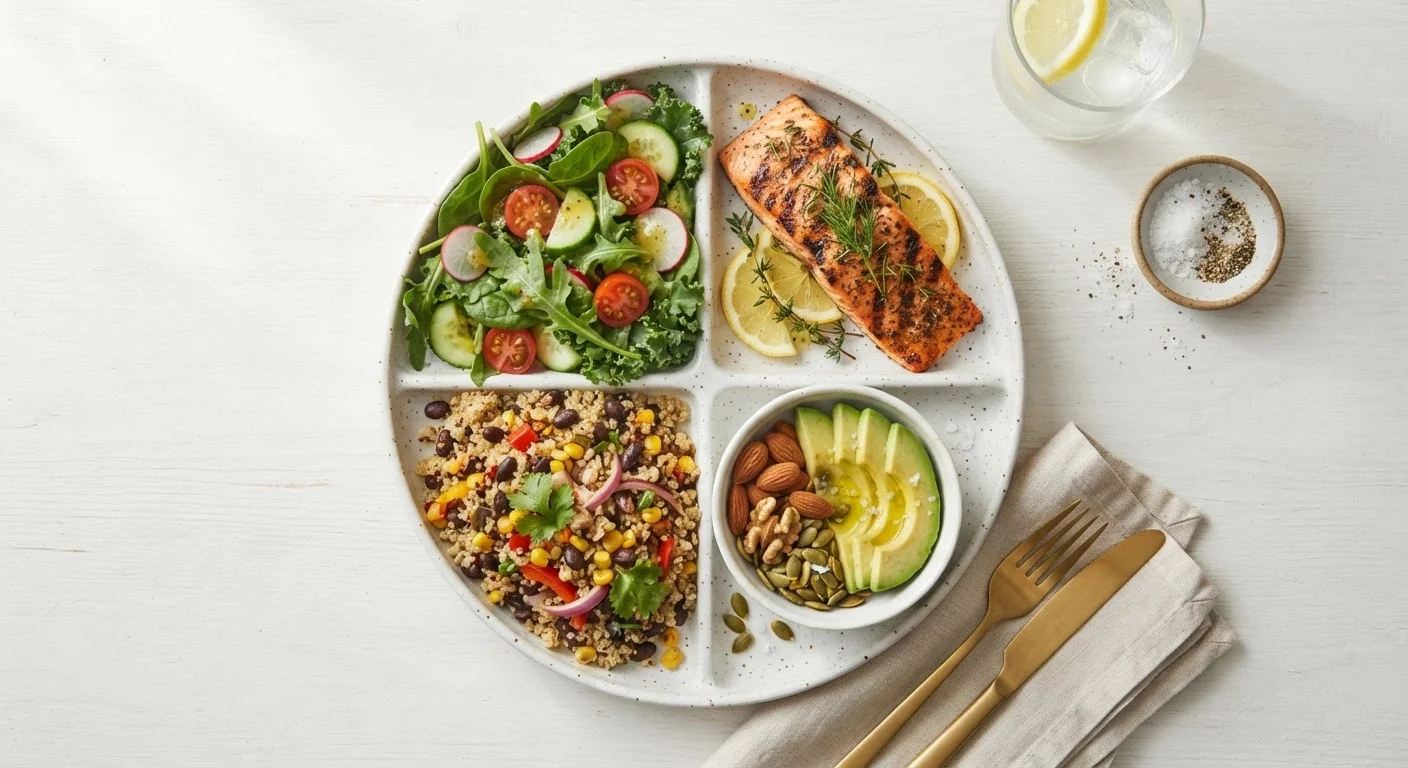
Photo credit: QuickInsights.net
In this article
Learn how to structure meals with the right proportions of nutrients without counting every calorie or following a strict diet.
Key Takeaways
- Half your plate filled with vegetables and fruit provides fiber, vitamins, and disease-protective compounds.
- A quarter plate of quality protein supports muscle maintenance, satiety, and cellular repair.
- Whole grains as your grain choice provide more fiber and nutrients than refined alternatives.
- Healthy fats from foods like nuts, seeds, and avocado support hormone and brain function.
- Visual portioning is a sustainable, evidence-backed alternative to tracking every calorie.
- Individual needs vary - consult a registered dietitian for personalized guidance.
Why a Plate Framework Works Better Than Calorie Counting
Calorie counting can feel like a second job - logging every bite, scrutinizing every label, and still feeling uncertain about whether you're eating well. Research consistently suggests that dietary quality, not just quantity, is a central driver of long-term health outcomes. A plate-based framework shifts the focus from numbers to proportions, making balanced eating more intuitive and sustainable for most people.
The core idea is simple: divide a standard dinner plate into visual sections, each representing a category of food. This method - broadly supported by dietary guidelines from nutrition researchers and health organizations - removes the need for scales or apps while still guiding you toward a nutrient-dense eating pattern. If you want to understand what's actually in packaged food, our guide to reading Nutrition Facts labels is a practical companion to this framework.
Start With One Meal a Day
If restructuring every meal feels overwhelming, apply the plate framework to just one meal - lunch or dinner is usually easiest. Building the habit gradually is more sustainable than attempting a complete overhaul overnight. Most people find the approach becomes automatic within a few weeks of consistent practice.
The Core Plate Proportions Explained
A well-supported model divides a meal plate into three main sections:
- Half the plate: vegetables and fruit. Non-starchy vegetables - leafy greens, broccoli, peppers, carrots - should dominate this half. Fruit can occupy a portion of it too. This section delivers fiber, vitamins, minerals, and phytonutrients with relatively few calories.
- One quarter: lean or plant-based protein. This section supports muscle maintenance, satiety, and cellular repair. Protein also slows glucose absorption, which helps moderate energy levels after meals.
- One quarter: whole grains or starchy vegetables. Brown rice, quinoa, whole-wheat pasta, oats, sweet potato, or corn provide complex carbohydrates and additional fiber. They form the body's primary fuel source and - when whole - contribute B vitamins and minerals.
A small, separate source of healthy fat rounds out the meal. This might appear as olive oil used in cooking, a few slices of avocado, or a sprinkle of nuts or seeds.
Macronutrients
The three main categories of nutrients - carbohydrates, protein, and fat - that provide energy and form the bulk of what you eat.
Micronutrients
Vitamins and minerals needed in smaller amounts that support body functions like immunity, bone health, and energy metabolism.
Fiber
A type of carbohydrate found in plant foods that the body cannot digest; it supports digestive health, helps regulate blood sugar, and promotes a feeling of fullness.
Phytonutrients
Naturally occurring compounds in plants - responsible for much of their color and flavor - that may offer protective health effects when consumed regularly.
Whole grains
Grains that retain all three parts of the grain kernel (bran, germ, endosperm), providing more fiber and nutrients than refined grains like white flour or white rice.
Unsaturated fats
A type of dietary fat - found in foods like olive oil, avocado, nuts, and fish - associated with heart-health benefits when consumed in place of saturated fats.
Choosing Foods Within Each Category
The framework gains power from variety within each section, not from eating the same foods daily. In the vegetable half, rotating colors is a practical proxy for rotating nutrients - dark leafy greens offer iron and folate, orange vegetables supply beta-carotene, and cruciferous vegetables like broccoli provide compounds studied for their role in cellular health.
For the protein quarter, options include eggs, fish, poultry, lean beef, legumes, tofu, and tempeh. Comparing animal and plant protein sources in detail can help you decide what fits your preferences and budget. For the grain quarter, choosing whole grains over refined ones consistently delivers more fiber and a broader micronutrient profile - a trade worth making when possible.
For a deeper look at the vitamins and minerals each food category contributes, see our overview of essential micronutrients.
Making the Framework Work in Real Life
Real eating rarely happens in ideal conditions. Meals get assembled at food courts, eaten at desks, or thrown together from whatever's in the refrigerator. The plate framework is designed to flex with these realities.
For mixed dishes - stir-fries, soups, grain bowls, tacos - mentally map the proportions across the whole meal rather than each component. A burrito bowl with a large base of rice and small scattering of vegetables is not a balanced plate; inverting those proportions brings it much closer to the model.
Budget is a real constraint for many households. Frozen vegetables are nutritionally equivalent to fresh and considerably cheaper; canned beans are among the most affordable protein sources available. Our guide to healthy eating on a tight budget explores these strategies in more depth. If you'd like to see how a full week of balanced eating can look using ordinary ingredients, a week of nutritionally balanced eating puts this framework into everyday context.
Portion Size Still Matters
The plate proportions assume a reasonably sized plate - roughly 9 inches in diameter, which is standard for a dinner plate. Using a very large plate and filling the sections still results in a large meal. If portion control is a concern for your health, discuss appropriate serving sizes with your healthcare provider or a registered dietitian rather than relying on plate size alone.
Adjusting for Different Needs and Life Stages
No single plate proportion works identically for every person. Nutritional needs shift across life stages - children, pregnant individuals, older adults, and people managing chronic conditions all have meaningfully different requirements. Our article on nutrition through every life stage explores these shifts in detail.
People who are highly physically active may need larger grain and protein portions to support energy expenditure and muscle recovery. Those following plant-based diets will fill their protein quarter differently - and may need to plan more carefully around nutrients like vitamin B12, zinc, and long-chain omega-3s. For a balanced exploration of plant-focused eating, see what plant-based eating involves and what the research says.
The plate method is a practical starting point, not a clinical prescription. A registered dietitian can help refine the framework to match individual health history, goals, and preferences. Pairing a balanced plate with regular movement also amplifies its benefits - building a weekly movement plan from scratch is a useful next step for readers looking to integrate both habits.
This article provides general nutrition information for educational purposes only and is not a substitute for personalized advice from a qualified healthcare provider or registered dietitian.
Frequently Asked Questions

Author
Health & Wellness Editorial Team
Health & Wellness Editorial Team is the collective byline for our editorial team and contributor network. Articles published under this byline or an editorial pen name are researched, written, and reviewed according to our editorial standards for clarity, consistency, and independence before publication.
View all articles →