
Reading a Nutrition Facts Label Without Getting Lost
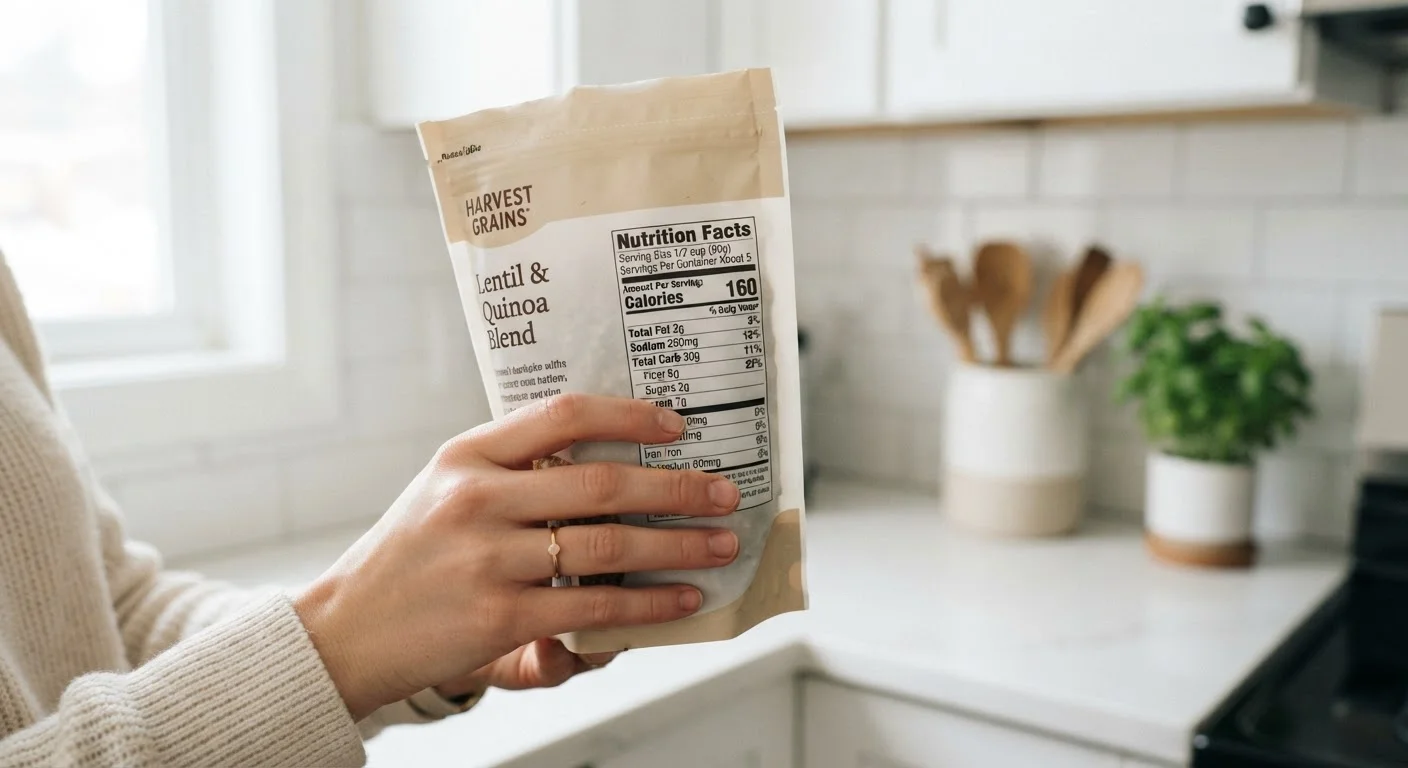
Photo credit: QuickInsights.net
In this article
A practical walkthrough of every section on a Nutrition Facts panel so you can shop and eat with more confidence.
Key Takeaways
- Serving size is the foundation of every number on the label - always check it first.
- Percent Daily Value (%DV) uses a 2,000-calorie reference diet and helps you gauge nutrient amounts quickly.
- Aim to limit added sugars, sodium, and saturated fat; prioritize fiber, vitamins, and minerals.
- Ingredients are listed by weight, so the first few reveal what a product is mostly made of.
- Labels reflect general population averages - individual needs vary, so consult a healthcare provider for personalized guidance.
Why the Label Exists and How It's Organized
The Nutrition Facts label was created by the U.S. Food and Drug Administration (FDA) to give consumers standardized, science-based information about packaged foods. A major redesign - finalized and fully implemented by most manufacturers - updated the format to reflect current nutrition science and reflect how people actually eat. The label flows top to bottom in a deliberate order, and reading it that way prevents the most common errors.
At its core, the label answers four questions: How much of this food constitutes one serving? How many calories does that serving contain? What nutrients are present, and in what amounts? And how do those amounts fit into an overall daily diet? Once you internalize that structure, scanning any label takes less than a minute.
Compare Labels Before You Grab and Go
When choosing between two similar products - say, two brands of canned soup or breakfast cereal - hold both labels side by side and compare the same serving size. Small differences in sodium or added sugar content can add up meaningfully over a week of eating. Making label comparison a routine habit takes seconds and requires no nutrition background.
Step-by-Step: Decoding Each Section
Start With Serving Size and Servings Per Container
Every number on the label - calories, nutrients, %DV - applies to one serving, not the entire package. The serving size is expressed in familiar units (cups, pieces, grams) and reflects an amount typically consumed at one time, based on FDA reference amounts.
Check servings per container next. If a bag lists 3 servings and you eat the whole bag, multiply every value by 3. This single step prevents the most common label-reading mistake.
Check Calories Per Serving
The large, bold calorie number reflects the total energy in one serving from all three macronutrients: fat (9 calories per gram), carbohydrate (4 calories per gram), and protein (4 calories per gram). Calories are a useful anchor, but they don't capture nutrient quality - 200 calories from almonds and 200 calories from a candy bar carry very different nutritional profiles.
Interpret Percent Daily Value (%DV)
The %DV column is one of the label's most practical tools. It shows how much of a nutrient one serving contributes toward a daily reference intake based on a 2,000-calorie diet. The FDA's general guideline: 5% DV or less is low; 20% DV or more is high.
Use %DV to make quick comparisons between similar products. You don't need to do math - the column does it for you. Keep in mind that your personal calorie and nutrient needs may differ from the 2,000-calorie reference.
Evaluate Fat, Sodium, and Added Sugars
These three nutrients appear prominently because excess intake is consistently associated with health concerns in large-scale research. The label now distinguishes between total fat, saturated fat, and trans fat - saturated and trans fats are the types most linked to cardiovascular risk. Added sugars (a line added in the updated label format) separates sugars added during processing from naturally occurring sugars, giving a clearer picture of how sweet a product actually is beyond its natural ingredients.
Look for Fiber, Vitamins, and Minerals
Below the sodium line, the label lists nutrients that many Americans under-consume: dietary fiber, vitamin D, calcium, iron, and potassium. Higher %DV values here are generally a positive signal. A food providing 15-20% DV of calcium or iron per serving is making a meaningful contribution to daily needs.
Dietary fiber supports digestive health, blood sugar regulation, and cardiovascular health. A single food providing 10% DV or more of fiber is considered a good source; 20% DV or more qualifies as an excellent source under FDA definitions.
After working through the label systematically, you can connect what you learn to broader eating habits. If you want to put these insights to immediate use, the practical framework for building a balanced plate offers a straightforward way to translate label knowledge into meal structure - without calorie counting or rigid rules.
Nutrients to Watch and Why They Matter
The label groups nutrients into two informal tiers. Nutrients to limit - saturated fat, trans fat, sodium, and added sugars - are consistently linked in research to elevated risk of cardiovascular disease, hypertension, and metabolic conditions when consumed in excess. Nutrients to get enough of - dietary fiber, vitamin D, calcium, iron, and potassium - are under-consumed by many Americans and associated with reduced risk of chronic disease.
Fiber deserves particular attention. Most adults in the U.S. fall well below the recommended daily intake, and the Nutrition Facts label makes it easy to spot high-fiber choices. For a deeper look at why fiber matters and how to get more from everyday foods, see our article on why most Americans fall short on dietary fiber.
It's also worth noting that nutritional needs are not one-size-fits-all. Children, older adults, pregnant individuals, and people managing chronic conditions may have different targets for many of these nutrients. For context on how requirements shift over time, nutrition needs across every life stage explains how key nutrients like protein, calcium, and iron evolve. Always consult a qualified healthcare professional or registered dietitian for guidance tailored to your specific circumstances.
%DV Is a General Reference, Not a Personal Target
The Daily Values on a Nutrition Facts label are based on a 2,000-calorie-per-day reference diet set for the general adult population. Your actual needs may be higher or lower depending on age, sex, activity level, health conditions, and other factors. Use %DV as a directional guide rather than a precise personal prescription, and speak with a registered dietitian or physician if you need individualized nutrient targets.
Reading the Ingredient List Alongside the Label
The Nutrition Facts panel and the ingredient list work together. Ingredients are ranked by weight - the first ingredient is present in the largest quantity. A product listing sugar (or one of its many aliases: high-fructose corn syrup, cane juice, maltose, dextrose) among the first three ingredients warrants a second look at the added sugars row on the panel.
Watching for nutrient gaps in your overall diet is equally important. Physical signs like persistent fatigue or slow wound healing can sometimes reflect dietary shortfalls - the article signs your diet may be missing key nutrients outlines what those signals may mean and when to seek professional input.
Finally, reading labels efficiently is a skill that compounds over time. The more consistently you apply the framework above, the faster and more confident your grocery decisions become - and the more naturally healthy choices fit into a realistic, sustainable week of eating. For an illustrative look at what that can actually look like in practice, see a week of nutritionally balanced eating using ordinary, affordable ingredients.
This article is for general informational and educational purposes only and is not a substitute for professional medical or dietary advice. Consult a qualified healthcare provider or registered dietitian before making significant changes to your diet.

Author
Health & Wellness Editorial Team
Health & Wellness Editorial Team is the collective byline for our editorial team and contributor network. Articles published under this byline or an editorial pen name are researched, written, and reviewed according to our editorial standards for clarity, consistency, and independence before publication.
View all articles →