
Building a Weekly Movement Plan from Scratch
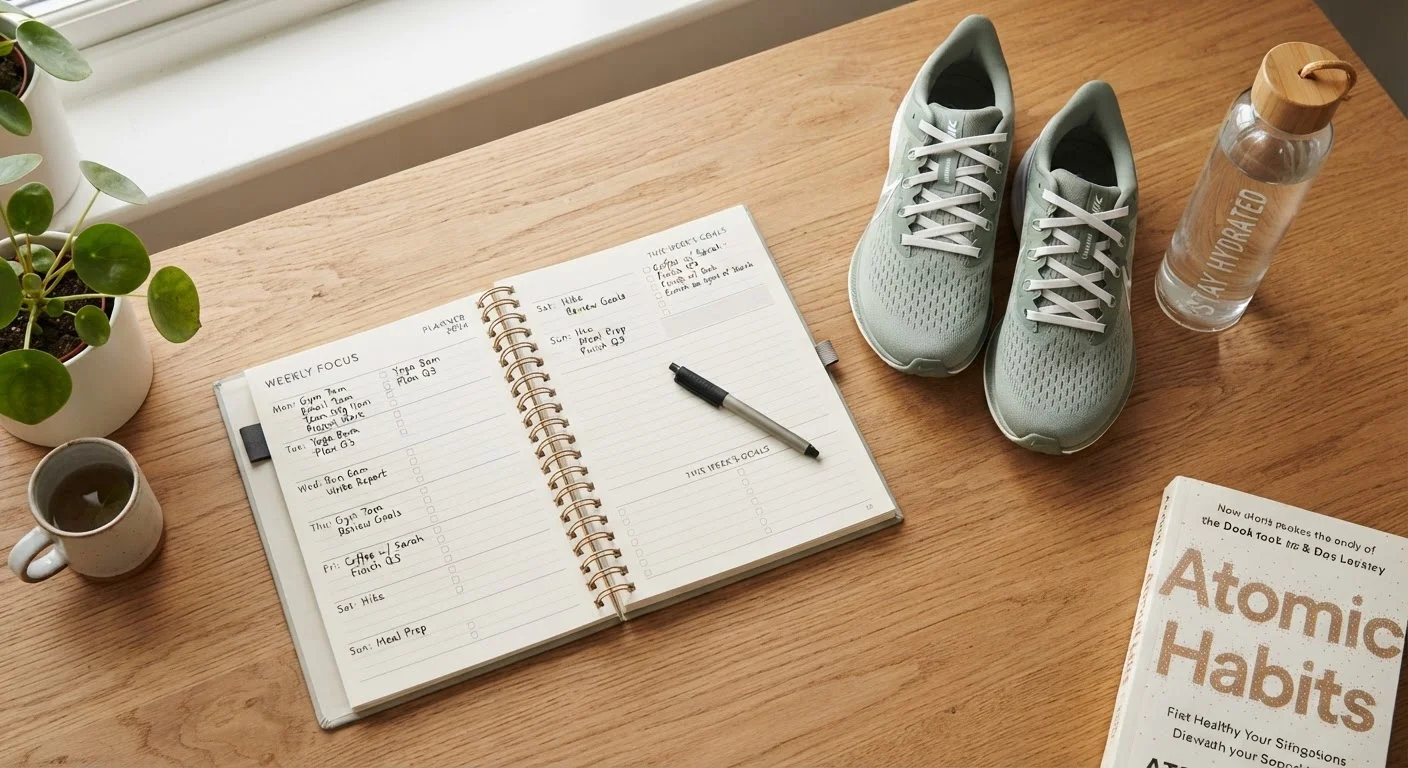
Photo credit: QuickInsights.net
In this article
Step-by-step guidance on designing a realistic, balanced weekly exercise schedule—even if you're starting with zero fitness habits.
Key Takeaways
- Starting with two to three movement days per week is more sustainable than jumping to daily exercise.
- Balancing cardiovascular activity, strength work, and rest days reduces injury risk and builds long-term habit.
- Scheduling workouts like appointments significantly improves follow-through for busy adults.
- Progress should be gradual - adding volume or intensity too quickly is a leading cause of early dropout.
- Movement quality and consistency matter more than workout length, especially at the start.
Why a Written Plan Outperforms Good Intentions
Most people begin a fitness effort with genuine motivation - and lose it within a few weeks. The problem is rarely willpower. It's structure. A written weekly movement plan transforms an abstract goal into a series of specific, manageable actions. It removes the daily decision of whether to exercise, which reduces the mental friction that causes skipped sessions to accumulate.
Public health guidance from sources including the U.S. Department of Health and Human Services generally recommends that adults aim for at least 150 minutes of moderate-intensity aerobic activity per week, alongside muscle-strengthening activities on two or more days. A written plan is simply the most reliable way to work toward those benchmarks without overhauling your life all at once.
Consult a Professional Before Starting
This article provides general educational guidance, not personalized medical advice. If you have a chronic health condition, recent injury, or have been inactive for an extended period, speak with a qualified healthcare provider before beginning a new exercise program. They can help you identify safe starting points tailored to your individual health status.
Movement also supports mental wellness in well-documented ways - if you're building broader self-care habits, see our framework for building a personal mental wellness routine alongside this guide.
Pair Movement with Nutrition for Stronger Results
Physical activity and eating habits are deeply connected. Fueling your body with balanced, varied meals supports energy, recovery, and motivation. See our practical guide to building a balanced plate for straightforward meal-structuring strategies that complement your movement plan.
What You'll Need Before You Begin
Designing an effective movement plan doesn't require expensive equipment or a gym membership. It does require a few practical inputs.
What you will need
Weekly calendar or planner
Used to schedule and visualize your movement sessions across the week.
Fitness tracking app or journal
Helps you log completed sessions, notice patterns, and track gradual progress over time.
Resistance bands or light dumbbells
Useful for adding basic strength work at home without gym access.
Timer or interval app
Keeps sessions structured and helps beginners manage effort and rest periods.
Gather these before working through the steps below. The calendar or planner is non-negotiable - everything else can be improvised.
Follow These Steps to Build Your Plan
Work through the steps below in order. Each one builds on the last, so resist the urge to skip ahead to scheduling before you've completed the honest self-assessment.
Assess your current starting point honestly
Before designing any schedule, take stock of where you actually are - not where you wish you were. Ask yourself: How many days per week are you currently moving intentionally? How long can you sustain moderate effort without stopping? What does your week genuinely look like in terms of free time?
Being honest here sets you up for a plan you'll actually follow. Overestimating your baseline is one of the structural reasons new routines stall early. For more on that pattern, see why most fitness routines fail in the first month.
Choose a realistic number of movement days
For most beginners, two to three dedicated movement days per week is the right starting range. This frequency is enough to build habit and see early adaptation without overwhelming a busy schedule. Daily exercise may be a long-term goal, but starting there often leads to burnout or injury within weeks.
If your schedule is genuinely tight, shorter sessions spread across more days can be equally effective. Getting active when you have almost no free time offers practical approaches for squeezing movement into a packed day.
Build in a balanced mix of movement types
A well-rounded weekly plan includes three categories: cardiovascular activity (walking, cycling, swimming), strength or resistance work (bodyweight exercises, light weights), and active recovery or flexibility (stretching, yoga, gentle walking). Each serves a different physiological purpose and together they reduce overuse injury risk.
A simple beginner template might look like: two days of moderate cardio, one day of basic strength work, and at least two full rest days. Adjust the mix based on what you enjoy - enjoyment is a genuine predictor of adherence.
Schedule sessions like appointments
Vague intentions like "I'll exercise this week" rarely translate into action. Block specific times on your calendar the same way you would a meeting or medical appointment. Decide the day, the time, and the approximate duration in advance. Research on implementation intentions - specific if-then plans - suggests this approach meaningfully improves follow-through compared to general goals.
Choose times that align with your natural energy patterns. If you're exhausted by 8 p.m., scheduling evening workouts sets you up to skip them.
Set a four-week progression rule
Once your baseline plan feels manageable - typically after three to four consistent weeks - you can incrementally increase volume or intensity. A general guideline often cited in exercise science is to avoid increasing total weekly effort by more than roughly 10 percent at a time. This applies to duration, distance, or resistance.
Adding too much too soon is one of the most common paths to injury and dropout. Gradual progression keeps the plan sustainable. For strategies that help you stay on track beyond the initial weeks, see how to stay consistent with exercise when motivation runs out.
Avoid the 'All or Nothing' Trap
One of the most common mistakes beginners make is treating a missed session as a reason to abandon the entire plan. Research on habit formation consistently shows that missing one day has little effect on long-term outcomes - missing several in a row does. Build in flexibility from the start so that imperfect weeks are part of the plan, not failures.
What a Realistic Starter Week Might Look Like
To make the framework concrete, here's an illustrative beginner week for someone with limited free time and no current exercise habit:
| Day | Activity | Duration |
|---|---|---|
| Monday | Brisk walk | 20 minutes |
| Tuesday | Rest or light stretching | 10 minutes |
| Wednesday | Bodyweight strength (squats, push-ups, planks) | 20 minutes |
| Thursday | Rest | - |
| Friday | Brisk walk or low-impact cardio | 25 minutes |
| Saturday | Active recovery (gentle yoga or leisurely walk) | 15-20 minutes |
| Sunday | Full rest | - |
This template totals roughly 65-85 minutes of intentional movement - well below the weekly target, but a sustainable entry point that builds the habit infrastructure first. Volume can increase once consistency is established.
This article is for general informational and educational purposes only and does not constitute medical advice. Always consult a qualified healthcare professional before starting a new exercise program, especially if you have any health conditions or concerns.

Author
Health & Wellness Editorial Team
Health & Wellness Editorial Team is the collective byline for our editorial team and contributor network. Articles published under this byline or an editorial pen name are researched, written, and reviewed according to our editorial standards for clarity, consistency, and independence before publication.
View all articles →