
Micronutrients: The Vitamins and Minerals Your Body Can't Make on Its Own
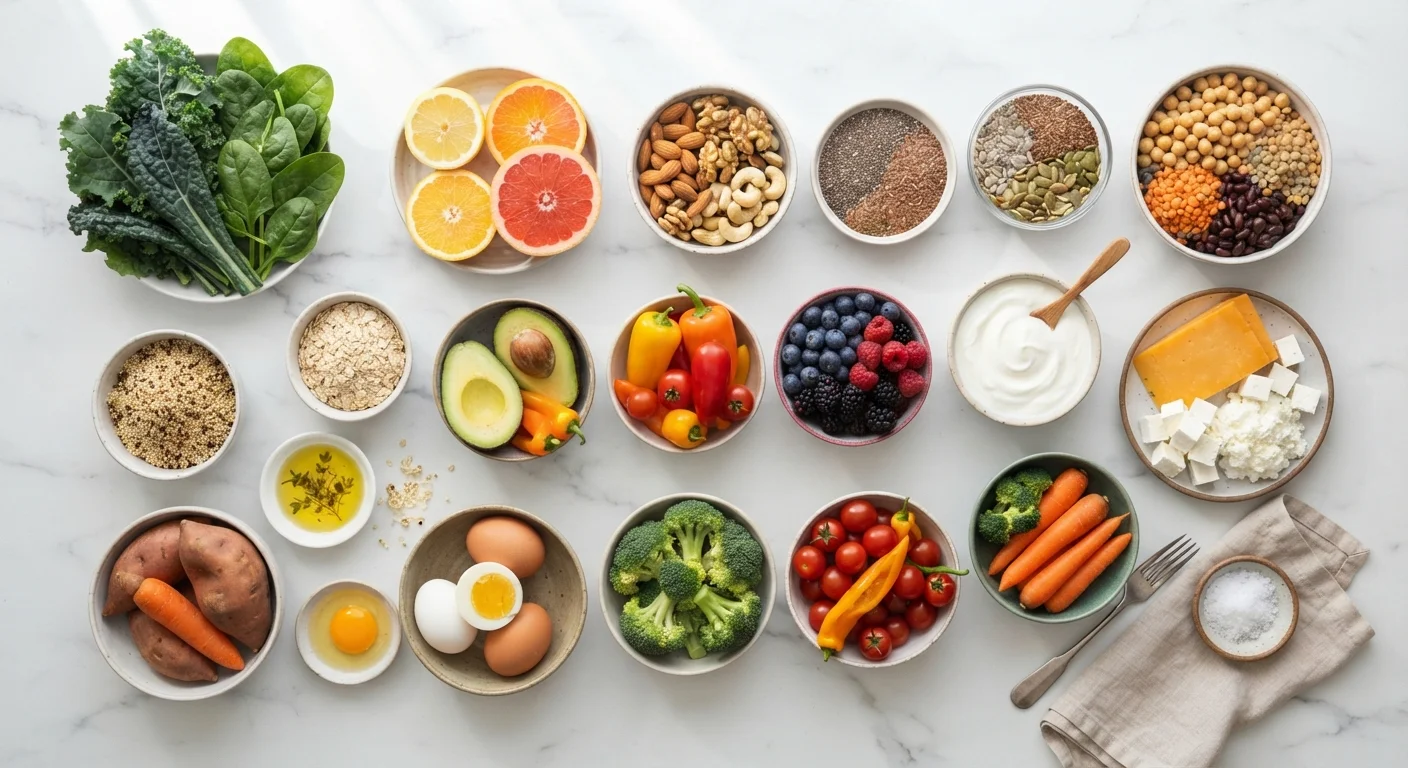
Photo credit: QuickInsights.net
In this article
A clear reference guide to essential vitamins and minerals, what they do, and which foods naturally supply them.
What Are Micronutrients and Why Do They Matter?
Unlike macronutrients like carbohydrates, proteins, and fats, micronutrients don't provide calories. Instead, they serve as the chemical tools your body relies on for virtually every biological process - from converting food into energy to building bone, clotting blood, and supporting immune defense. The term micronutrient covers two broad categories: vitamins (organic compounds) and minerals (inorganic elements).
What makes micronutrients essential is that your body cannot synthesize adequate amounts on its own. You must obtain them through food - or, in certain situations assessed by a healthcare provider, through supplementation. Deficiencies can develop quietly over time and may only become apparent when function is already compromised. For a closer look at possible warning signs, see signs your diet may be missing key nutrients.
Micronutrient
A vitamin or mineral required by the body in small amounts to support normal physiological function. Unlike macronutrients, micronutrients do not supply energy (calories).
Fat-Soluble Vitamin
Vitamins (A, D, E, K) that dissolve in fat and are stored in body tissues. They do not need to be consumed daily but can accumulate to potentially harmful levels if over-supplemented.
Water-Soluble Vitamin
Vitamins (C and the B vitamins) that dissolve in water and are not significantly stored in the body. Regular dietary intake is needed, and excess is generally excreted in urine.
Trace Mineral
A mineral the body requires in very small amounts (micrograms to low milligrams per day), such as iron, zinc, iodine, and selenium. Despite the tiny quantities needed, deficiency can impair health significantly.
Bioavailability
The proportion of a nutrient that is actually absorbed and used by the body. Factors such as food preparation, the presence of other nutrients, and individual health status all influence bioavailability.
Antioxidant
A compound that neutralizes unstable molecules called free radicals, helping to protect cells from oxidative damage. Several vitamins and minerals, including vitamin C, vitamin E, and selenium, act as antioxidants.
Key Vitamins: Functions and Food Sources
Vitamins are divided into two groups based on how the body stores and transports them:
Fat-Soluble Vitamins (A, D, E, K)
These dissolve in fat, are stored in body tissues, and can accumulate to excess if over-supplemented. They do not need to be consumed every single day.
- Vitamin A - Supports vision (especially in low light), skin integrity, and immune function. Found in liver, dairy, eggs, and as beta-carotene in orange and dark green vegetables.
- Vitamin D - Regulates calcium absorption and supports bone health and immune response. Synthesized by skin in sunlight; dietary sources include fatty fish, egg yolks, and fortified foods.
- Vitamin E - Acts as an antioxidant protecting cells from oxidative damage. Found in nuts, seeds, wheat germ, and vegetable oils.
- Vitamin K - Essential for blood clotting and bone metabolism. Leafy greens (kale, spinach, broccoli) are among the richest sources.
Water-Soluble Vitamins (C and the B Vitamins)
These are not stored in significant amounts, so regular dietary intake is important. Excess amounts are typically excreted in urine.
- Vitamin C - Supports immune function, collagen synthesis, and iron absorption. Citrus fruits, bell peppers, strawberries, and broccoli are excellent sources.
- B Vitamins (B1, B2, B3, B5, B6, B7, B9, B12) - Collectively support energy metabolism, red blood cell production, and nervous system function. Whole grains, legumes, meat, dairy, eggs, leafy greens, and fortified cereals each contribute different B vitamins. Vitamin B12, notably, is found almost exclusively in animal-derived foods, making it a key consideration for people following plant-based diets.
| Total essential vitamins | 13 (4 fat-soluble, 9 water-soluble) (National Institutes of Health, Office of Dietary Supplements) |
| Essential dietary minerals | At least 16 recognized as essential (Dietary Reference Intakes, National Academies of Sciences) |
| Most common deficiency globally | Iron deficiency (World Health Organization) |
| Vitamin D synthesis | Skin produces it from UVB sunlight - diet alone is often insufficient (National Institutes of Health, Office of Dietary Supplements) |
| B12 and plant-based diets | Vitamin B12 is found almost exclusively in animal-derived foods (Academy of Nutrition and Dietetics) |
| Fat-soluble vitamin risk | Vitamins A, D, E, K can accumulate to toxic levels if over-supplemented (National Institutes of Health, Office of Dietary Supplements) |
Essential Minerals: Their Roles in the Body
Minerals are inorganic elements that your body uses for structure (such as bone and teeth) and for regulating processes like fluid balance, nerve signaling, and muscle contraction. They fall into two practical categories based on how much the body requires.
Major Minerals
- Calcium - The most abundant mineral in the body. Critical for bone density, muscle contraction, and nerve signaling. Dairy products, fortified plant milks, tofu made with calcium sulfate, and leafy greens are good sources.
- Magnesium - Involved in more than 300 enzymatic reactions, including energy production and protein synthesis. Found in nuts, seeds, legumes, whole grains, and dark leafy greens.
- Potassium - Helps regulate fluid balance, blood pressure, and heart rhythm. Bananas, potatoes, avocados, beans, and dairy are reliable sources.
- Sodium - Necessary for fluid balance and nerve function, though most Americans consume well above recommended amounts through processed foods.
Trace Minerals
- Iron - Carries oxygen in red blood cells. Found in red meat, poultry, fish (heme iron, well-absorbed) and legumes, tofu, fortified cereals (non-heme iron, better absorbed alongside vitamin C).
- Zinc - Supports immune function, wound healing, and DNA synthesis. Meat, shellfish, legumes, nuts, and seeds are good sources.
- Iodine - Essential for thyroid hormone production and metabolic regulation. Iodized salt, seafood, and dairy are the primary sources in the U.S. diet.
- Selenium - Functions as an antioxidant and supports thyroid metabolism. Brazil nuts, seafood, and whole grains supply it in meaningful amounts.
Micronutrient needs are not static. As outlined in how nutritional needs shift across life stages, requirements for calcium, iron, and vitamin D, among others, change significantly depending on age, sex, and physiological status such as pregnancy.
Getting Enough Through Your Diet
For most healthy adults, a varied whole-food diet provides adequate amounts of essential micronutrients without the need for supplementation. Eating a wide range of vegetables, fruits, whole grains, legumes, lean proteins, and dairy or fortified alternatives naturally distributes different vitamins and minerals across your meals. Structuring a balanced plate with color and variety is one of the most practical strategies for covering your micronutrient bases.
A Note on Supplements vs. Whole Foods
Supplements can help address confirmed deficiencies, but they generally don't replicate the full benefit of nutrients consumed within whole foods. Food delivers micronutrients alongside fiber, phytonutrients, and other compounds that work together in ways science is still mapping. Supplementation decisions are best made with a healthcare provider or registered dietitian based on individual assessment - not as a general precaution.
Certain groups - including people who are pregnant, older adults, vegans and vegetarians, and those with specific health conditions - may have elevated needs or absorption challenges that a food-only approach cannot always meet. In those cases, a qualified healthcare provider or registered dietitian can assess whether supplementation is appropriate and at what level. Self-prescribing high-dose supplements carries real risks, particularly for fat-soluble vitamins that accumulate in tissue.
This article provides general nutrition information for educational purposes only and is not a substitute for personalized medical or dietary advice. Consult a qualified healthcare professional or registered dietitian before making significant changes to your diet or starting any supplement regimen.

Author
Health & Wellness Editorial Team
Health & Wellness Editorial Team is the collective byline for our editorial team and contributor network. Articles published under this byline or an editorial pen name are researched, written, and reviewed according to our editorial standards for clarity, consistency, and independence before publication.
View all articles →