
Macronutrients Explained: What Carbs, Proteins, and Fats Actually Do
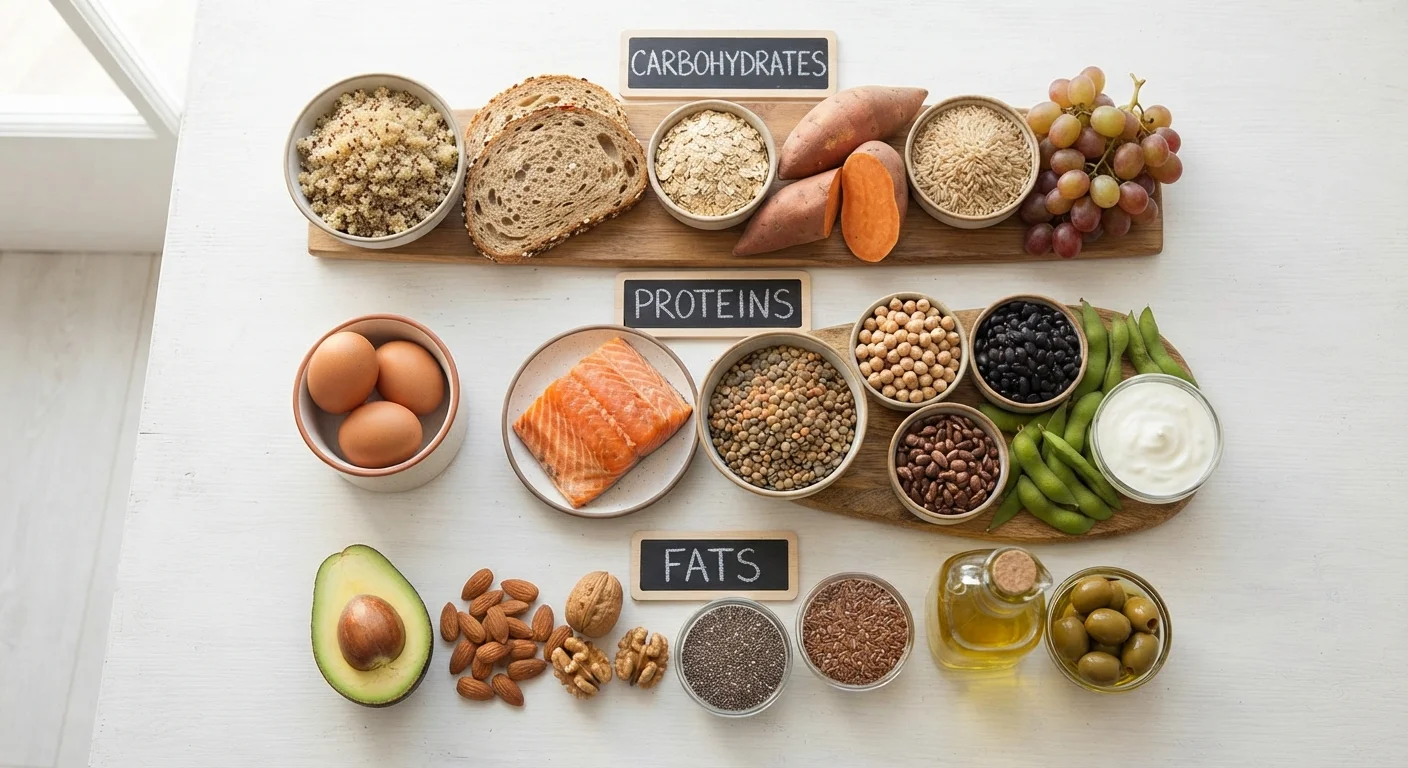
Photo credit: QuickInsights.net
In this article
Learn what carbohydrates, proteins, and fats do in your body and why all three matter for everyday health.
Key Takeaways
- All three macronutrients - carbs, proteins, and fats - are essential; none is inherently harmful.
- Carbohydrates are the body's preferred and most efficient fuel source for energy.
- Proteins supply amino acids needed to build, repair, and regulate virtually every tissue and process.
- Dietary fats support brain function, hormone production, and absorption of fat-soluble vitamins.
- Food quality within each macronutrient category matters as much as quantity.
- A balanced diet draws on all three macronutrients rather than eliminating any one group.
Carbohydrates: Your Body's Preferred Fuel
Carbohydrates are the body's primary energy source, and for good reason - they break down into glucose efficiently, fueling the brain, muscles, and organs. When you eat carbs, your digestive system converts them into glucose, which enters the bloodstream and powers cellular activity. Excess glucose is stored as glycogen in the liver and muscles for later use.
Not all carbohydrates behave the same way. Simple carbohydrates - found in fruit, milk, and refined sugars - digest quickly. Complex carbohydrates - in whole grains, legumes, and vegetables - digest more slowly and typically carry fiber, which supports digestive health, blood sugar stability, and satiety. The distinction matters: a diet rich in fiber-containing complex carbs is associated with better long-term health outcomes than one dominated by refined, low-fiber options.
Fiber itself is technically a carbohydrate, though the body can't fully digest it. It feeds beneficial gut bacteria, slows glucose absorption, and contributes to feelings of fullness - making it one of the most practically valuable nutrients in a typical American diet.
Choose Fiber-Rich Carb Sources When Possible
When selecting carbohydrate-containing foods, look for options that come with natural fiber - whole grains, legumes, vegetables, and fruit. Fiber slows digestion, supports gut health, and helps you feel satisfied longer. Most Americans consume well below the recommended daily fiber intake, so small swaps like choosing whole-grain bread or adding beans to meals can make a meaningful difference over time.
Proteins: Builders, Regulators, and More
Protein is far more than a muscle-building nutrient. It is made up of amino acids - the structural backbone of nearly every tissue in your body. Proteins form enzymes that drive chemical reactions, hormones that regulate physiological processes, antibodies that support immune defense, and the structural components of skin, hair, and connective tissue.
There are 20 amino acids in total, and nine are considered essential - meaning your body cannot synthesize them and must obtain them through food. Animal-based foods (meat, poultry, fish, eggs, dairy) generally provide all nine essential amino acids and are called complete proteins. Many plant sources lack one or more, though eating a varied plant-based diet across the day can reliably meet amino acid needs. For a side-by-side nutritional comparison, see how animal and plant proteins stack up.
Protein also plays a role in satiety - it tends to be the most filling macronutrient per calorie, which is relevant for anyone managing their appetite or energy levels throughout the day.
9
Essential amino acids humans must get from food
According to established nutritional science, the human body cannot synthesize these nine amino acids and depends entirely on dietary intake to obtain them.
~45-65%
Recommended share of calories from carbohydrates
The U.S. Dietary Guidelines for Americans recommend that carbohydrates make up roughly 45-65% of total daily calorie intake for most adults.
9 kcal/g
Calories provided per gram of dietary fat
Fat provides more than twice the caloric energy per gram compared to carbohydrates or protein, making it the most energy-dense macronutrient.
Fats: Essential, Not the Enemy
Dietary fat has been unfairly maligned for decades, but the science is clear: fat is an essential macronutrient that your body cannot function without. It supports the absorption of fat-soluble vitamins (A, D, E, and K), provides the building blocks for cell membranes and hormones, insulates organs, and serves as a long-lasting energy reserve.
Fat quality is the key variable. Unsaturated fats - found in olive oil, avocados, nuts, and fatty fish - are broadly associated with heart and metabolic health. Saturated fats, found mainly in animal products and some tropical oils, should be consumed in moderation according to most dietary guidelines. Trans fats, largely removed from the U.S. food supply through regulation, remain something to watch for on ingredient labels as partially hydrogenated oils.
Because fat is calorie-dense at 9 calories per gram, portions can add up quickly - but that density also means small amounts go a long way in providing sustained energy and satisfaction. Pairing fat with other nutrients, as happens naturally in whole foods, is one of the reasons whole foods tend to outperform processed alternatives in supporting overall health.
How the Three Work Together
In practice, your body doesn't process macronutrients in isolation - they interact constantly. Carbohydrates provide fast-acting fuel; fat provides sustained energy; protein maintains and repairs the structures that keep everything working. Meals that include all three tend to produce more stable blood sugar, more sustained energy, and greater satisfaction than meals built around just one.
The proportions that work best vary by individual. Factors like activity level, age, health status, and personal preference all influence what a well-balanced diet looks like for any given person. What the evidence consistently supports, regardless of exact ratios, is prioritizing quality: whole grains over refined ones, lean and varied protein sources, and predominantly unsaturated fats.
Macronutrients are only part of the nutrition picture. Vitamins and minerals - which don't provide energy but are equally critical - complete it. For more on those, see our guide to micronutrients. And if you're curious about how popular claims about macronutrients hold up, our nutrition myths article addresses the most widespread misconceptions.
This article is for general informational and educational purposes only and is not a substitute for personalized medical or dietary advice. Consult a qualified healthcare professional or registered dietitian for guidance specific to your health needs.
Frequently Asked Questions

Author
Health & Wellness Editorial Team
Health & Wellness Editorial Team is the collective byline for our editorial team and contributor network. Articles published under this byline or an editorial pen name are researched, written, and reviewed according to our editorial standards for clarity, consistency, and independence before publication.
View all articles →