
Whole Foods vs. Processed Foods: What the Difference Really Means for Your Diet
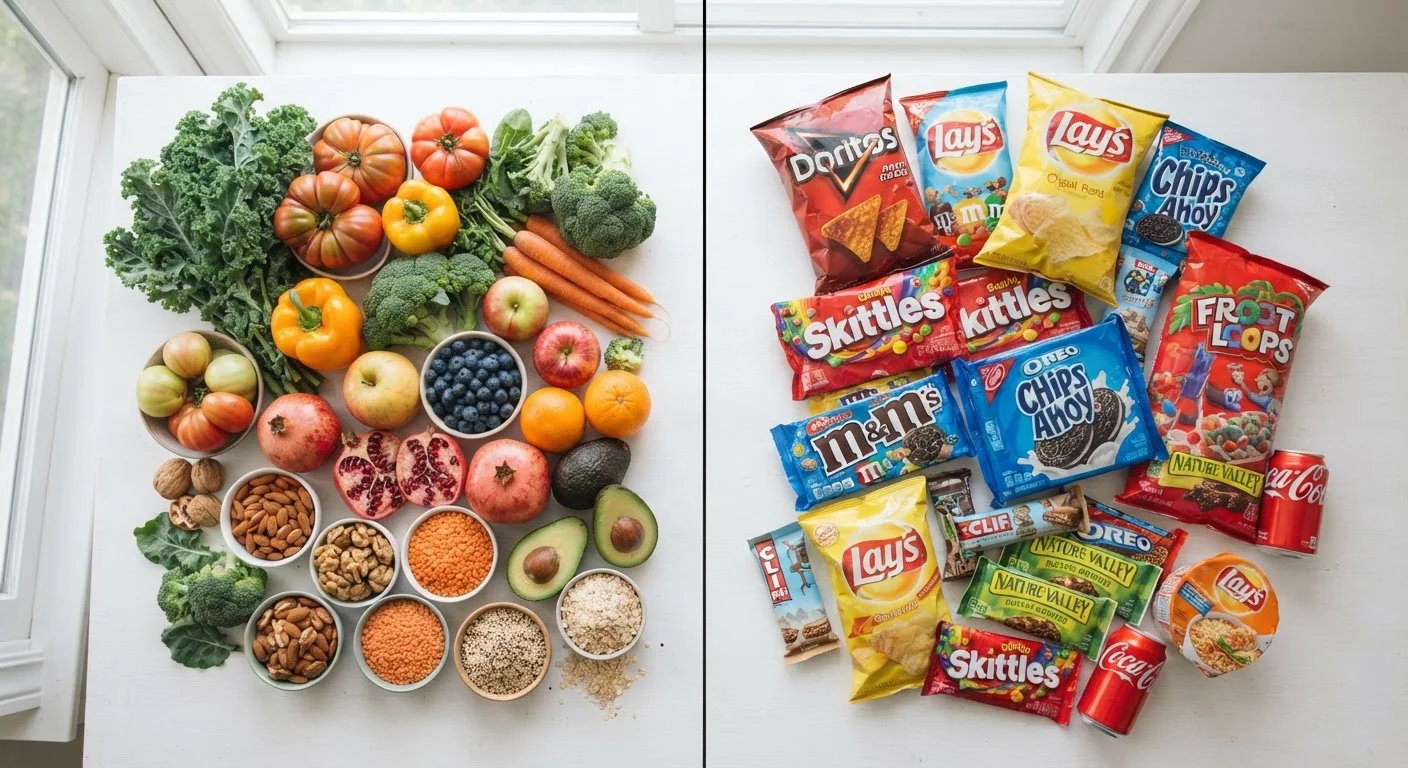
Photo credit: QuickInsights.net
In this article
Understand what separates whole foods from processed ones and how that distinction shapes everyday nutrition choices.
Key Takeaways
- Whole foods retain most of their original nutrients because they undergo little or no industrial processing.
- Processed foods exist on a spectrum - minimally processed items like frozen vegetables differ vastly from ultra-processed snacks.
- Research consistently associates diets rich in whole foods with lower risks of several chronic conditions.
- Added sugars, sodium, and refined fats are the primary nutritional concerns in heavily processed products.
- No single food makes or breaks a diet; the overall pattern of eating matters most.
- Reading nutrition labels helps you identify where on the processing spectrum a food actually falls.
Defining the Terms: What Makes a Food 'Whole' or 'Processed'?
A whole food is one that remains close to its natural state - a raw apple, a handful of lentils, a piece of salmon, or a cup of rolled oats. It may be washed, cut, or cooked, but it hasn't been industrially reformulated. Processed food, by contrast, describes any food that has been deliberately altered from its original form before it reaches you.
That definition immediately reveals a problem: nearly all food is processed in some way. Pasteurizing milk, freezing peas, and roasting almonds all involve processing. Nutrition researchers often use the NOVA classification system - developed by researchers at the University of São Paulo - to distinguish between levels of processing. NOVA divides foods into four groups, ranging from unprocessed or minimally processed foods (Group 1) to ultra-processed formulations (Group 4). Ultra-processed foods typically contain combinations of refined starches, added sugars, hydrogenated oils, flavor enhancers, and preservatives rarely found in home cooking.
Understanding this spectrum is the first step to making sense of your pantry. For a deeper look at how the key nutrients found across these food types function in your body, see our guide to macronutrients.
| Criterion | Whole Foods | Processed Foods |
|---|---|---|
| Definition | Close to natural state; minimal alteration | Industrially modified from original form |
| Nutrient density | Generally high; intact vitamins and minerals | Varies widely; often reduced by refining |
| Fiber content | Naturally present in plant-based whole foods | Frequently removed during processing |
| Added sugars | Absent or negligible | Common in ultra-processed products |
| Sodium levels | Naturally low | Often elevated for flavor or preservation |
| Shelf life | Shorter; requires fresh storage | Extended through additives or packaging |
| Convenience | Requires more preparation time | Ready-to-eat or quick to prepare |
| Cost | Varies; staples like legumes are affordable | Varies; ultra-processed snacks often inexpensive |
What the Research Says About Health Outcomes
A substantial and growing body of evidence links diets high in ultra-processed foods to increased risk of obesity, type 2 diabetes, cardiovascular disease, and certain cancers. A widely cited 2019 cohort study published in The BMJ found that a 10% increase in the proportion of ultra-processed foods in the diet was associated with a 12% higher risk of overall cancer - though observational research of this type identifies associations rather than proving direct causation.
On the other side, diets built around whole foods - often studied through the lens of Mediterranean or plant-forward eating patterns - are consistently associated with better long-term health markers in large population studies. These benefits are attributed to higher fiber content, greater micronutrient density, and fewer additives like excess sodium and added sugars.
57%
Share of American calories from ultra-processed foods
Research published in BMJ Open estimated that ultra-processed foods accounted for roughly 57% of total daily energy intake among U.S. adults.
+12%
Associated cancer risk per 10% increase in ultra-processed food intake
A 2019 prospective cohort study in The BMJ found this association, though observational design means causation cannot be confirmed.
28g
Daily fiber target for most adults (approximate)
The U.S. Dietary Guidelines for Americans recommend roughly 28 grams of dietary fiber per day for a 2,000-calorie diet; most Americans consume significantly less.
It's worth noting that food quality and dietary pattern matter more than any single item. A diet containing some canned tomatoes, plain Greek yogurt, or minimally processed whole-grain bread alongside abundant vegetables, legumes, and lean proteins is still nutritionally strong. For more on how sugars factor into this picture, our article on natural vs. added sugars is a useful companion read.
Practical Guidance: Navigating Both in Everyday Eating
Few people eat exclusively whole foods or exclusively ultra-processed ones. The realistic goal for most households is shifting the balance - not achieving perfection. A few evidence-informed strategies can help:
- Use the ingredient list as a guide. Shorter lists with recognizable ingredients typically signal less processing. Reading a Nutrition Facts label with confidence makes this easier.
- Embrace strategically processed options. Frozen vegetables, canned legumes (rinsed to reduce sodium), plain oats, and unsweetened nut butters are processed but nutritionally sound.
- Prioritize plant variety. Eating a wide range of vegetables, fruits, whole grains, and legumes delivers fiber, phytonutrients, and micronutrient diversity. Our overview of plant-based eating explores this approach in more depth.
- Watch the three main additives. Added sugars, sodium, and refined fats are the primary concerns in heavily processed products. The Nutrition Facts panel makes these visible.
For a concrete example of how these principles translate to actual meals, see our illustrative week of balanced eating.
Processing Isn't Always the Enemy
Some processing actually improves nutritional access. Cooking tomatoes increases the bioavailability of lycopene, a beneficial plant compound. Pasteurization removes harmful pathogens from dairy. Fermentation adds beneficial bacteria to foods like yogurt and kefir. The concern is primarily with ultra-processed products that replace whole food components with refined substitutes and additives - not processing in general.
This article provides general nutrition information for educational purposes only and is not a substitute for personalized advice from a registered dietitian or qualified healthcare professional. Consult a professional before making significant dietary changes, especially if you have an existing health condition.

Author
Health & Wellness Editorial Team
Health & Wellness Editorial Team is the collective byline for our editorial team and contributor network. Articles published under this byline or an editorial pen name are researched, written, and reviewed according to our editorial standards for clarity, consistency, and independence before publication.
View all articles →