
Traveling During Political Unrest: Signals to Watch and Decisions to Make
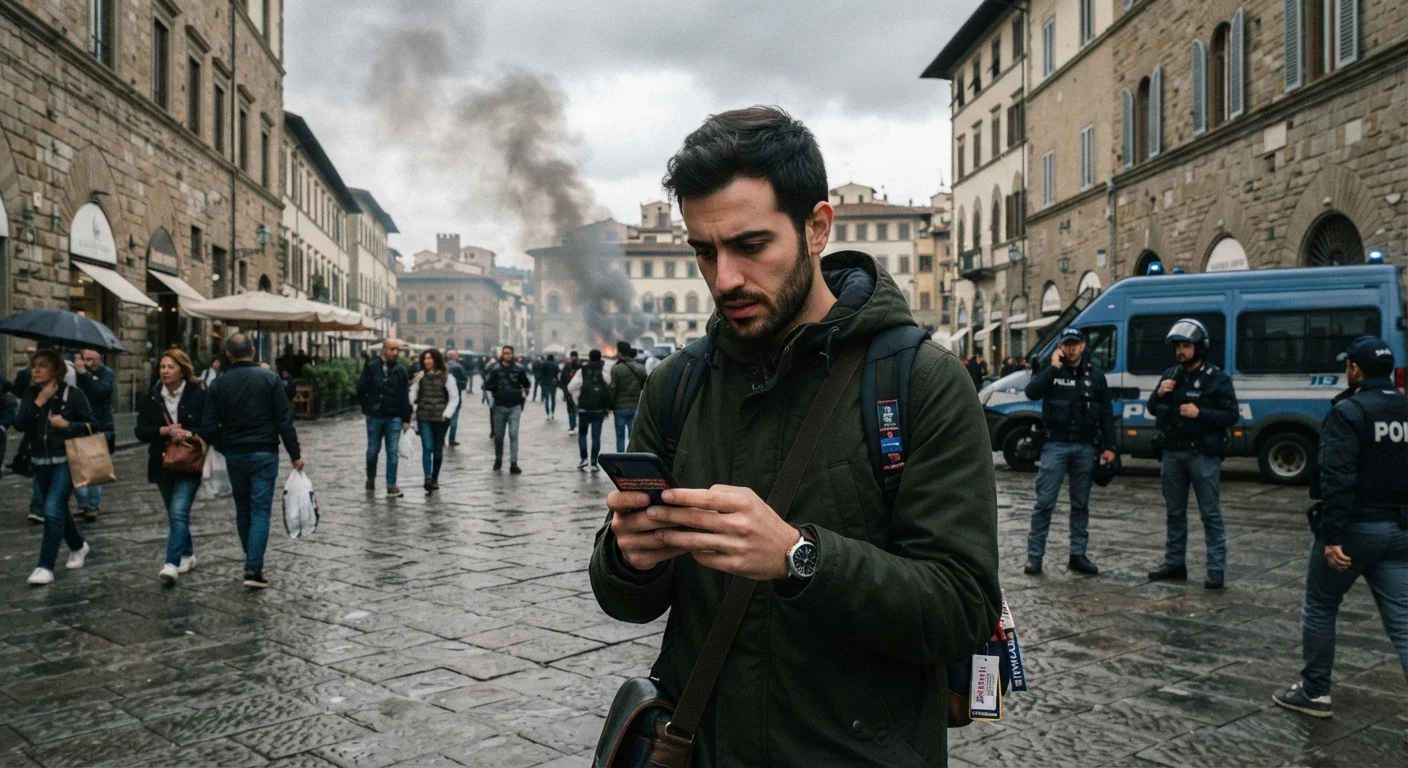
Photo credit: QuickInsights.net
In this article
Political situations can shift quickly when you're abroad. Learn how to monitor conditions, assess risk in the moment, and decide when to leave.
Key Takeaways
- Monitor official government travel advisories regularly before and during your trip.
- Enroll in your government's traveler registration program before departing.
- Recognize on-the-ground warning signs: military checkpoints, closed banks, media blackouts.
- Have a pre-planned departure route and communicate it to someone at home.
- Decide early rather than late - evacuation windows can close quickly during unrest.
- Keep emergency documents, cash reserves, and contacts accessible at all times.
Why Political Unrest Is Uniquely Hard to Read
Natural disasters have seasons and forecasts. Political unrest doesn't follow a schedule. It can simmer for months, then spike in a single afternoon. That unpredictability is what makes it particularly disorienting for travelers - you can arrive in a calm city and find it transformed within days. Unlike weather risk, which you can largely assess before departure, political risk requires active monitoring throughout your trip. See how natural disaster risk differs for a useful contrast in risk-assessment approaches.
The other complication is that political situations are highly localized. A country can be simultaneously hosting international tourists in one region while experiencing civil unrest in another. Understanding this granularity - rather than treating a country as a single data point - is what separates informed travelers from anxious ones.
U.S. State Department Travel Advisories
Provides tiered, country-level risk assessments and updates during evolving situations.
Smart Traveler Enrollment Program (STEP)
Registers your trip with the nearest U.S. embassy so you can receive alerts and be located in emergencies.
Local SIM Card or International Data Plan
Maintains connectivity for receiving alerts and communicating with contacts without relying on Wi-Fi.
Offline Maps App (e.g., Maps.me or downloaded Google Maps)
Provides navigation when internet access is cut or unreliable during unrest.
Emergency Cash Reserve in Local Currency
Covers transportation, accommodation, or bribes-of-last-resort when ATMs and card systems go down.
Travel Insurance Policy with Evacuation Rider
Covers medical evacuation and trip interruption costs that can reach tens of thousands of dollars.
How to Prepare Before You Leave
The best time to prepare for political instability abroad is before you board. Start with a realistic read of your destination's context: review the full text of your government's travel advisory, not just the tier level. Factor in what's driving any instability - election cycles, economic pressures, territorial disputes - and how that might evolve during your travel window.
Pack your preparation kit accordingly. That means travel insurance with evacuation coverage, offline maps of your destination city, a reliable way to receive local-language emergency alerts, and physical copies of all critical documents stored separately from the originals.
What you will need
For travelers new to international safety planning, foundational travel safety practices are a strong starting point before layering in unrest-specific strategies.
Step-by-Step: From Pre-Trip Registration to the Decision to Leave
The steps below walk you through the full arc of managing political risk - from pre-departure setup through active monitoring and, if needed, the decision to depart early. Each step builds on the last, so the more you complete before arrival, the more options you'll have if conditions change.
Don't Wait for Certainty to Act
Political situations can escalate from tense to dangerous within hours. If your gut and the signals around you suggest things are deteriorating, act on that assessment rather than waiting for official confirmation. Delayed decisions narrow your options. When in doubt, prioritize your physical safety over schedule, sunk costs, or convenience.
Register Your Trip Before You Depart
Before leaving home, enroll in the U.S. Smart Traveler Enrollment Program (STEP) at travel.state.gov. This free service notifies the nearest U.S. embassy or consulate of your presence in a country. In the event of a crisis, the embassy can reach out directly with safety instructions and can help your family locate you. Non-U.S. travelers should use the equivalent program offered by their home government - most countries maintain one.
Share your itinerary, accommodation addresses, and a copy of your passport with a trusted contact at home who can act as your emergency coordinator.
Establish Your Baseline Before Arrival
Research your destination's current political climate using official government advisories and credible international news sources before you arrive. Understand what the advisory level means - not just the headline number, but the reasoning behind it. See how to interpret advisory levels for a detailed breakdown of the tiered system.
Know the difference between structural, long-term instability and acute, event-driven unrest. A country experiencing both requires a different preparation mindset than one facing a single flash point.
Monitor Conditions Actively While You're There
Once in-country, don't assume the situation you researched will hold. Set up news alerts for your destination using a reliable international outlet. Check your home government's travel advisory page every day or two, especially if you're in a country with elevated baseline risk. Pay attention to what local people - hotel staff, vendors, fellow travelers - are saying about the mood in the streets.
Note changes in your immediate environment: increased military or police presence, unusual crowd behavior, businesses closing unexpectedly, or disruptions to transport and banking. These on-the-ground signals often precede official advisory updates by hours or days.
Recognize the Warning Signs That Demand Action
Certain signals should prompt you to seriously consider adjusting your plans or leaving:
- Military checkpoints appearing on previously open roads
- Bank closures or ATM shortages - a sign of economic panic or government restriction
- Internet or phone service disruptions - often imposed deliberately during unrest
- Curfews announced with little notice
- Airports announcing schedule changes or flight cancellations
- Your embassy issuing a security alert or advising a specific area to be avoided
No single signal is definitive, but multiple signals appearing together warrant immediate reassessment. For context on how official risk ratings compare to real-time conditions, see destination risk vs. advisory level.
Know Your Departure Options in Advance
Before any unrest materializes, identify your exit routes. Know the location of the nearest international airport, land border crossings, and the address of the nearest U.S. embassy or consulate. If you're staying in multiple cities, map this for each location.
Keep your passport, travel insurance documents, and an emergency cash reserve - ideally in U.S. dollars as well as local currency - accessible and not buried in checked luggage. If you need to move quickly, you need these items on your person.
Make the Decision to Stay or Go
This is the hardest part. The decision to cut a trip short involves real financial and emotional costs, and uncertainty makes it easy to rationalize waiting. But the calculus is asymmetric: leaving a day early costs you time and money; staying too long in a deteriorating situation can cost far more.
Ask yourself three questions: Can I move freely? Is my exit route still open? Am I comfortable with the risk level right now? If the answer to any of these is no, that's meaningful information. Contact your airline or travel insurer to understand your options - many policies include trip interruption benefits for civil unrest.
If you're unsure whether your foundational safety preparation is solid, revisit core travel safety principles before your next trip.
Staying Safe If You Can't Leave Immediately
Sometimes leaving isn't immediately possible - flights are grounded, roads are blocked, or the situation escalates faster than expected. In those cases, shelter in place is a legitimate strategy. Stay indoors, away from windows if there is nearby unrest, and keep your phone charged. Contact the nearest embassy to let them know your location and situation.
Crowds and Protests Are Unpredictable
Even peaceful demonstrations can turn volatile without warning, especially when counter-groups or security forces are present. Avoid positioning yourself near protests, even as an observer. If you are caught near an escalating situation, move calmly away from the crowd - do not film, do not engage, and do not run unless there is immediate physical danger.
Avoid drawing attention to yourself as a foreign national. Dress inconspicuously, avoid discussing politics publicly, and don't photograph security forces, protests, or government buildings - even for personal documentation.
Local Contacts Are an Underrated Resource
Hotel staff, guesthouse owners, and local guides often have real-time situational awareness that no advisory can match. Ask them directly what they're seeing and hearing, and whether they'd advise moving around that day. Their firsthand read on a neighborhood or city is often more current than anything online.
Use this time to finalize your departure plan for when conditions allow. Check airline rebooking policies, confirm your insurance coverage, and coordinate with your emergency contact at home. For guidance on protecting your digital presence during this period, see digital safety while traveling.

Author
Travel Editorial Team
Travel Editorial Team is the collective byline for our editorial team and contributor network. Articles published under this byline or an editorial pen name are researched, written, and reviewed according to our editorial standards for clarity, consistency, and independence before publication.
View all articles →