
ROI vs. Enjoyment: Rethinking Why You Renovate
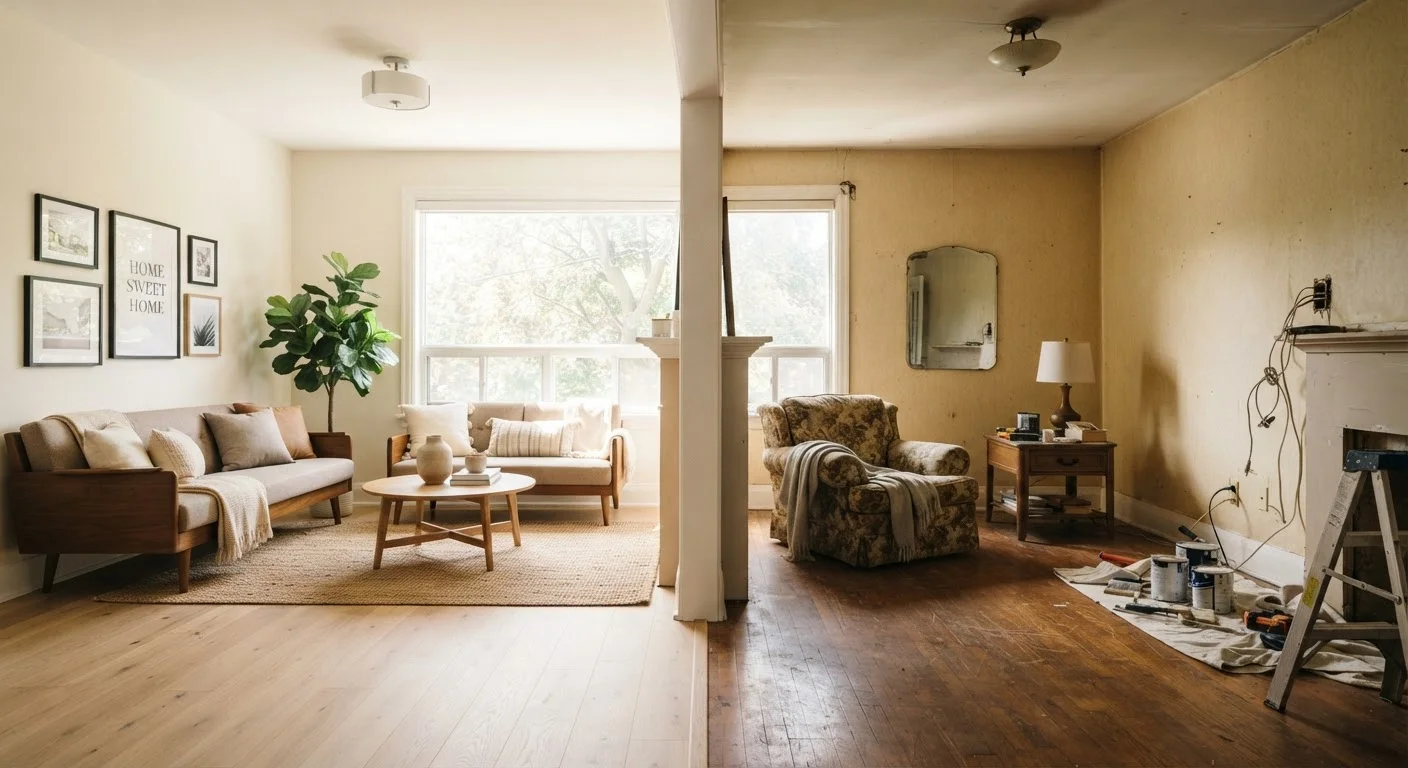
Photo credit: QuickInsights.net
In this article
Should you renovate for resale value or personal satisfaction? Here's how to think through the trade-off before you pick up a hammer.
Key Takeaways
- Most renovations do not fully recoup their cost at resale - ROI rarely reaches 100%.
- Personal enjoyment is a legitimate and often overlooked reason to renovate.
- The longer you plan to stay in your home, the more enjoyment should factor into your decision.
- Some projects serve both goals well; others are better optimized for one or the other.
- Knowing your timeline and motivations before renovating helps prevent costly second-guessing.
The ROI Myth Most Homeowners Believe
There's a widespread assumption that renovating a home is always a smart financial move - that money spent improving a property comes back at sale, plus some. The reality is more nuanced. Most renovations recoup somewhere between 50% and 80% of their cost, and many popular projects fall short of that range.
That doesn't make renovation a bad decision. It means the financial math is only part of the picture. When homeowners frame every project purely as an investment, they often end up making choices guided by resale guides rather than their own lives - renovating a kitchen for hypothetical future buyers while living for years with a layout they dislike.
Understanding what renovation ROI actually measures - and what it doesn't - is the first step to spending wisely. For a detailed look at which projects tend to return the most at resale, see our guide on which home improvements actually add resale value.
~66%
Average cost recouped across common renovation projects
Remodeling Magazine's Cost vs. Value Report has historically found that most mid-range renovation projects return roughly two-thirds of their cost at resale, though this varies significantly by project type and region.
Top 5
Highest-ROI projects are typically exterior improvements
Consistently across Cost vs. Value data, projects like garage door replacement and manufactured stone veneer outperform interior remodels in percentage of cost recouped at resale.
7-10 years
Median homeownership tenure in the U.S.
According to U.S. Census and National Association of Realtors data, Americans typically stay in a home for seven to ten years - long enough for enjoyment-focused renovations to deliver meaningful lived value.
Enjoyment as a Financial Factor
Personal enjoyment isn't the opposite of financial sense - it's part of the equation. Consider the math differently: if a $15,000 bathroom renovation makes your mornings meaningfully better for the next twelve years before you sell, the value of that daily experience is real, even if the resale return is partial.
The longer you plan to stay in your home, the more weight enjoyment deserves. A renovation that fits your household's actual habits - the way your family cooks, relaxes, or works from home - can reduce stress, improve function, and make a house feel genuinely yours.
This is where many homeowners get tripped up: they read that open floor plans appeal to buyers, so they knock out walls without asking whether an open layout fits how they actually live. Our article on open floor plan trade-offs breaks down what removing walls really means for daily life.
“The best renovation is the one that makes the house work better for the people living in it today. Resale is a consideration, not a mandate.”
— Home & Garden Editorial Team, Editorial perspective on renovation decision-making
Projects That Serve Both Goals
Some renovations genuinely thread the needle - they improve daily living while also holding up reasonably well at resale. These tend to share a few characteristics: they address universal needs rather than niche preferences, they improve function over aesthetics alone, and they don't over-improve beyond what the neighborhood supports.
- Kitchen refreshes (not full gut jobs): Updating cabinet hardware, countertops, and lighting can modernize a kitchen without the disruption or cost of a full structural remodel. See our breakdown of kitchen remodel scope to understand what each level actually involves.
- Energy efficiency improvements: Upgrades like insulation, air sealing, and window replacements lower utility bills and improve comfort - benefits you feel immediately. They also appeal to environmentally conscious buyers. Our article on energy efficiency upgrades explains what each one actually does.
- Curb appeal updates: Exterior improvements like fresh paint, landscaping, and entry upgrades create strong first impressions for guests and buyers alike. Our piece on curb appeal offers an honest look at where the impact is real and where it plateaus.
- Bathroom additions: In homes with only one bathroom, adding a second can meaningfully improve daily function and buyer appeal. The specifics depend heavily on your existing layout and market - see our article on bathroom addition resale math for context.
How to Think Through Your Own Decision
Before committing to any renovation, two questions cut through most of the noise:
- How long do I plan to stay? If you're selling within two or three years, lean toward projects with documented market appeal in your area. If you're staying a decade or more, optimize for how you actually want to live.
- Am I renovating for myself or for an imaginary buyer? It's easy to make choices based on what real estate articles say buyers want. But buyers vary, markets shift, and tastes change. Renovating to please a theoretical future buyer while ignoring your household's real needs is a common and frustrating mistake.
A useful middle path: prioritize projects that you would genuinely enjoy and that are unlikely to limit buyer appeal later. Avoid over-personalizing finishes or making structural changes that are expensive to undo.
If you're new to the renovation process altogether, our first renovation project primer walks through planning, budgeting, and hiring from the beginning. For larger multi-room undertakings, planning a whole-home renovation covers sequencing and realistic timelines.
Frequently Asked Questions

Author
Home & Garden Editorial Team
Home & Garden Editorial Team is the collective byline for our editorial team and contributor network. Articles published under this byline or an editorial pen name are researched, written, and reviewed according to our editorial standards for clarity, consistency, and independence before publication.
View all articles →