
Kitchen Remodel Scope: Minor Refresh vs. Full Gut Job
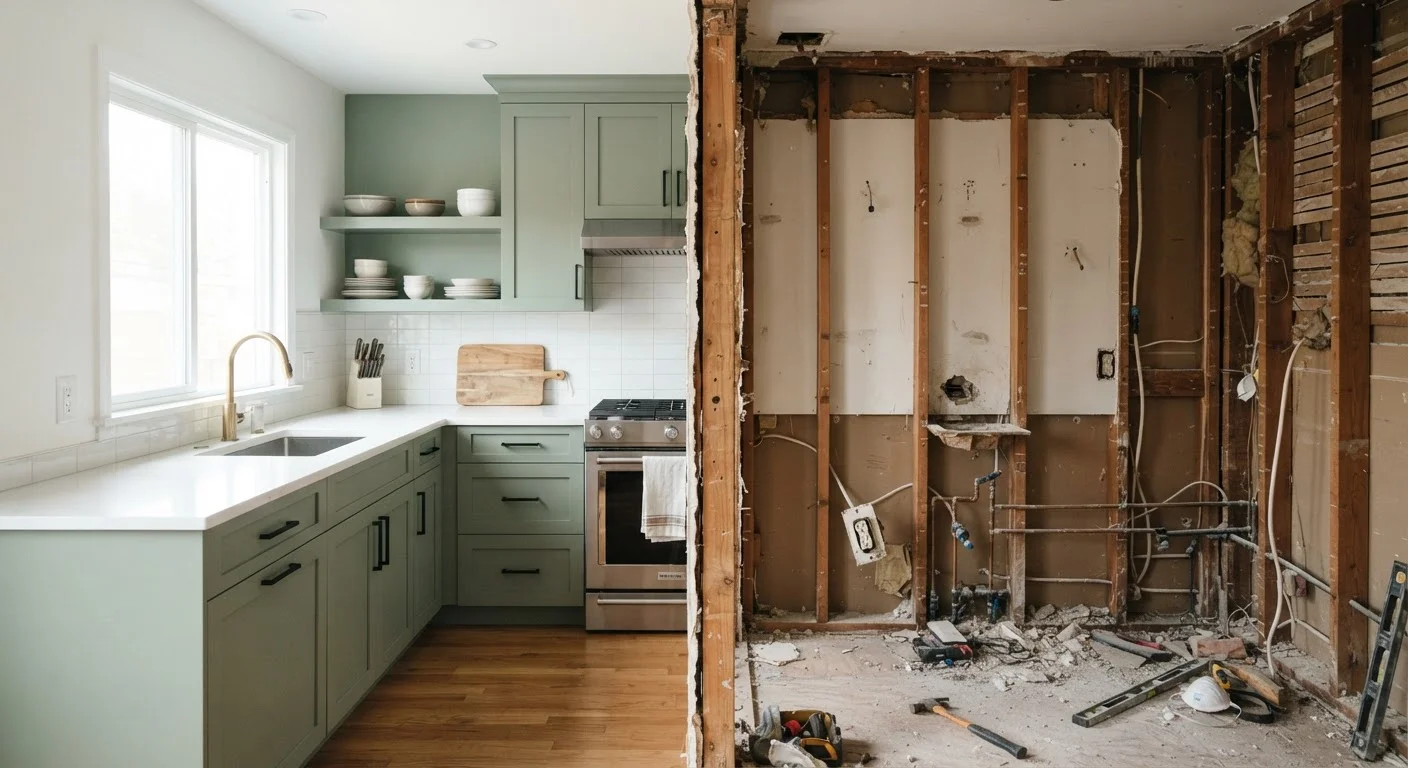
Photo credit: QuickInsights.net
In this article
Understand the real differences in cost, disruption, and return between a cosmetic kitchen update and a full structural remodel.
Key Takeaways
- A minor refresh replaces surfaces and fixtures while leaving the layout, plumbing, and electrical unchanged.
- A full gut remodel strips everything to the studs, allowing structural, plumbing, and layout changes.
- Scope dramatically affects cost, timeline, and the disruption your household will experience.
- Neither approach is universally better - the right choice depends on your home's condition, your goals, and your budget.
- Cosmetic updates can meaningfully improve a kitchen's appearance without the cost or risk of a full gut job.
What Each Scope Actually Involves
A minor kitchen refresh works within the existing footprint. Cabinet boxes stay in place - you might reface or paint them, swap out doors and hardware, and replace countertops. The sink typically stays where it is, appliances slide back into their original spots, and the tile or flooring gets updated without rerouting anything beneath it. Permits are rarely required for purely cosmetic work, though you should verify requirements with your local building department.
A full gut remodel means removing everything down to the studs: cabinets, flooring, drywall, and sometimes the ceiling. This opens the room to address plumbing rough-in locations, upgrade electrical panels and circuits, improve ventilation, and change the layout entirely. It's the only path when you need to move a sink, add an island with plumbing, or open a wall. Permits are almost always required, and licensed tradespeople - plumbers, electricians, and sometimes structural engineers - are typically part of the project team.
| Criterion | Minor Refresh | Full Gut Remodel |
|---|---|---|
| Layout changes | Not possible | Fully possible |
| Plumbing/electrical work | Minimal or none | Extensive, often required |
| Typical timeline | 1-3 weeks | 8-16+ weeks |
| Permits typically required | Rarely | Almost always |
| Kitchen usability during work | Largely maintained | Unavailable for weeks |
| Addresses failing infrastructure | No | Yes |
| Relative cost | Lower | Significantly higher |
| Resale cost-recovery rate | Generally higher % | Generally lower % |
Cost and Timeline: The Real Numbers
Cost ranges vary widely by region, material choices, and contractor rates, so treat any figures as rough orientation rather than quotes. That said, a cosmetic refresh typically runs a fraction of a full remodel - the absence of demo, structural work, and new rough-in plumbing or electrical accounts for the bulk of the savings.
Timeline differences are just as significant. A refresh might take one to three weeks, with the kitchen largely functional throughout. A gut remodel commonly runs eight to sixteen weeks or more, leaving you without a usable kitchen for a substantial period. Setting up a temporary cooking station - microwave, countertop burner, and a mini-fridge - is worth planning in advance. See our guide on keeping renovation budgets grounded for insight into why costs often exceed initial estimates and how to plan more realistically.
~77%
Minor kitchen remodel cost recouped at resale
Remodeling Magazine's Cost vs. Value report has historically shown minor mid-range kitchen remodels recouping roughly 70-80% of project cost at resale.
~54%
Upscale full kitchen remodel cost recouped at resale
Major upscale kitchen remodels typically recover a lower percentage of their cost, reflecting how over-improvement relative to neighborhood comps affects buyer perception.
3-4 months
Average full gut remodel duration
General contractor estimates suggest full kitchen gut remodels commonly run three to four months when accounting for design, ordering lead times, demo, and all trade work.
Resale Value and Return on Investment
Neither remodel type is guaranteed to return its full cost at resale, but the relationship between investment and recovery differs meaningfully between them. Industry data consistently shows that mid-range minor kitchen remodels tend to recoup a higher percentage of their cost than upscale full remodels, partly because buyers discount over-improvements relative to neighborhood norms.
That doesn't mean a gut remodel is a bad financial decision - it means the math is more complex. If your kitchen is genuinely dysfunctional or infrastructure is failing, a full remodel may be necessary regardless of resale math. For a deeper look at which projects reliably add value, our article on home improvements that add resale value is a useful companion read. And if you're wrestling with whether to renovate for your own enjoyment versus future buyers, rethinking why you renovate can help clarify your priorities.
How to Choose the Right Scope for Your Situation
Start by honestly assessing your kitchen's bones. Open a cabinet door - does it hang straight? Check under the sink for signs of water damage. Look at your electrical panel and ask when the kitchen circuits were last updated. If the infrastructure is sound and the layout functions for your household, a refresh is almost always the smarter starting point.
If you discover deteriorating subfloor, outdated knob-and-tube wiring, or galvanized pipes on their last legs, cosmetic work risks covering up problems that will surface - expensively - later. In that case, a gut remodel isn't overreach; it's the responsible choice.
Consider your timeline, too. If this is your first renovation project, a minor refresh offers a less complex introduction to the process. A gut remodel involves managing multiple trades, navigating inspections, and absorbing unexpected discoveries behind walls - a more demanding experience even for seasoned homeowners. Whatever scope you choose, thoughtful sequencing and planning will protect both your budget and your sanity.
Always Verify Local Permit Requirements
What requires a permit varies by municipality. Even some cosmetic work - replacing a window, adding recessed lighting - may trigger a permit requirement in certain jurisdictions. Before any work begins, contact your local building department to confirm what's needed. Unpermitted work can complicate home sales and may create liability if something goes wrong.

Author
Home & Garden Editorial Team
Home & Garden Editorial Team is the collective byline for our editorial team and contributor network. Articles published under this byline or an editorial pen name are researched, written, and reviewed according to our editorial standards for clarity, consistency, and independence before publication.
View all articles →