
Companion Planting: Which Vegetables Grow Better Together
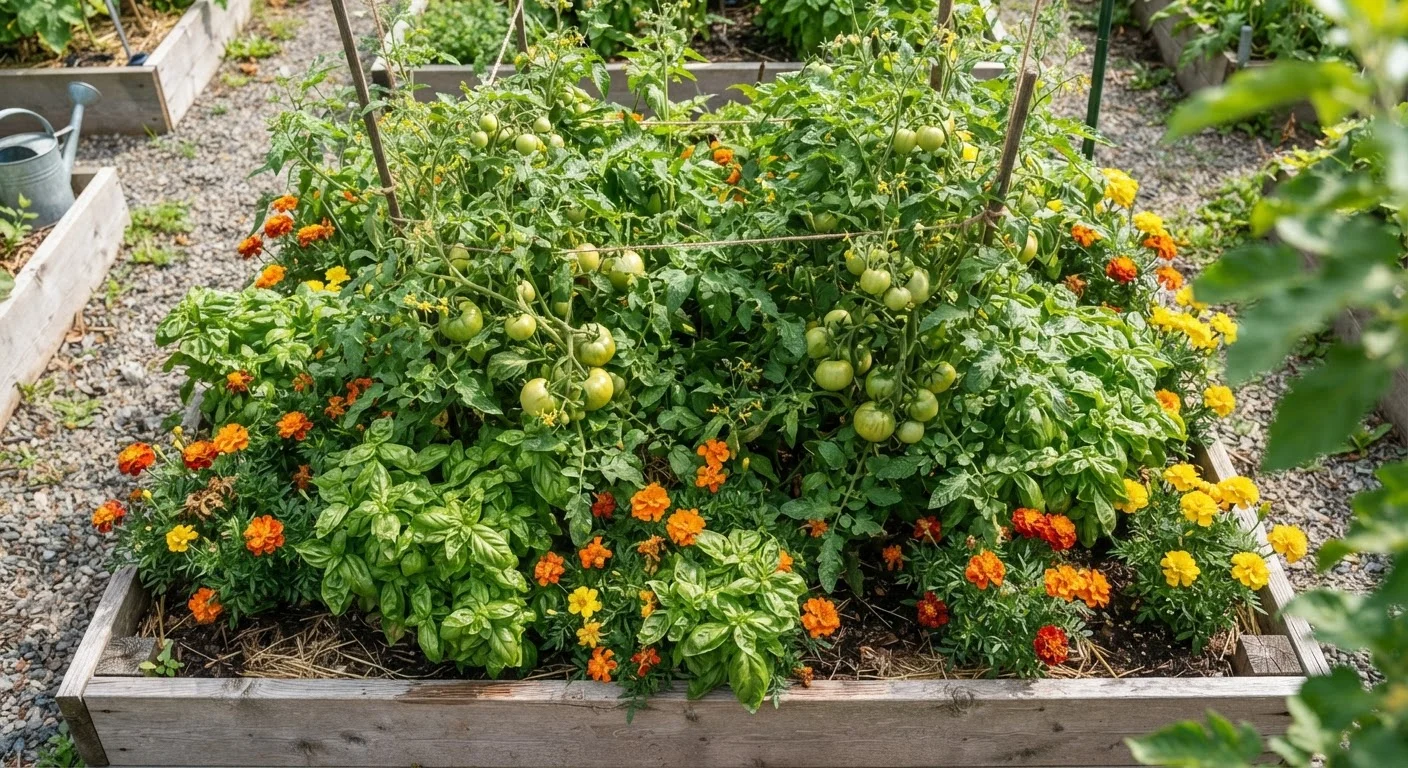
Photo credit: QuickInsights.net
In this article
Some plants support each other's growth while others compete. Learn the principles behind companion planting and which pairings hold up.
Key Takeaways
- Companion planting works through several mechanisms: pest deterrence, nutrient sharing, pollinator attraction, and space efficiency.
- The 'Three Sisters' combination of corn, beans, and squash is one of the best-documented examples of mutually beneficial planting.
- Some plants actively harm their neighbors - knowing which combinations to avoid matters as much as knowing which to seek.
- Not every companion planting claim is backed by science; treat traditional pairings as starting points and observe results in your own garden.
- Soil health and spacing still matter - companion planting works best when the basics are already in place.
How Companion Planting Actually Works
Companion planting isn't magic - it's ecology applied at garden scale. Plants interact with their surroundings through root chemicals, scent, shade, and the insects they attract or repel. Understanding the mechanisms helps you choose pairings intentionally rather than just following lists.
The main ways companion plants support each other include:
- Pest deterrence: Strongly scented plants like marigolds or aromatic herbs can confuse or repel certain insects, reducing feeding damage to nearby crops.
- Nitrogen fixation: Legumes (beans, peas) host bacteria in their roots that convert atmospheric nitrogen into a form plants can use, enriching the soil for neighboring crops.
- Pollinator attraction: Flowering companions draw bees and other pollinators, which improves fruit set in crops like squash and cucumbers.
- Canopy and ground cover: Tall plants can shade heat-sensitive crops; low-growing plants suppress weeds and retain soil moisture beneath taller neighbors.
Before you start pairing plants, make sure your garden's foundation is solid. Healthy soil is the single biggest factor in plant performance - companion planting works best when nutrients, drainage, and pH are already dialed in.
Start With One Proven Pairing
Rather than redesigning your whole garden around companion planting, try one well-known combination this season - tomatoes and basil, or beans and squash are good starting points. Observe how your specific plants perform and build from there. Your own garden's results are the most reliable guide you have.
Classic Combinations That Hold Up
Some pairings have earned their reputation through both tradition and observation. These are solid starting points for any garden:
The Three Sisters
Corn, climbing beans, and squash grown together is arguably the most famous companion planting system in North America, used by Indigenous farmers for centuries. Corn provides a structure for beans to climb; beans fix nitrogen in the soil; squash's broad leaves shade the ground, suppressing weeds and retaining moisture. Each plant addresses a need the others create.
Tomatoes and Basil
This pairing is popular in kitchen gardens worldwide. Basil is often said to repel aphids and thrips near tomatoes, though scientific evidence for this specific effect is still limited. What's clear is that both plants thrive in similar conditions - full sun and well-drained soil - making them practical neighbors regardless of pest effects.
Carrots and Onions
Onion family plants are thought to deter carrot flies, while carrots may discourage onion flies. The interplanting also makes efficient use of space since carrots grow deep while onion bulbs occupy the shallower soil layer.
If you're planning your first vegetable garden, choosing one of these established combinations gives you a manageable way to experiment with the concept without overcomplicating your layout.
Combinations to Avoid
Just as some plants help each other, others compete or actively suppress their neighbors. Knowing which combinations to avoid can prevent disappointing results.
- Fennel and most vegetables: Fennel releases chemicals from its roots that inhibit the growth of many garden plants. It's best isolated in its own container or a separate bed.
- Onions and beans: Members of the allium family (onions, garlic, leeks) are generally thought to stunt the growth of beans and peas. Keep these apart.
- Brassicas and brassicas: Planting cabbage, broccoli, kale, and cauliflower too closely together intensifies competition for nutrients and creates dense conditions that invite disease.
- Tomatoes and fennel: Beyond fennel's general allelopathic effects, tomatoes appear particularly sensitive to it.
It's worth noting that the evidence for some of these negative interactions is also partly traditional. The practical advice is to avoid them until you have reason to experiment - the downside risk is a wasted season. For a broader look at which garden advice stands up to scrutiny, separating garden myths from facts is a useful exercise.
3-in-1
Crops supported simultaneously in the Three Sisters system
Corn, beans, and squash each address each other's growing needs - a centuries-old polyculture system still studied by agricultural researchers.
~20%
Potential reduction in aphid damage near companion plants
Some controlled studies have observed reduced pest pressure when aromatic companion plants are interplanted with susceptible crops, though results vary widely by garden conditions.
Putting It Into Practice
Companion planting is most useful when it's part of a thoughtful garden plan rather than a last-minute arrangement. A few practical guidelines:
- Start simple. Pick one or two pairings and observe what happens over a full growing season before expanding your approach.
- Consider spacing. Companions still need room to grow. Overcrowding reduces airflow and invites disease even if the species are theoretically compatible.
- Match growing conditions. Pairing plants with very different water or sun needs will cause problems regardless of their companion benefits.
- Keep notes. Record what you planted where and what you observed - pest levels, yields, plant health. Your own garden's data is more useful than any general list.
Companion planting principles apply whether you garden in the ground, in raised beds, or in containers. If you're working with raised beds, understanding the trade-offs of your garden setup will help you plan spacing and soil management more effectively. Container growers can also benefit - see container gardening guidance for pairings suited to pots and small spaces.
Companion planting is genuinely useful, but it works alongside good gardening fundamentals - not instead of them. Soil, water, light, and timing still do the heavy lifting.
Frequently Asked Questions

Author
Home & Garden Editorial Team
Home & Garden Editorial Team is the collective byline for our editorial team and contributor network. Articles published under this byline or an editorial pen name are researched, written, and reviewed according to our editorial standards for clarity, consistency, and independence before publication.
View all articles →