
Raised Bed vs. In-Ground Garden: Which Setup Suits Your Yard?
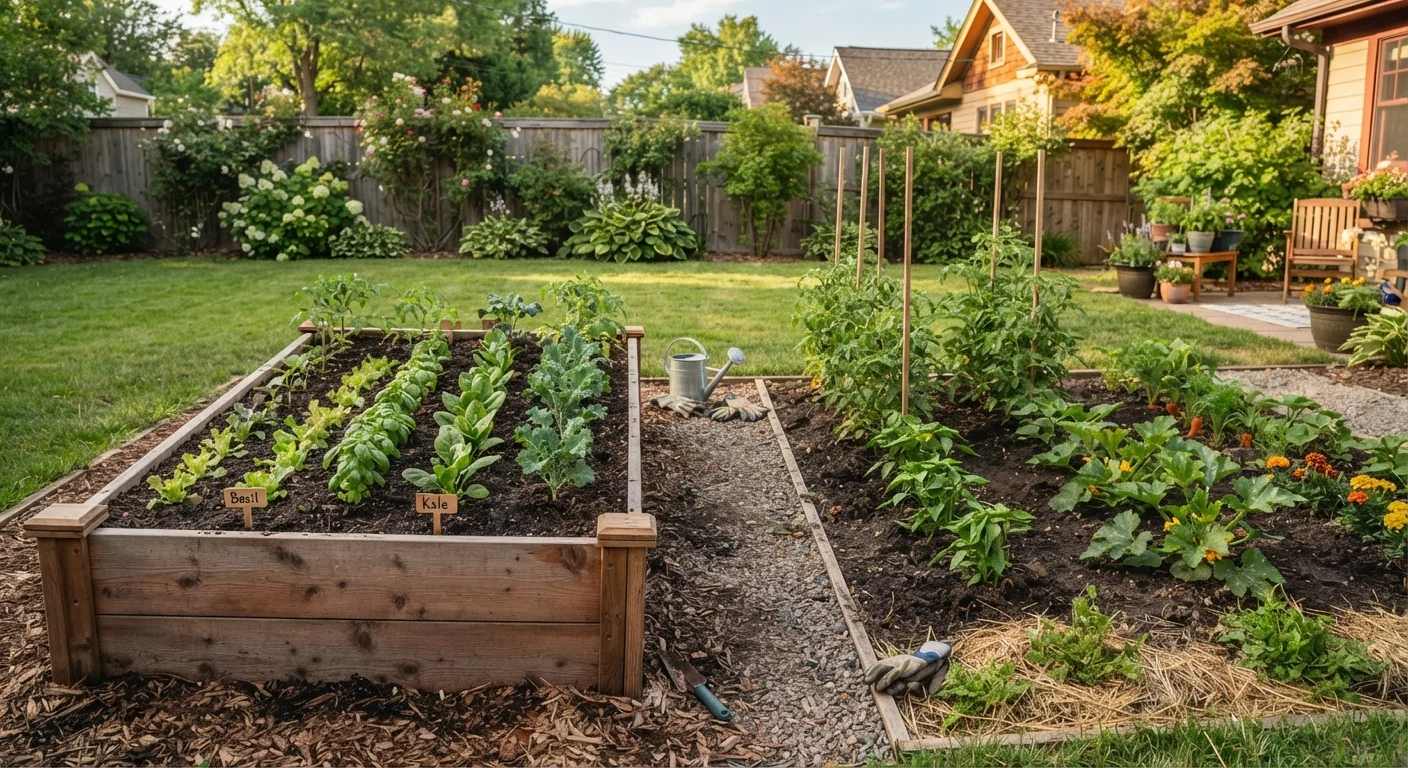
Photo credit: QuickInsights.net
In this article
Raised beds and in-ground plots each have real trade-offs. Compare drainage, cost, soil control, and upkeep to find your fit.
Key Takeaways
- Raised beds offer superior drainage and soil control, making them ideal for yards with heavy clay or compacted ground.
- In-ground gardens cost less to start and can be scaled up more easily than raised bed systems.
- Raised beds tend to warm up faster in spring, extending your growing season by a few weeks.
- In-ground plots rely on and can improve your native soil over time through composting and amendment.
- Accessibility and physical comfort are meaningful advantages of raised beds for many gardeners.
- Both methods can produce excellent results - your yard's specific conditions should drive the decision.
Soil Control and Drainage
Soil quality is arguably the most important factor in any garden's success. In-ground gardeners work with whatever native soil exists beneath their feet. In many American yards, that means clay-heavy, sandy, or nutrient-depleted ground that requires significant amendment before planting becomes worthwhile. Over several seasons, regular composting can improve native soil considerably - but that improvement is gradual. Our soil basics guide explains exactly what to look for and how to start improving what you have.
Raised beds sidestep this problem entirely. You fill the structure with a custom growing mix - typically a blend of topsoil, compost, and amendments - tailored to what you plan to grow. Drainage is almost always superior because the soil never competes with compacted ground below. This matters most in regions with heavy rainfall or dense clay soils where standing water can suffocate plant roots.
| Criterion | Raised Bed | In-Ground |
|---|---|---|
| Startup Cost | Moderate to high | Low |
| Soil Control | Complete - you choose the mix | Dependent on native soil quality |
| Drainage | Excellent in most cases | Varies by native soil type |
| Spring Warm-Up | Faster - earlier planting | Slower in cooler climates |
| Weed Pressure | Lower with proper base barrier | Higher - open to surrounding weeds |
| Accessibility | High - reduces bending and kneeling | Standard - ground-level work required |
| Scalability | Requires new structures to expand | Easy to expand without added cost |
| Long-Term Soil Improvement | Maintained through added amendments | Native soil can improve over seasons |
Cost and Setup
Starting an in-ground garden is among the least expensive ways to grow your own food or flowers. Beyond basic tools - a spade, fork, and hose - you may only need bags of compost and mulch to get started. For gardeners with relatively good native soil, the investment can be quite modest.
Raised beds carry a higher upfront cost. Materials for the structure itself (lumber, galvanized metal, or composite boards) can range widely depending on size and build quality. You'll also need enough growing medium to fill the bed, which adds up quickly for larger or deeper builds. That said, a well-built raised bed can last a decade or more, spreading that cost over many growing seasons. If budget is a constraint, starting with a single small bed is a practical middle ground.
12-24 in.
Typical raised bed height range
Most gardening extension resources cite 12 inches as a functional minimum depth for most vegetables, with 18-24 inches recommended for root crops.
2-3 weeks
Earlier spring planting advantage
University cooperative extension programs commonly note that raised bed soil can warm to planting temperature several weeks ahead of in-ground plots in cooler climates.
6-8 hrs
Daily sunlight both methods require
The USDA and most horticultural guidelines recommend at least six hours of direct sun daily for productive vegetable gardening, regardless of bed type.
Season Length and Growing Conditions
One practical advantage of raised beds is that elevated soil warms up faster in spring than ground-level plots. This can translate to an earlier planting window - sometimes by two to three weeks in cooler climates - and a longer productive season overall. The contained environment also makes it easier to add row covers or cold frames to extend growing even further.
In-ground gardens tend to stay cooler longer in spring but can be more resilient during summer heat waves, since deeper native soil retains moisture better than a shallow raised structure. Plants with deep root systems - think tomatoes, squash, or perennial herbs - can ultimately access a larger soil volume when grown in-ground, which may reduce how often you need to water during dry stretches.
Weed and Pest Pressure
Weeding is one of the less glamorous realities of gardening. In-ground beds are generally more susceptible to weed pressure since they connect directly to surrounding soil where seeds travel freely. Without a physical barrier, persistent weeds like bindweed or grass can infiltrate from the edges and become a recurring chore.
Raised beds offer a meaningful advantage here. The defined border creates a natural visual boundary, and lining the base with landscape fabric or cardboard before filling can block weeds from below. Many gardeners find weeding a raised bed substantially easier and less frequent. Pest management varies more by region and plant choice than by bed type, though raised beds do make it simpler to add physical barriers like netting or row covers. For a broader look at what actually works in the garden, see our piece on common garden myths that might be affecting your approach.
Accessibility, Aesthetics, and Long-Term Flexibility
For gardeners who find kneeling or bending uncomfortable, the height of a raised bed can be genuinely transformative. Even a standard 12-inch-tall bed reduces strain considerably, and taller builds (24 inches or more) can make gardening accessible at near-standing height. This is worth weighing seriously as a long-term consideration, not just a current comfort preference.
Aesthetically, raised beds lend a structured, intentional look to outdoor spaces and integrate well with paths, patios, and landscaping features. They're a natural fit for the kind of thoughtful yard design covered in our guide to low-maintenance outdoor spaces. In-ground gardens offer a more naturalistic appearance and remain easier to reconfigure - expanding, reshaping, or moving a bed doesn't require rebuilding a physical structure.
If you're just getting started and want a step-by-step path forward, our guide to starting a vegetable garden from scratch walks through both options in a beginner-friendly format.

Author
Home & Garden Editorial Team
Home & Garden Editorial Team is the collective byline for our editorial team and contributor network. Articles published under this byline or an editorial pen name are researched, written, and reviewed according to our editorial standards for clarity, consistency, and independence before publication.
View all articles →