
Your Car's Maintenance Schedule, Explained
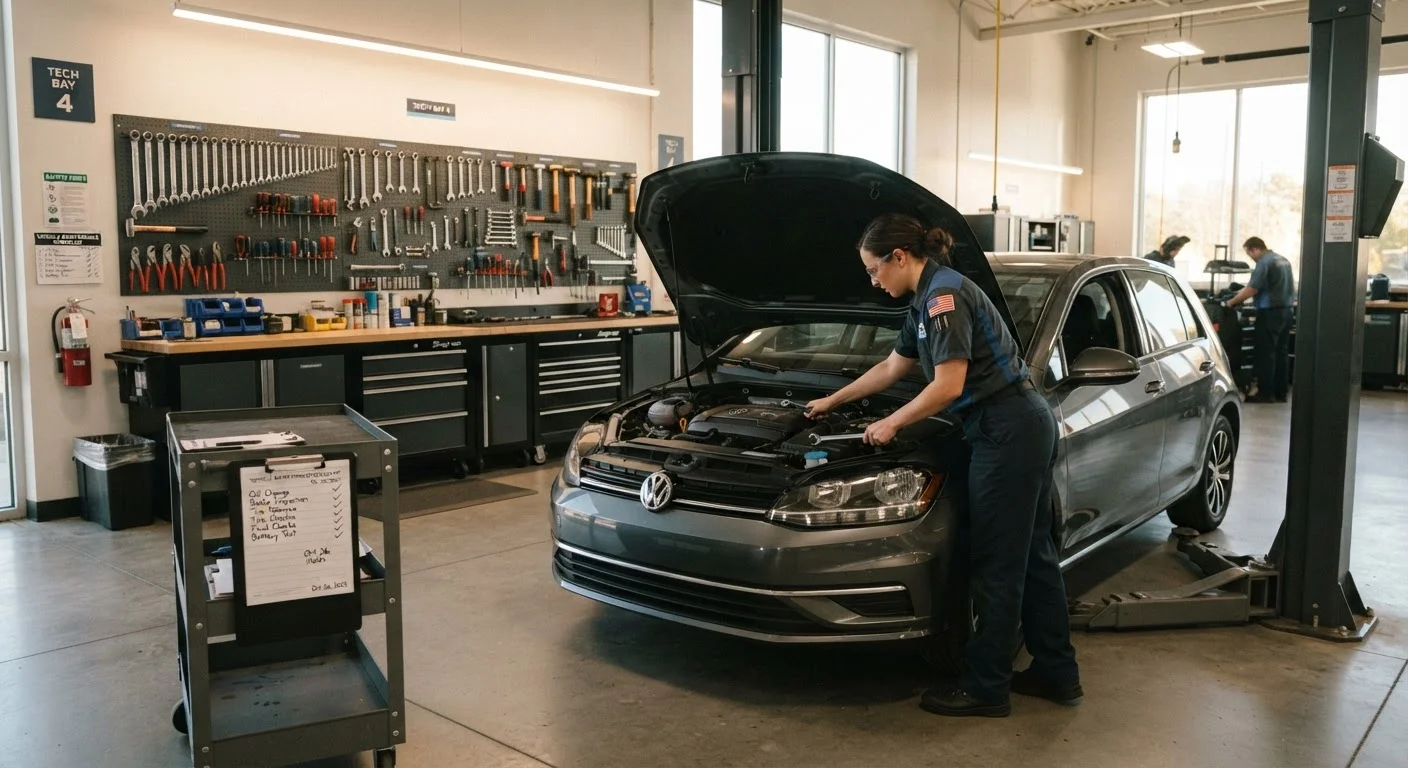
Photo credit: QuickInsights.net
In this article
Understand what each service interval means, why it matters, and how to track your vehicle's maintenance history without confusion.
Key Takeaways
- Your owner's manual contains the definitive maintenance schedule for your specific vehicle - not the sticker on your windshield.
- Maintenance intervals are based on both mileage and elapsed time, whichever comes first.
- Skipping or delaying service doesn't just risk breakdowns - it can void warranty coverage and lower resale value.
- Modern vehicles with oil life monitoring systems can help you time oil changes more accurately than fixed-interval stickers.
- Keeping a written service record is one of the simplest ways to protect your investment over the long term.
What a Maintenance Schedule Actually Contains
A vehicle maintenance schedule is a list of service tasks grouped by interval - meaning the mileage or time at which each task should be performed. Common intervals are every 5,000 miles, 15,000 miles, 30,000 miles, 60,000 miles, and so on, with many tasks recurring at each milestone.
Typical items on a maintenance schedule include:
- Engine oil and filter changes - the most frequent task for most vehicles
- Tire rotation - promotes even tread wear across all four tires
- Air filter replacement - both engine and cabin air filters have separate intervals
- Brake inspection - pads, rotors, and fluid are checked at regular intervals
- Fluid top-offs and replacements - coolant, transmission fluid, brake fluid, and power steering fluid each have recommended change points
- Spark plug replacement - interval varies widely by plug type; iridium plugs often last 100,000 miles
- Timing belt or chain inspection - a critical component with potentially severe consequences if it fails
The specific intervals for each task vary by make, model, and engine type. A compact sedan with a four-cylinder engine will have a different schedule than a diesel pickup truck. This is why your owner's manual - not a generic shop reminder - is the right reference.
The Owner's Manual Is Your Primary Source
Many drivers rely on the sticker a shop places on their windshield after an oil change, but that sticker reflects that shop's recommendation - not necessarily your manufacturer's specification. Manufacturer guidelines are determined through engineering testing for your specific engine and drivetrain. When in doubt, open the manual.
How Intervals Are Measured - and Why Both Mileage and Time Matter
Maintenance intervals are expressed as whichever comes first: a mileage threshold or a time period. For example, an oil change might be specified at "every 7,500 miles or 12 months." If you only drive 4,000 miles a year, the 12-month mark triggers the service before you hit the mileage number.
This matters because fluids degrade from heat cycles, moisture exposure, and oxidation - not just from miles driven. A vehicle that sits for months still experiences chemical breakdown in its oil and coolant. Low-mileage drivers often underestimate their maintenance needs precisely because they're looking only at the odometer.
~5,000-10,000 mi
Typical modern oil change interval
Many manufacturers now specify full-synthetic oil change intervals in this range, compared to the older 3,000-mile guideline - though the correct figure depends on your specific vehicle and oil type.
60,000-100,000 mi
Common timing belt replacement interval
Timing belt replacement intervals vary widely by engine design; failing to replace it on schedule can result in catastrophic engine damage, making it one of the highest-stakes items on any maintenance schedule.
2x
Potential repair cost multiplier from deferred maintenance
Industry estimates suggest that neglected routine maintenance - such as skipped fluid changes or ignored minor leaks - can lead to repair costs significantly higher than the original service would have cost.
If your vehicle is equipped with an oil life monitoring system, it calculates remaining oil life based on actual operating conditions rather than a fixed schedule. This is generally more accurate than a static mileage sticker - but it doesn't replace the full maintenance schedule, which covers many items the monitor doesn't track.
Normal vs. Severe Service: Which One Applies to You?
Most owner's manuals include two maintenance tracks. The normal schedule assumes steady highway driving in moderate temperatures with moderate loads. The severe schedule shortens certain intervals and applies when a driver regularly experiences:
- Frequent trips under five miles, especially in cold weather
- Stop-and-go urban traffic
- Towing or hauling heavy loads
- Driving in dusty, sandy, or muddy conditions
- Extreme heat or extreme cold over extended periods
Research from automotive engineers consistently shows that short-trip driving is particularly hard on engines - the oil never fully reaches operating temperature, allowing moisture and combustion byproducts to accumulate. If your daily commute is a series of short errands rather than highway miles, the severe schedule likely applies even if your total annual mileage is low.
For guidance on how temperature extremes affect your car beyond just the oil, see our article on seasonal car care.
Tracking Your Service History - and Why It Pays Off
A complete service record does three practical things: it helps mechanics diagnose problems faster, it protects you during warranty disputes, and it supports your vehicle's resale value. Buyers and dealers routinely ask for maintenance records, and a documented history signals that a car has been properly cared for.
The simplest approach is a small notebook kept in your glove box. Each time you have work done, note the date, odometer reading, service performed, and where it was done. Digital options - apps, spreadsheets, or automaker portals - work equally well. Our guide on keeping a personal vehicle maintenance log walks through what to record and how to organize it.
If you've recently purchased a used vehicle and don't have its history, a mechanic can perform a general inspection to establish a baseline. From that point forward, you follow the manufacturer's schedule as if starting fresh - accounting for the vehicle's current mileage.
Maintenance is part of a broader picture of long-term ownership. Our overview of everything involved in long-term car ownership covers how maintenance fits alongside insurance, registration, and eventual resale planning.
When Your Dashboard Tells You Something Is Wrong
Scheduled maintenance is proactive - it addresses wear before it causes failure. But vehicles also signal unscheduled problems through dashboard warning lights. These are separate from maintenance reminders and should be taken seriously on their own timeline.
A maintenance minder light (often labeled "Maint Reqd" or shown as a wrench icon) simply means a scheduled service is due. An engine check light, temperature warning, or oil pressure light indicates a condition that may require immediate attention - not just a routine appointment.
Understanding what each light means helps you respond appropriately rather than either panicking or ignoring something urgent. Our reference guide on dashboard warning lights covers the most common ones in plain language.
If a warning light prompts a diagnosis that turns out to be beyond basic maintenance, it may be time for professional service. Our article on when to call a mechanic outlines the situations where DIY has real limits.
Frequently Asked Questions

Author
Autos & Vehicles Editorial Team
Autos & Vehicles Editorial Team is the collective byline for our editorial team and contributor network. Articles published under this byline or an editorial pen name are researched, written, and reviewed according to our editorial standards for clarity, consistency, and independence before publication.
View all articles →