
Signs Your Car Needs a Mechanic, Not a YouTube Tutorial
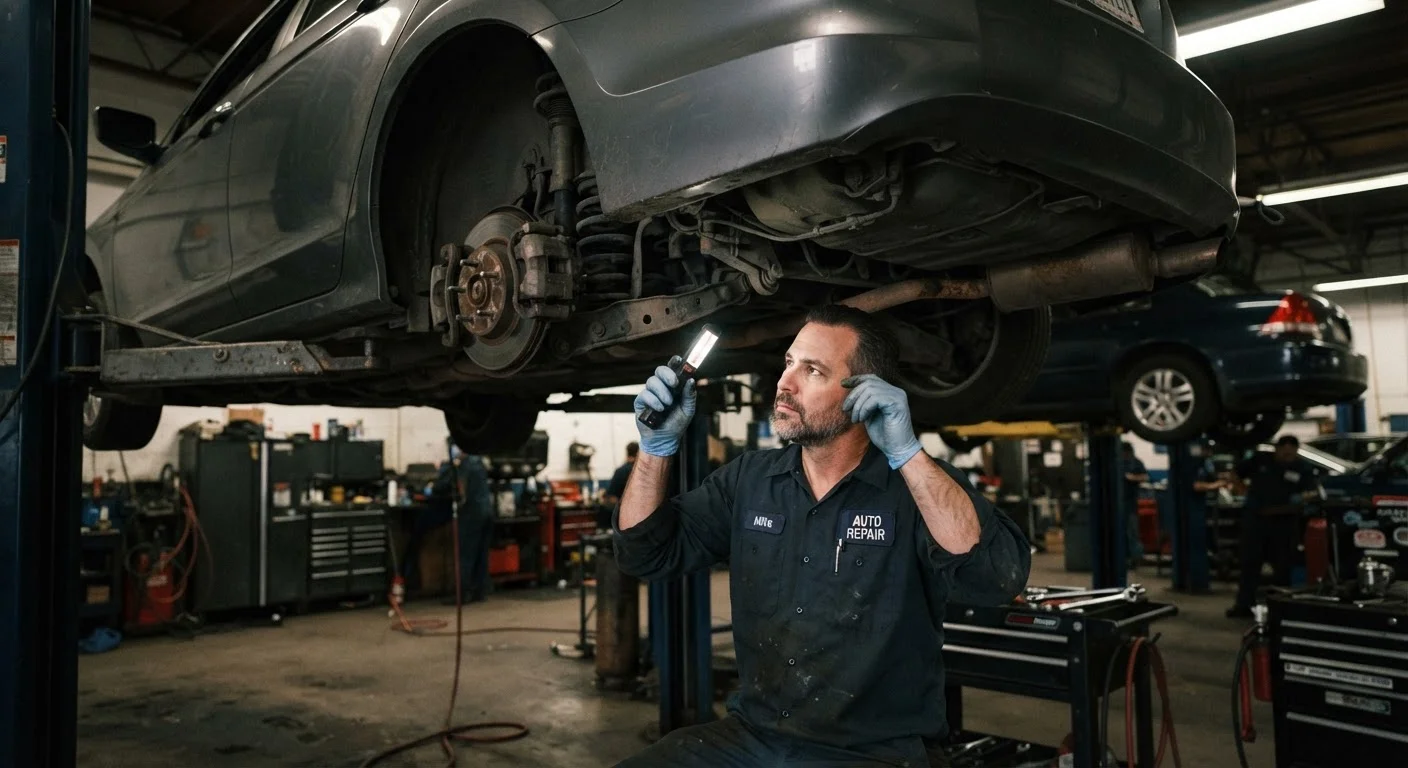
Photo credit: QuickInsights.net
In this article
DIY car care has its limits. Here are the repair and safety situations where professional service is the right call—not a cost-cutting opportunity.
Key Takeaways
- DIY car maintenance is fine for many routine tasks, but certain repairs require professional tools and training.
- Brake system failures, airbag work, and structural damage are safety-critical - always defer to a licensed mechanic.
- Attempting complex repairs without proper equipment can void warranties and create new, costlier problems.
- Knowing your limits protects both your safety and your wallet over the long run.
DIY Has Real Limits - And Real Consequences
Changing your air filter or swapping wiper blades? That's entirely reasonable to handle yourself. But the popularity of automotive tutorial videos has given some drivers confidence that outpaces their actual situation - missing specialized tools, a safe lift, or hands-on diagnostic experience that takes years to build.
The risk isn't just a botched repair. An incorrectly bled brake line, a misrouted airbag connector, or an improperly torqued wheel bearing can put lives at stake. Beyond safety, DIY attempts on complex systems can trigger dealer warranty exclusions, create liability issues after an accident, and often cost more to fix the second time around.
Understanding where the DIY line sits is part of responsible car ownership. For a broader picture of what your vehicle actually needs and when, see our maintenance schedule guide. The list below covers the situations where calling a professional isn't a concession - it's the right call.
Any Work on the Brake System Beyond Pad Swaps
Replacing brake pads on a straightforward setup is a manageable DIY task for someone with basic mechanical experience. But the moment you're looking at brake line replacement, master cylinder work, ABS module diagnosis, or a caliper that won't compress properly, you're in professional territory. Brake hydraulics must be bled to spec and free of air contamination - a mistake here directly affects stopping distance. If your brake pedal feels spongy, sinks to the floor, or the vehicle pulls to one side under braking, have a mechanic inspect the full system before driving further.
A spongy brake pedal or pulling under braking means the entire system needs professional eyes, not just new pads.
Airbag and Supplemental Restraint System (SRS) Repairs
Airbag systems operate under stored electrical charge and contain pyrotechnic components. Disconnecting or reconnecting an airbag incorrectly can cause accidental deployment - which delivers serious force at close range - or leave the system in a state where it won't deploy when needed. If your SRS warning light is on, a clock spring needs replacement, or you're reinstalling components after a collision, this work belongs with a shop that has the proper diagnostic equipment and training to disable and re-enable the system safely.
Airbag systems carry stored charge capable of accidental deployment - this is one area where amateur work is genuinely dangerous.
Transmission Repair or Replacement
Automatic and continuously variable transmissions (CVTs) are among the most complex mechanical assemblies in a modern vehicle. Disassembly requires specialized tooling, a clean working environment, and precise knowledge of clutch pack tolerances, valve body configurations, and fluid specifications. A fluid and filter service is routine maintenance; anything involving internal components, slipping gears, hard shifts, or failure to engage is a job for a transmission specialist. Getting this wrong typically means a completely failed unit - which is far more expensive than the original repair.
Internal transmission work requires specialized tooling and precision that home garages simply cannot replicate.
Suspension and Steering Component Replacement
Control arms, tie rods, struts, and ball joints are safety-critical components that affect how your vehicle handles and how your tires contact the road. Replacing them incorrectly - wrong torque, improper installation sequence, or skipping a required alignment afterward - creates unpredictable handling that may not show up until you're on the highway. Any replacement of steering or suspension parts should be followed by a professional four-wheel alignment. If you notice uneven tire wear, the car drifts without input, or the steering wheel is off-center, have a shop assess it before attempting any component replacement.
Steering and suspension repairs always require a professional alignment afterward - skipping it puts your tires and handling at risk.
Persistent or Intermittent Warning Lights Without a Clear Cause
A generic OBD-II code reader from a parts store can pull fault codes, but it can't tell you why the code set, whether it's a sensor failure or a deeper mechanical issue, or whether multiple codes are related. Intermittent electrical faults - the kind that disappear when you look for them - are particularly difficult without professional scan tools that can monitor live data, record freeze frames, and run bidirectional component tests. Clearing a code without diagnosing the underlying cause is a common DIY mistake that leads to repeat failures and sometimes damages additional components.
A cheap code reader can tell you what tripped - only a professional scan tool can reliably tell you why.
Structural or Frame Damage After a Collision
Modern vehicles use engineered crumple zones and high-strength steel structures that must be repaired to precise factory specifications to protect occupants in a future crash. Straightening or welding structural components without proper frame-measuring equipment and manufacturer repair procedures can leave the vehicle's safety geometry compromised in ways that are invisible to the eye. If your car has been in a collision significant enough to affect body panels, door alignment, or the frame rails, assessment by a certified collision repair facility is not optional - it's a safety requirement.
Post-collision structural repairs done outside factory specs can leave a vehicle unable to protect occupants in a future crash.
The Bottom Line on Knowing When to Step Back
None of this is about discouraging mechanical curiosity. Oil changes, cabin air filter replacements, battery swaps, and similar tasks are well within reach for an attentive DIYer with the right basic tools. The problem is when the scope of a repair quietly expands - a brake job that reveals a seized caliper, an electrical fault that cascades through multiple modules - and the temptation is to keep going rather than stop.
When in Doubt, Get a Diagnosis First
Many independent repair shops will perform a diagnostic inspection for a modest fee - sometimes waived if you proceed with the repair. Getting a professional assessment before you start tearing into a system you're unsure about costs far less than reassembling a component incorrectly and returning it. Use the diagnosis to decide whether the job is genuinely within your skill set.
Deferred or incomplete repairs are consistently more expensive than professional service done right the first time. Our article on the real costs of deferred maintenance walks through how small delays compound into large bills. And if you want to build a record that helps any mechanic diagnose your car faster, keeping a personal vehicle maintenance log is a practical place to start.
This article is for general informational purposes only. Always consult a qualified, licensed mechanic for diagnosis and repair of your specific vehicle. Do not perform repairs that exceed your training, tools, or safe working environment.

Author
Autos & Vehicles Editorial Team
Autos & Vehicles Editorial Team is the collective byline for our editorial team and contributor network. Articles published under this byline or an editorial pen name are researched, written, and reviewed according to our editorial standards for clarity, consistency, and independence before publication.
View all articles →