
Seasonal Car Care: Preparing Your Vehicle for Temperature Extremes
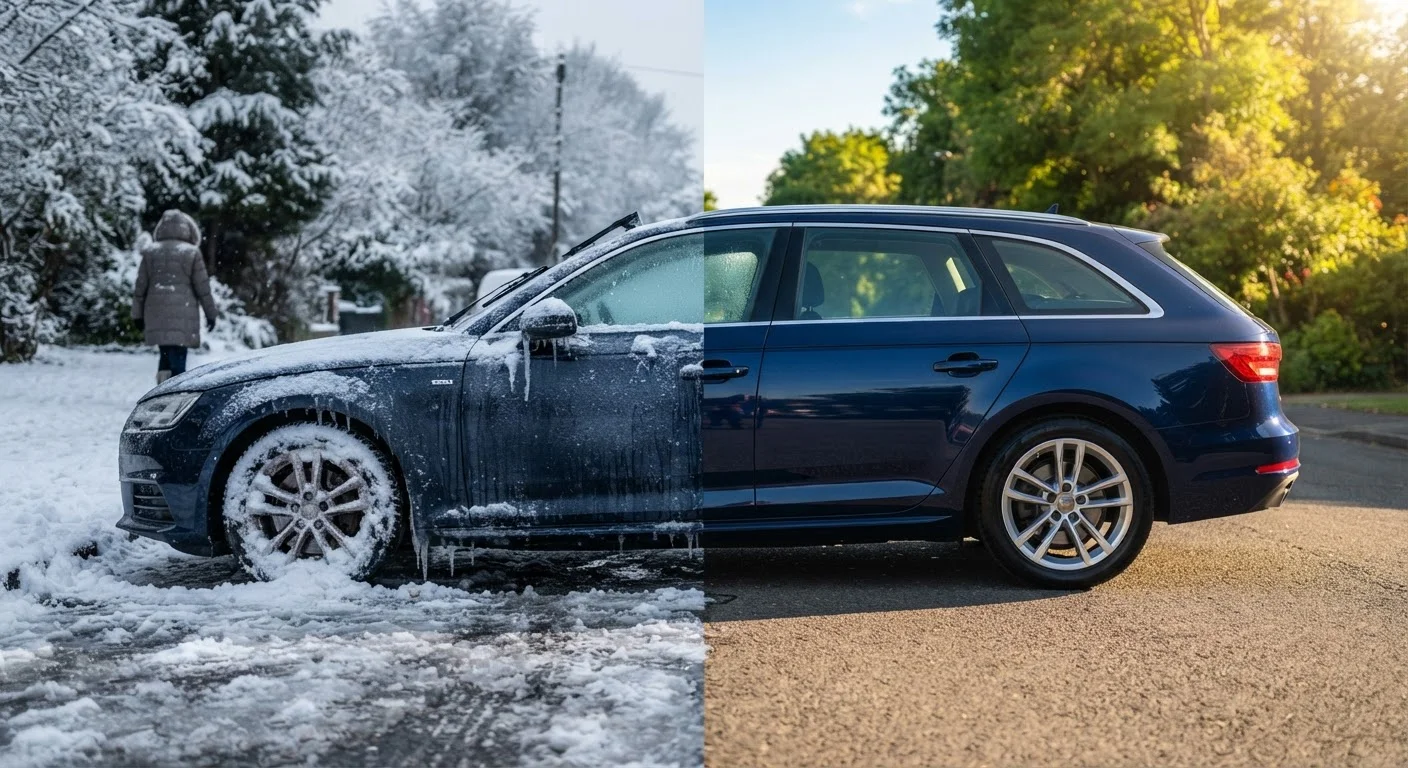
Photo credit: QuickInsights.net
In this article
Extreme heat and cold stress different vehicle systems in different ways. This guide covers what to check before each season changes.
Key Takeaways
- Batteries, tires, and coolant are the three most commonly neglected items before seasonal transitions.
- Cold weather reduces battery capacity and tire pressure simultaneously - check both before the first freeze.
- Extreme heat accelerates fluid degradation and can cause tires to overheat if underinflated.
- Many seasonal checks take under five minutes and can prevent costly roadside failures.
- A consistent seasonal inspection routine supports long-term vehicle reliability and resale value.
Why Seasonal Transitions Are Hard on Vehicles
Temperature swings - not just sustained cold or heat - are what tend to expose weaknesses in aging vehicle components. A battery that performs adequately at 70°F may struggle to crank an engine at 10°F. Tire pressure drops roughly one PSI for every 10-degree Fahrenheit drop in ambient temperature. Coolant that hasn't been serviced can boil over in July or freeze in January.
The good news: most seasonal failure points are predictable and easy to address before they become emergencies. This checklist covers both the winter-prep and summer-prep angles so you can adapt it to your region and climate. For a broader view of how these checks fit into your ongoing upkeep, see our vehicle maintenance schedule guide.
Battery and Electrical
Tires and Wheels
Fluids
Cooling and Heating Systems
Brakes and Safety Systems
Belts, Hoses, and Under-Hood Components
Emergency and Seasonal Supplies
What You'll Need to Work Through This Checklist
Most of these inspections require no special tools - just a few minutes and attention to detail. A handful of items benefit from basic equipment you likely already own or can borrow from a parts store.
Tire pressure gauge
Used to measure tire inflation accurately; digital gauges read more precisely than stick-type gauges.
Multimeter or battery tester
Tests battery voltage to determine whether it can reliably start the engine in cold temperatures.
Antifreeze tester (refractometer or strip tester)
Measures the freeze and boil-over protection level of your coolant mixture.
Tread depth gauge or quarter coin
Provides a quick, accurate read of remaining tire tread before a season of demanding conditions.
Flashlight or work light
Allows inspection of underhood components and the underside of the vehicle in low-light conditions.
Terminal cleaning brush
Removes corrosion from battery terminals to maintain a solid electrical connection.
Cold Weather Kills Marginal Batteries Fast
A battery that tests at 70-80% capacity may start your car fine through summer but fail entirely on the first cold morning. Battery capacity can drop by 30-50% at temperatures near 0°F. If your battery is three or more years old and hasn't been load-tested recently, test it before winter - not after the first no-start event strands you.
Understanding the Risks at Each Extreme
Winter risks: Cold thickens engine oil, reduces battery voltage output, and causes rubber seals and hoses to harden and crack. Road salt and moisture accelerate corrosion on brake lines, exhaust components, and underbody surfaces. Visibility problems - fogged or iced windows, degraded wiper performance - add a direct safety dimension.
Summer risks: Heat breaks down motor oil more quickly, stresses the cooling system, and causes belts and hoses to swell and degrade. Underinflated tires in summer heat build up internal pressure unevenly, increasing blowout risk at highway speeds. Air conditioning systems that sat dormant over winter may have slow refrigerant leaks that only surface when demand is highest.
These checks are part of what separates vehicles that reach 200,000 miles from those that don't. Our article on habits that extend vehicle life covers the year-round dimension of that equation. And if you're thinking about ownership costs holistically, everything involved in long-term car ownership puts seasonal maintenance in a larger financial context.
Don't DIY Brake or Fuel System Work
This checklist covers visual inspection of brake components and fluid levels - that's appropriate for most drivers. Any actual repair involving brake calipers, rotors, brake lines, or fuel system components should be performed by a qualified mechanic. Improperly serviced brakes are a direct safety hazard. If you're unsure what you're looking at, have a professional inspect it.

Author
Autos & Vehicles Editorial Team
Autos & Vehicles Editorial Team is the collective byline for our editorial team and contributor network. Articles published under this byline or an editorial pen name are researched, written, and reviewed according to our editorial standards for clarity, consistency, and independence before publication.
View all articles →