
Warning Lights on Your Dashboard and What They're Actually Telling You
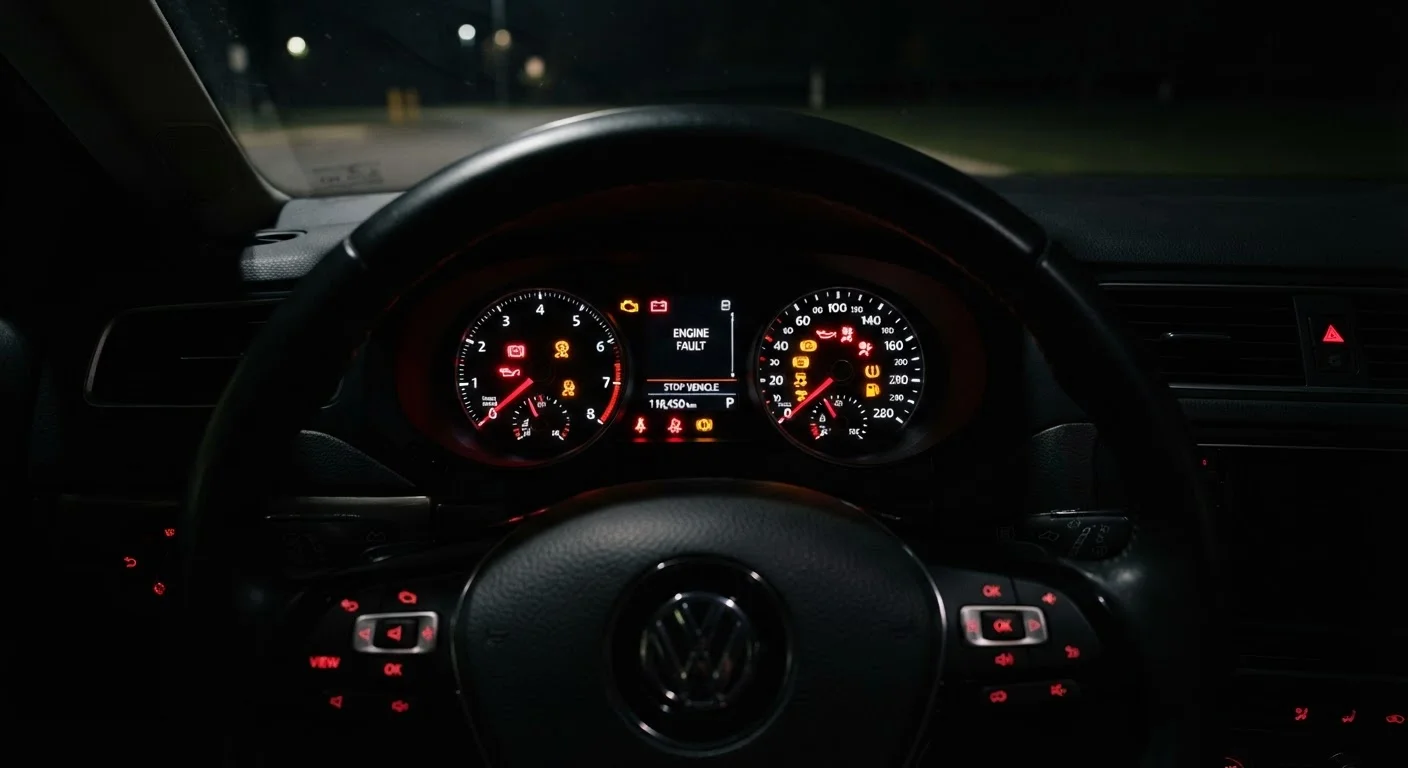
Photo credit: QuickInsights.net
In this article
A plain-language reference to the most common dashboard warning lights, what triggers them, and when to act quickly versus monitor calmly.
The Color Code: How Urgent Is That Light?
Modern vehicles use a three-tier color system to communicate severity. Understanding this system is the first step to responding correctly - not every light demands that you pull over immediately, and not every light can be safely ignored.
| Red light meaning | Stop - immediate action required |
| Amber light meaning | Caution - service needed soon |
| Green/blue light meaning | System active - informational only |
| Fault code storage | Most vehicles store codes retrievable via OBD-II scan |
| TPMS inflation threshold | Typically triggers at 25% below recommended PSI (U.S. NHTSA TPMS standard) |
| Overheating damage risk | Cylinder head warping can occur within minutes of critical overheating |
- Red: Stop-level urgency. A red warning light signals a condition that can cause immediate engine damage, safety failure, or personal injury. Pull over safely as soon as conditions allow and do not drive until the issue is addressed.
- Amber or Yellow: Caution-level. The vehicle has detected a problem that needs attention but is not typically causing immediate harm. Schedule a service appointment within a reasonable timeframe - days, not weeks.
- Green or Blue: Informational. These simply confirm that a system is active - high beams, turn signals, cruise control. No action required.
A few lights, particularly those tied to emissions or driver-assist systems, appear in white or orange on some vehicles. Always consult your owner's manual for model-specific meanings, since the same symbol can carry slightly different implications across manufacturers.
Red Lights: Act Immediately
These lights indicate conditions that can cause rapid mechanical damage or a safety emergency. If any of the following appear while driving, reduce speed, activate your hazard lights, and stop when it is safe to do so.
- Oil Pressure Warning (oil can icon): The engine is not receiving adequate oil pressure. Continuing to drive risks severe engine damage within minutes. Turn off the engine and check oil level only after it has had a chance to cool.
- Engine Temperature Warning (thermometer in liquid): The coolant temperature is critically high. Stop the vehicle, turn off the engine, and do not open the radiator cap. Overheating can warp cylinder heads - a repair that runs into thousands of dollars.
- Battery or Charging System Alert (battery icon): The charging system has failed. The vehicle is running solely on battery reserve, which typically lasts 30-60 minutes. Minimize electrical load and get to a service location promptly.
- Brake System Warning (exclamation mark in circle, or BRAKE): If this appears while the parking brake is fully released, it may indicate low brake fluid or a hydraulic failure. Do not drive without verifying the cause. Brake failure is a direct safety hazard.
When to Call Roadside Assistance Instead of Driving
If a red warning light appears alongside unusual sounds, burning smells, smoke, or a sudden loss of braking or steering response, do not attempt to drive to a shop. Call roadside assistance or emergency services and wait for help. Driving a compromised vehicle can turn a mechanical problem into a safety emergency. Many auto insurance policies include roadside assistance as an add-on - check your coverage before you need it.
Amber Lights: Schedule Service Soon
Amber warnings do not always require stopping, but they should not be dismissed. Ignoring them long enough typically converts a minor repair into a major one.
- Check Engine Light (engine outline): The most misunderstood light on any dashboard. It can trigger for something as minor as a loose gas cap or as significant as a catalytic converter failure. A diagnostic scan - available at most auto parts retailers and repair shops - reads the stored fault code and narrows down the cause. Pair this with your vehicle's maintenance schedule to see if overdue service may be contributing.
- Tire Pressure Monitoring System (TPMS - exclamation mark inside a tire cross-section): One or more tires are significantly under-inflated. Check all four tires with a gauge; the recommended pressure is on the sticker inside the driver's door jamb, not the number on the tire sidewall.
- Transmission Temperature Warning: Transmission fluid is overheating, often from towing, stop-and-go traffic, or low fluid level. Reduce load and check fluid level when safe.
- Electronic Stability Control or Traction Control (car with skid lines): If this light flashes during acceleration or cornering, the system is actively working - that is normal. A steady glow means the system is disabled or has a fault that needs diagnosis.
Special Cases Worth Knowing
A handful of warning lights do not fit neatly into the red/amber scheme but carry real consequences if misread.
- Service Due or Maintenance Required
- This is a mileage-based reminder set by the manufacturer, not a fault indicator. It does not mean something is broken - it means your car has reached an interval where inspection or fluid changes are recommended. Reset it after service per your owner's manual.
- Airbag or SRS Warning (person with inflating circle)
- The Supplemental Restraint System has a fault. In a collision, airbags and seatbelt pretensioners may not deploy correctly. This requires professional diagnosis - do not ignore it.
- Power Steering Warning
- Electric power steering systems display a steering wheel icon, sometimes with an exclamation point. Steering still functions but may require significantly more physical effort. Get it checked before it leaves you unable to turn safely at low speeds.
OBD-II Fault Code
A standardized diagnostic code stored by a vehicle's onboard computer when it detects a system fault. Technicians and scan tools read these codes to identify the source of a warning light.
TPMS
Tire Pressure Monitoring System - a sensor network that alerts the driver when one or more tires drops significantly below the recommended inflation pressure.
SRS
Supplemental Restraint System - the combined network of airbags and seatbelt pretensioners designed to protect occupants in a collision. A fault in this system can prevent proper deployment.
Coolant
A liquid that circulates through the engine and radiator to regulate operating temperature. Low or degraded coolant is a common cause of engine overheating.
Catalytic Converter
An emissions-control device in the exhaust system that converts harmful gases into less harmful compounds. Failure is one of the more costly triggers of a check engine light.
For vehicles purchased used, unresolved warning lights can affect both safety and resale value. A vehicle history report can reveal whether a car has recurring fault patterns that a seller may not disclose.
What to Do When a Light Comes On
A systematic response prevents both panic and the opposite mistake - ignoring something that needs immediate attention.
- Note the color and symbol. Take a photo with your phone if you can do so safely while parked.
- Check your owner's manual. Every vehicle includes a warning light reference section. It is the most reliable source for your specific make, model, and year.
- Assess symptoms. Is there unusual noise, smell, vibration, or handling change? These clues help a mechanic diagnose faster.
- For red lights: Stop driving. Call a mechanic or roadside assistance. Do not restart and drive on, hoping the light clears.
- For amber lights: Book a diagnostic appointment within a few days. Ask for the fault code in writing - you own that information and it helps if you get a second opinion.
Keep in mind that a vehicle breakdown can affect more than your repair bill. Unresolved mechanical issues may have implications for coverage eligibility under your policy - something worth reviewing in your auto insurance coverage documents.
This article provides general educational information about vehicle warning systems. It is not a substitute for diagnosis by a qualified, licensed mechanic. Always consult a certified technician for any concern about your specific vehicle's safety or performance.

Author
Autos & Vehicles Editorial Team
Autos & Vehicles Editorial Team is the collective byline for our editorial team and contributor network. Articles published under this byline or an editorial pen name are researched, written, and reviewed according to our editorial standards for clarity, consistency, and independence before publication.
View all articles →