
How to Read and Understand a Vehicle History Report
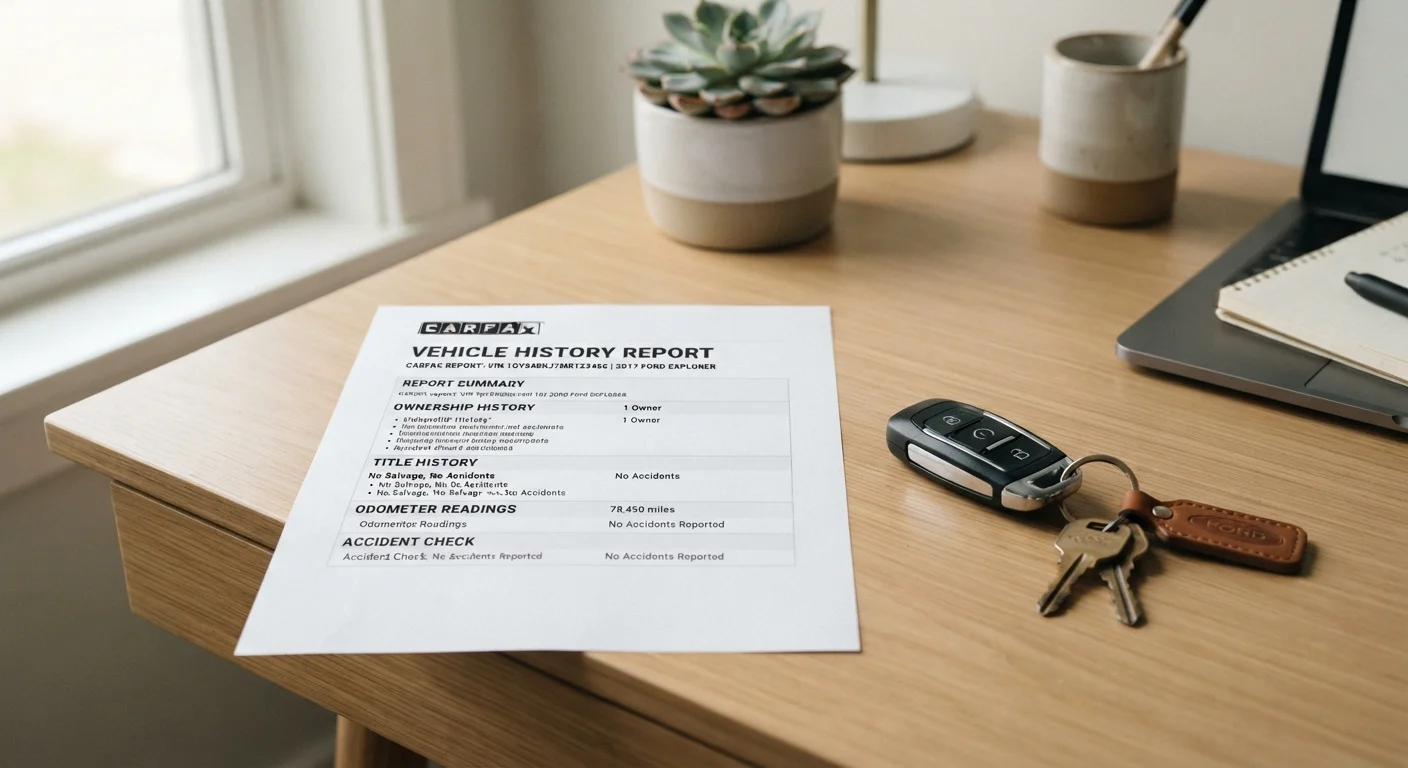
Photo credit: QuickInsights.net
In this article
Vehicle history reports contain more than accident records. Learn how to interpret each section so nothing important slips past you.
Key Takeaways
- A vehicle history report draws from multiple databases - no single report captures every event.
- Title brands like 'salvage' or 'rebuilt' significantly affect a vehicle's insurability and resale value.
- Odometer discrepancies flagged in a report are a strong indicator of potential fraud.
- Service and ownership records add context, but gaps don't automatically mean neglect.
- A history report should complement - not replace - a professional pre-purchase inspection.
What a Vehicle History Report Actually Contains
A vehicle history report aggregates records from state DMVs, insurance companies, auto auctions, salvage yards, rental fleets, and some repair shops. The result is a timeline of documented events tied to a specific VIN - the unique 17-character code assigned to every vehicle built after 1981.
Understanding what the report can and cannot tell you is the first step. Providers compile records from sources that voluntarily contribute data, so incidents handled privately - a cash-settled fender-bender, a repair done at a small independent shop - may never appear. Think of the report as strong evidence, not a complete legal transcript. Pair it with a professional pre-purchase inspection to surface problems that records alone won't reveal.
Reports are typically organized into distinct sections. Here's how to work through each one deliberately.
What you will need
Step-by-Step: Reading Each Section
Work through the report in the order it's presented, flagging anything that warrants a follow-up question to the seller or a closer look from a mechanic.
Verify the VIN Matches the Vehicle
Before reading a single line of the report, confirm the VIN on the report matches the VIN physically on the vehicle. Check the dashboard plate, the driver-side door jamb sticker, and the title document. A mismatch - even a single transposed digit - means the report describes a different vehicle entirely.
Check the Title History and Brands
The title section lists every state where the vehicle was registered and flags any title brands assigned along the way. Common brands include:
- Salvage: Declared a total loss by an insurer
- Rebuilt/Reconstructed: Previously salvage, later repaired and re-titled
- Flood/Water damage: Exposed to significant water intrusion
- Lemon law buyback: Repurchased by a manufacturer under state lemon law
- Junk/Scrapped: Designated for parts or crushing - should not be on public roads
Any brand is a material fact that affects value, insurability, and future financing. Do not overlook a brand because the vehicle looks fine on a test drive.
Review Odometer Readings Over Time
The report logs odometer readings recorded at registration, auctions, and sometimes service visits. Read these chronologically. The mileage should increase consistently over time. Watch for:
- A reading that is lower than a previous recorded reading (odometer rollback)
- Mileage that jumps dramatically between readings in a short period
- A flag labeled "odometer discrepancy" or similar - treat this as a serious concern requiring explanation
Examine Accident and Damage Records
This section lists reported collisions, where the damage occurred on the vehicle, and severity when available. Note whether airbags deployed - airbag deployment typically indicates a significant impact. Also note whether structural or frame damage is mentioned, as frame repairs affect long-term handling and safety even when done correctly.
A single minor rear-end incident is very different from multiple high-severity collisions. Read the detail, not just the count.
Look at Ownership and Use History
This section shows how many owners the vehicle has had, the states it was registered in, and whether it was used as a personal vehicle, rental, lease, or fleet unit. Multiple registrations across different states in a short span can sometimes indicate a vehicle being moved to avoid a lemon law buyback disclosure requirement - a practice sometimes called "title washing."
Review Liens and Open Recalls
Some reports flag whether a lien (a legal claim by a lender) is currently recorded against the vehicle. Buying a car with an open lien can expose you to complications with the title transfer. Confirm with the seller how any lien will be resolved at closing.
Separately, check whether any open manufacturer recalls are listed. Recalls are repaired at no cost at dealerships, but only if the work hasn't been done yet. An open recall isn't a reason to walk away - it's a task to complete promptly after purchase. You can verify recall status independently through the National Highway Traffic Safety Administration's (NHTSA) public database using the VIN.
Red Flags vs. Context: Making Sense of What You Find
Not every negative entry is a deal-breaker, and not every clean report means trouble-free ownership. Interpretation matters.
Title brands require the most caution. A salvage title means an insurer once declared the vehicle a total loss. A rebuilt or reconstructed title means it was subsequently repaired and passed a state inspection - though inspection standards vary widely by state. Both designations typically make a vehicle harder to insure and harder to finance. Before purchasing, confirm the current title status with your state DMV and speak with your insurance provider, because coverage options for rebuilt-title vehicles can differ significantly. For a broader view of how insurance intersects with vehicle history, see our guide on reading an auto insurance policy.
Ownership history adds useful context. A vehicle with many short-term owners warrants a conversation about why it changed hands repeatedly. Fleet or rental history isn't automatically negative, but it typically means higher mileage and potentially harder daily use.
Maintenance gaps aren't always red flags. Many drivers use independent shops or perform their own oil changes - neither of which typically appears in a report. A gap in service records means you don't have documentation, not necessarily that service didn't happen. Ask the seller for any receipts or records they've retained.
Cross-Reference With a Physical Inspection
A history report describes documented events; a mechanic's inspection describes current condition. The two together give you a much clearer picture than either alone. If the report shows a past structural repair, tell your mechanic specifically so they can inspect that area closely. See our guidance on arranging a pre-purchase inspection before finalizing any used-vehicle purchase.
Reading a vehicle history report is similar in spirit to reviewing other consumer documents - like a window sticker on a new car - in that you're decoding structured data to make a more informed decision. The skill transfers.

Author
Autos & Vehicles Editorial Team
Autos & Vehicles Editorial Team is the collective byline for our editorial team and contributor network. Articles published under this byline or an editorial pen name are researched, written, and reviewed according to our editorial standards for clarity, consistency, and independence before publication.
View all articles →