
Reading a Window Sticker: Every Line Decoded
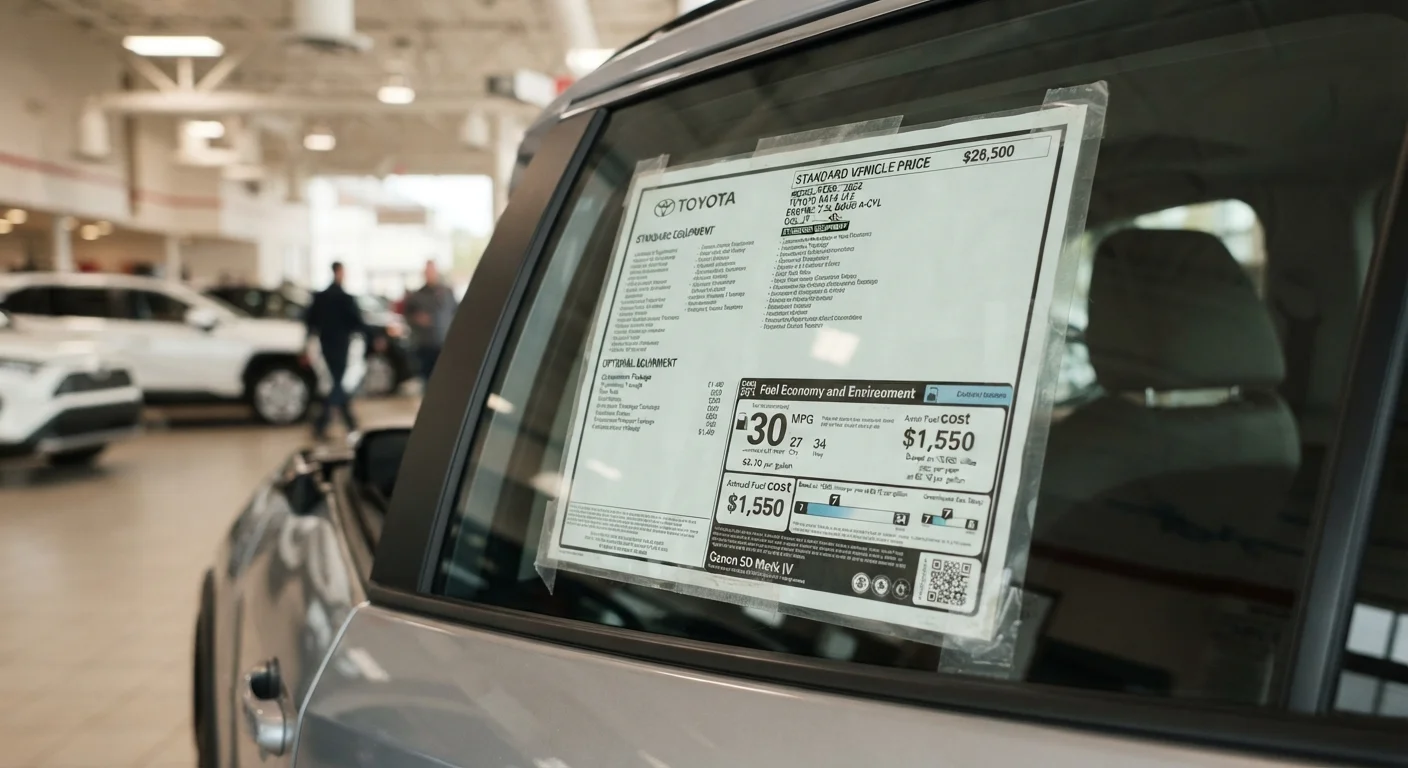
Photo credit: QuickInsights.net
In this article
The Monroney sticker holds a surprising amount of information. Here's what each section means and which numbers to scrutinize.
What the Monroney Sticker Is - and Why It's There
The label taped to the side window of every new car sold in the United States is formally called the Monroney sticker, named after Senator Mike Monroney, whose 1958 Automobile Information Disclosure Act made it mandatory. The law requires manufacturers - not dealers - to produce and attach it, and it is illegal for anyone other than the buyer to remove it before the sale.
That single requirement matters: because the manufacturer prints it, the sticker is not a dealer marketing document. It is a standardized disclosure. Knowing how to read it quickly separates the numbers worth negotiating from the ones that are simply informational. Pair it with a vehicle history report when evaluating any pre-owned vehicle that carries over a manufacturer certified label.
| Legal Name | Monroney Sticker (Automobile Information Disclosure Act, 1958) |
| Who Produces It | The vehicle manufacturer - not the dealership |
| Removal Before Sale | Illegal for anyone except the buyer (U.S. federal law) |
| Fuel Economy Source | U.S. Environmental Protection Agency (EPA) standardized testing |
| Destination Charge | Fixed by manufacturer; same for all buyers of that model |
| Dealer Add-Ons | Listed on a separate addendum sticker, not the Monroney |
Breaking Down Each Section of the Sticker
Vehicle Identification and Base Price
The top of the sticker lists the year, make, model, trim level, and the base Manufacturer's Suggested Retail Price (MSRP) - the price for that trim with no options added. This is the anchor number for any negotiation.
Installed Options and Packages
Below the base price, each factory-installed option or package is listed with its individual price. Common items here include technology packages, premium audio, towing prep, and paint upgrades. Add these to the base price and you get the total vehicle price before destination. Scrutinize this section carefully: some options are bundled in packages where you pay for features you don't want in order to get one you do.
Destination and Delivery Charge
This is a federally regulated line item representing the cost to ship the vehicle from the factory to the dealership. It is non-negotiable and the same for every buyer purchasing that model, regardless of the dealership's location. Do not confuse this with dealer-added fees, which are separate.
Fuel Economy Ratings
The EPA fuel economy section displays city, highway, and combined miles-per-gallon (or MPGe for plug-in vehicles). These figures come from standardized laboratory tests - real-world results typically vary. The sticker also shows an estimated annual fuel cost, calculated using a fixed assumed price of gasoline and a standard annual mileage figure. Use the combined rating as a comparison tool between vehicles, not as a precise prediction of what you'll spend.
Monroney Sticker
The federally mandated window label on new vehicles, produced by the manufacturer, disclosing price, options, fuel economy, and safety information. Removal before sale (except by the buyer) is illegal.
MSRP
Manufacturer's Suggested Retail Price. The price the automaker recommends the vehicle be sold for, before taxes and fees. It is a suggestion, not a fixed sale price.
Destination Charge
A fixed, non-negotiable fee covering factory-to-dealer shipping costs. It is set by the manufacturer and uniform for all buyers of that vehicle model.
MPGe
Miles Per Gallon equivalent. An EPA metric used to compare the energy efficiency of electric and plug-in hybrid vehicles against gasoline-powered cars.
Addendum Sticker
A secondary label placed by the dealer - not the manufacturer - listing dealer-installed accessories and their prices. Unlike the Monroney, these items are often negotiable.
Combined MPG
An EPA-weighted average of city and highway fuel economy ratings, calculated as 55% city and 45% highway driving. The most useful single figure for comparing fuel costs between vehicles.
Safety Ratings
Many stickers include a section referencing crash-test ratings from the National Highway Traffic Safety Administration (NHTSA) or the Insurance Institute for Highway Safety (IIHS). Not all stickers include full rating breakdowns - you may see a QR code or a prompt to visit the agency's website for complete results. Always look these up independently before buying.
Standard Equipment List
This section inventories what comes standard on the trim - safety systems, infotainment features, seating, powertrain details. It's useful for confirming what's actually included versus what the sales team describes verbally.
Total MSRP
The bottom-line MSRP is the sum of base price, options, and destination. This is the sticker price in common usage. It is not the final cost you'll pay. Taxes, title, registration, and dealer fees are added afterward. For a full picture of what you'll actually owe, see our explanation of what makes up the out-the-door price.
Which Numbers Actually Matter at the Negotiating Table
Not every line on the sticker carries the same weight in a negotiation. The base MSRP and options pricing are starting points - in most market conditions, transaction prices fall somewhere below MSRP for non-scarce vehicles, though high-demand models sometimes sell above it. The destination charge is fixed and should not appear inflated or duplicated in the dealer's fee sheet. If you see a separate "destination" or "freight" line on the dealer's purchase agreement that doesn't match the sticker, ask for clarification.
Dealer-added accessories - window tint, paint sealant, wheel locks - are not on the Monroney sticker. They appear on a separate addendum sticker, often placed next to the original. These items are negotiable, and some can be declined entirely.
Before signing any paperwork, verify that the purchase agreement's itemized price matches the Monroney base price and options. Once you own the vehicle, you'll face another layer of fine print: reading your auto insurance policy deserves the same careful line-by-line attention.

Author
Autos & Vehicles Editorial Team
Autos & Vehicles Editorial Team is the collective byline for our editorial team and contributor network. Articles published under this byline or an editorial pen name are researched, written, and reviewed according to our editorial standards for clarity, consistency, and independence before publication.
View all articles →