
Reading an Auto Insurance Policy Without Getting Lost
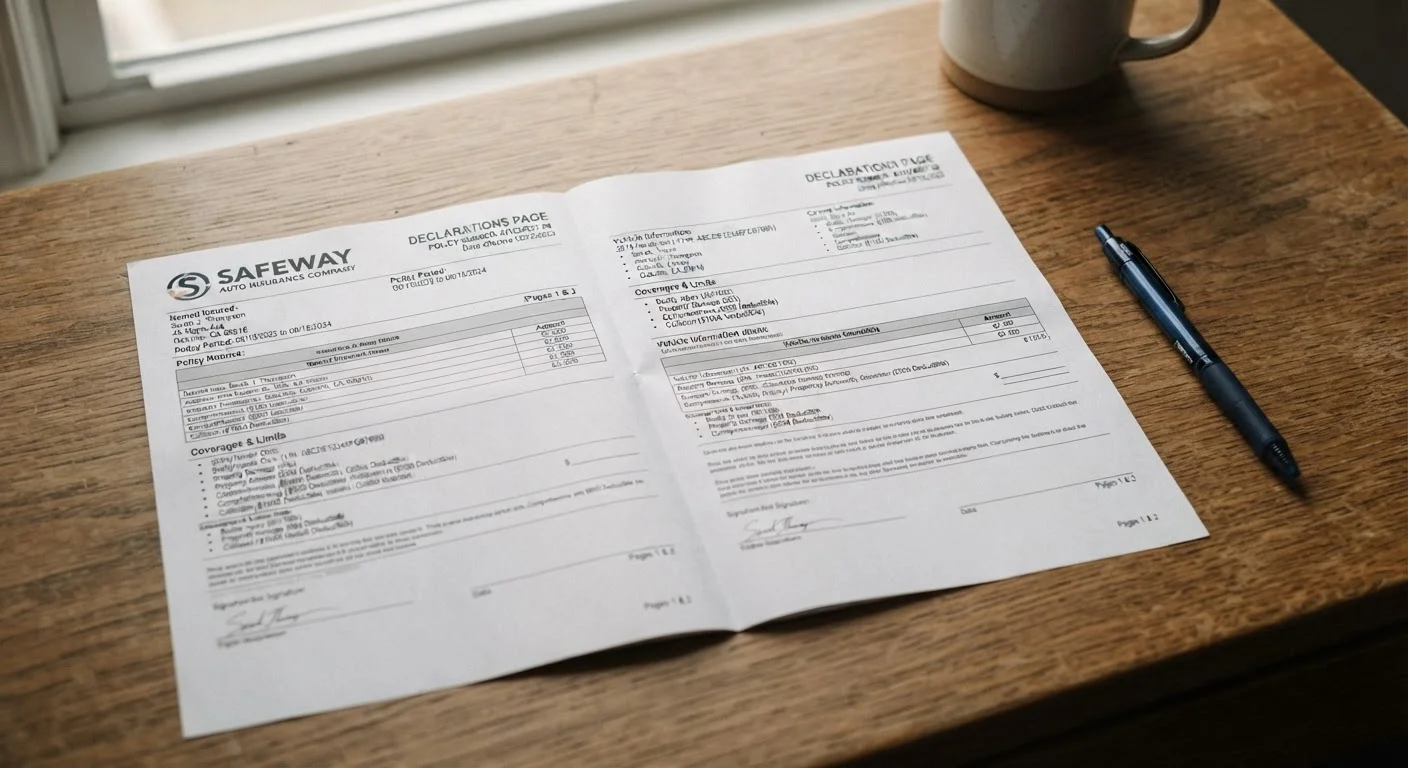
Photo credit: QuickInsights.net
In this article
Declarations page, exclusions, endorsements — learn what to look for and what the fine print actually means before signing.
Key Takeaways
- The declarations page summarizes your coverage limits, deductibles, and premium in one place - always start here.
- Exclusions define what your policy will not pay for, and they deserve as much attention as coverage descriptions.
- Endorsements are add-ons that modify your base policy - some expand coverage, others restrict it.
- Matching your coverage limits to your actual financial exposure is more important than choosing the lowest premium.
- Policy language is standardized enough that learning a few core terms unlocks most of what you'll encounter.
What You'll Need Before You Start
Reading a policy isn't passive browsing - it's an active review. Gather the materials below before you begin, and you'll move through the document faster and with more confidence.
What you will need
Full Policy Document
The complete contract - not the summary card - is the only document that contains exclusions, conditions, and endorsements.
State Insurance Department Website
Provides consumer guides on required minimums, your rights during claims, and how to file a complaint.
Notepad or Digital Notes App
Track questions, flagged sections, and items to confirm with your agent during review.
If you don't have a physical copy, most insurers provide a downloadable PDF through their online portal. Request one before your review session so you can annotate or highlight as you go. For plain-language definitions of terms you encounter, bookmark the Auto Insurance Terms Glossary - it covers deductibles, subrogation, underinsured motorist coverage, and more.
How to Work Through the Policy Step by Step
Auto insurance policies follow a predictable structure across most insurers. Learning that structure means you're never reading blind. Follow these steps in order - they mirror the document's own layout and build your comprehension progressively.
Read the Declarations Page First
The declarations page - often called the "dec page" - is typically the first one or two pages of your policy. It summarizes the essentials: named insured (the policyholder), covered vehicles with their VINs, policy period, coverage types, per-occurrence and per-person limits, deductibles, and the total premium.
Verify every field. Confirm the correct vehicle is listed, the policy dates are current, and the coverage limits match what you believe you purchased. This page is also what a claims adjuster will reference first, so errors here matter.
Understand the Coverage Sections
After the declarations page, the policy body describes each coverage type in detail. Common sections include:
- Liability - pays others for bodily injury or property damage you cause. Limits appear as split numbers (e.g., 100/300/100) or a single combined figure.
- Collision - pays to repair or replace your vehicle after a collision, regardless of fault, minus your deductible.
- Comprehensive - covers non-collision events such as theft, fire, hail, or animal strikes, also minus your deductible.
- Uninsured/Underinsured Motorist (UM/UIM) - protects you when the at-fault driver has no insurance or insufficient coverage.
- Medical Payments (MedPay) or Personal Injury Protection (PIP) - covers medical costs for you and passengers regardless of fault. PIP is required in some states.
Note the exact limit for each coverage type. A liability limit of 25/50/25 provides far less financial protection than 100/300/100 - and if damages exceed your limit, you can be personally responsible for the difference.
Read the Exclusions Section in Full
Exclusions are the policy's list of what it will not cover. This is the section most policyholders skip - and the section that generates the most claim disputes.
Common auto policy exclusions include: using a personal vehicle for commercial rideshare or delivery services, intentional damage, mechanical breakdown, racing, and certain types of customized equipment not scheduled on the policy. Read every exclusion, not just the headline. Sub-clauses can create narrow but consequential carve-outs.
Locate and Review Any Endorsements
Endorsements (sometimes called riders or amendments) are attachments that modify the base policy. They may expand coverage - such as adding rental reimbursement or roadside assistance - or restrict it by narrowing an existing provision.
Endorsements are usually listed on the declarations page by form number and appended at the back of the policy. Read each one and cross-reference it with the coverage section it modifies. An endorsement that restricts a coverage type can override language in the main body of the policy.
Review the Conditions Section
The conditions section spells out your obligations as a policyholder and the insurer's obligations to you. Key items typically include: how and when to report a claim, your duty to cooperate with an investigation, subrogation rights (the insurer's ability to sue a third party on your behalf after paying a claim), and cancellation and nonrenewal procedures.
Understanding these obligations prevents avoidable claim denials. For example, many policies require prompt notice of an accident - delays can give the insurer grounds to deny coverage.
Compare Quotes With Full Context
Once you understand how a policy is structured, comparing quotes across carriers becomes much more accurate. Coverage limits, deductibles, and exclusions vary - and a lower premium may reflect thinner coverage rather than better pricing. See how to shop for auto insurance without getting overwhelmed for a practical comparison process.
Once you understand your current policy, you're better positioned to spot coverage gaps that leave drivers exposed after an accident - many of which only become visible when you read the exclusions carefully.
What to Do If Something Doesn't Add Up
Policies sometimes contain errors - a wrong vehicle identification number (VIN), a listed driver who no longer lives with you, or a coverage limit that doesn't match what you requested at purchase. These mistakes can affect how a claim is paid.
If you find a discrepancy, contact your insurer or agent in writing. Document the date, the specific policy section, and the correction needed. Keep a copy of all correspondence. Insurers are generally required to issue an amended declarations page reflecting any agreed changes.
If coverage language is genuinely ambiguous - especially around exclusions - many state insurance departments have a consumer assistance division that can explain your rights. Your state's department of insurance website is a reliable starting point.
When your renewal date approaches, use what you've learned here alongside the auto insurance policy review checklist to confirm your coverage still fits your situation. Life changes - a new vehicle, a new driver in the household, a move to a different ZIP code - all affect what you need.
This article is for general informational purposes only and does not constitute personalised insurance, financial, or legal advice. Coverage terms, exclusions, and regulations vary by provider and by state. Always read your actual policy documents and consult a licensed insurance agent or adviser for guidance specific to your situation.

Author
Autos & Vehicles Editorial Team
Autos & Vehicles Editorial Team is the collective byline for our editorial team and contributor network. Articles published under this byline or an editorial pen name are researched, written, and reviewed according to our editorial standards for clarity, consistency, and independence before publication.
View all articles →