
The Canary Islands: Which Island Fits Which Kind of Traveler
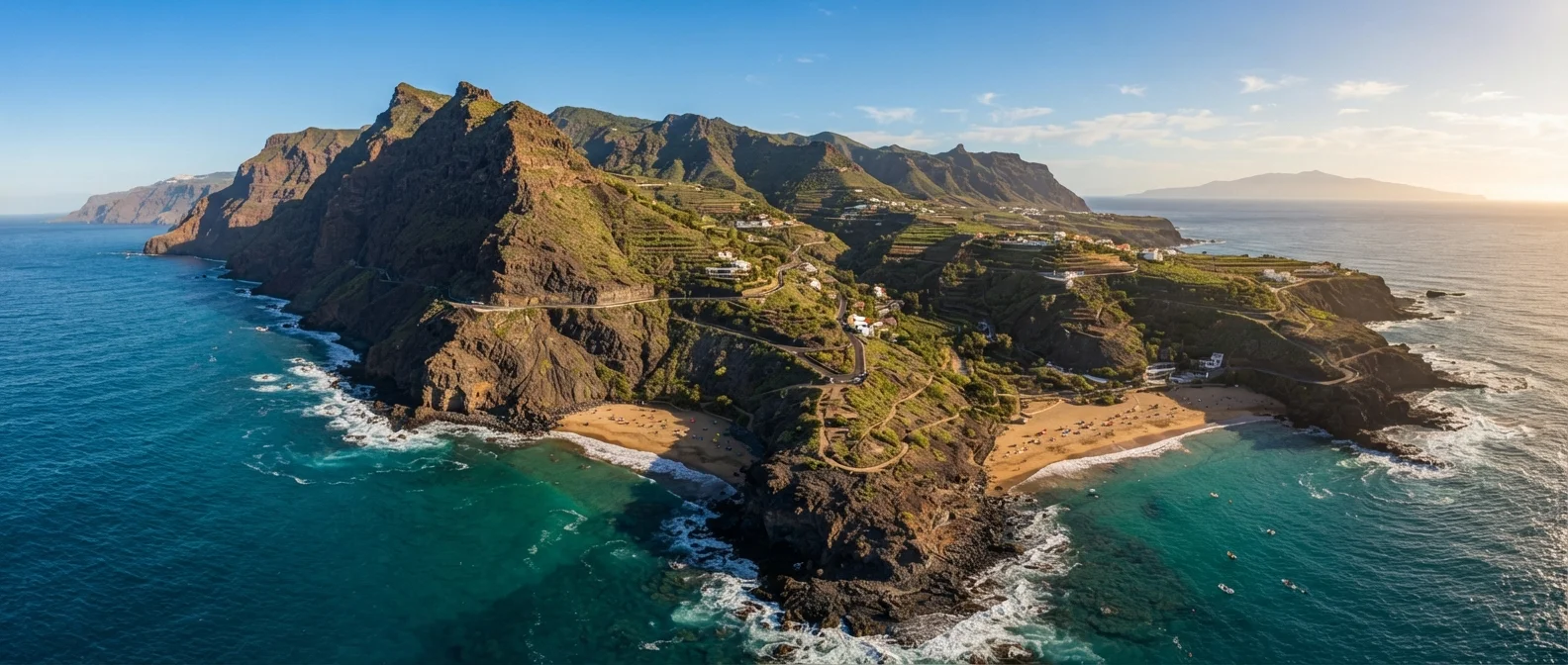
Photo credit: QuickInsights.net
In this article
Gran Canaria, Tenerife, La Palma — each Canary Island has a distinct personality. Here's how to match your interests to the right one.
Key Takeaways
- Tenerife suits travelers who want variety - beach, nightlife, and dramatic volcanic scenery in one trip.
- Gran Canaria is a strong pick for city-focused visitors who also want Atlantic beaches nearby.
- La Palma and La Gomera reward hikers and nature seekers with rugged terrain and minimal crowds.
- Lanzarote's moonlike volcanic landscape makes it one of Europe's most visually striking islands.
- Fuerteventura is the go-to for windsurfers, kitesurfers, and those chasing long stretches of sandy coast.
- All islands share a mild, year-round climate - entry requirements vary, so verify current rules before travel.
Why the Canary Islands Aren't Interchangeable
Located off the northwest coast of Africa, the Canary Islands are Spanish territory - which means EU travel rules apply for Americans visiting under the Schengen short-stay framework. But beyond paperwork, what surprises most visitors is how different each island actually feels. The chain stretches roughly 300 miles, and within that span you'll find desert dunes, ancient laurel forests, active volcanoes, and cosmopolitan resort towns. Treating these seven islands as a single destination means missing what makes each one work for a specific kind of trip.
If you've weighed destinations like Morocco's coastal versus inland regions, you already understand that geography shapes experience. The same logic applies here - only compressed into a set of islands close enough that island-hopping by ferry or regional flight is genuinely practical.
Island by Island: What Each One Delivers
Tenerife is the largest island and the easiest choice for first-timers. It contains Spain's highest peak, Mount Teide, which sits inside a national park and dominates the island's center. The south is resort-heavy; the north is greener, quieter, and culturally richer, with the historic city of La Laguna - a UNESCO World Heritage Site. Tenerife suits travelers who don't want to choose between nightlife, hiking, and beach time.
Gran Canaria punches above its size. Las Palmas de Gran Canaria is a working city with museums, a cathedral, and a genuine local restaurant scene - not just tourist infrastructure. The Maspalomas dunes in the south are a genuine natural spectacle. Gran Canaria works especially well for travelers who want an urban base without sacrificing access to dramatic scenery.
Lanzarote looks unlike anywhere else in Europe. Volcanic eruptions in the 18th century left much of the island covered in hardened lava fields, and the Timanfaya National Park preserves this landscape in an almost surreal state. Artist César Manrique shaped much of the island's architecture to harmonize with its raw terrain. This is an island for travelers drawn to stark beauty over conventional beach tourism.
Fuerteventura is the second-largest island and the flattest, with long, pale-sand beaches that draw windsurfers and kitesurfers from across Europe. The consistent Atlantic trade winds make conditions reliable for watersports much of the year. Those seeking resort relaxation over activity will also find low-key options here.
La Palma earns its nickname - La Isla Bonita - through dense forests, dramatic ravines, and some of the darkest skies in the world, protected by a starlight reserve designation. The Roque de los Muchachos observatory sits at the island's summit. Hikers and astronomy enthusiasts will find it rewarding; travelers seeking nightlife or resort amenities will not.
La Gomera is compact, deeply green, and home to the ancient Garajonay National Park - a UNESCO-listed laurel forest that predates the Ice Age. It's the choice for serious walkers and those wanting genuine remoteness without flying to a far-flung destination. Just as Iceland's seasons demand a deliberate choice, La Gomera demands intentionality - it rewards preparation.
| Tenerife | Gran Canaria | Lanzarote | Fuerteventura | La Palma | La Gomera | |
|---|---|---|---|---|---|---|
| Best for | All-around variety | City + beach combo | Volcanic landscapes | Watersports & beaches | Hiking & stargazing | Remote nature hiking |
| Landscape character | Volcanic peak, varied coasts | Dunes, cliffs, urban areas | Lava fields, craters | Flat, sandy, windswept | Forest ravines, summits | Dense laurel forest |
| Crowd level | High | High | Moderate | Moderate-High | Low | Very low |
| Nightlife & dining | Strong | Strong | Moderate | Moderate | Limited | Very limited |
| UNESCO recognition | La Laguna (city) | None | None | None | None | Garajonay (park) |
| Flight access from US | Easiest (via Madrid/UK) | Good (via Madrid) | Moderate | Moderate | Limited | Very limited |
Practical Considerations Before You Book
Most major Canary Island airports receive direct transatlantic or connecting flights via mainland Spain. Inter-island travel by ferry is affordable and scenic; the Fred Olsen and Naviera Armas lines connect the islands regularly, though schedules shift seasonally - always verify current timetables through official or carrier sources before committing to an itinerary.
Island-Hopping Is More Practical Than It Sounds
Combining two islands in one trip is common and logistically manageable. Tenerife and La Gomera pair well - a short ferry connects them, and the contrast between Tenerife's scale and La Gomera's intimacy is striking. Lanzarote and Fuerteventura are also close neighbors, linked by a short crossing. Plan at least three full days per island to avoid spending too much time in transit.
The archipelago's climate is mild year-round, but microclimates vary dramatically within each island. Tenerife's north can be overcast while the south is sunny; La Palma's trade-wind forests trap cloud cover that never reaches the coast. Research your specific destination within an island, not just the island as a whole.
If matching a destination to your interests is the goal, the same analytical approach applies elsewhere. Costa Rica's two coastlines illustrate how different a single country's regions can feel - a useful parallel for thinking through the Canaries systematically.
Entry requirements, visa rules, and travel advisories can change. Always verify current information through the U.S. Department of State and official Spanish government sources before traveling.

Author
Travel Editorial Team
Travel Editorial Team is the collective byline for our editorial team and contributor network. Articles published under this byline or an editorial pen name are researched, written, and reviewed according to our editorial standards for clarity, consistency, and independence before publication.
View all articles →