
Iceland in Summer vs. Winter: What Each Season Actually Offers
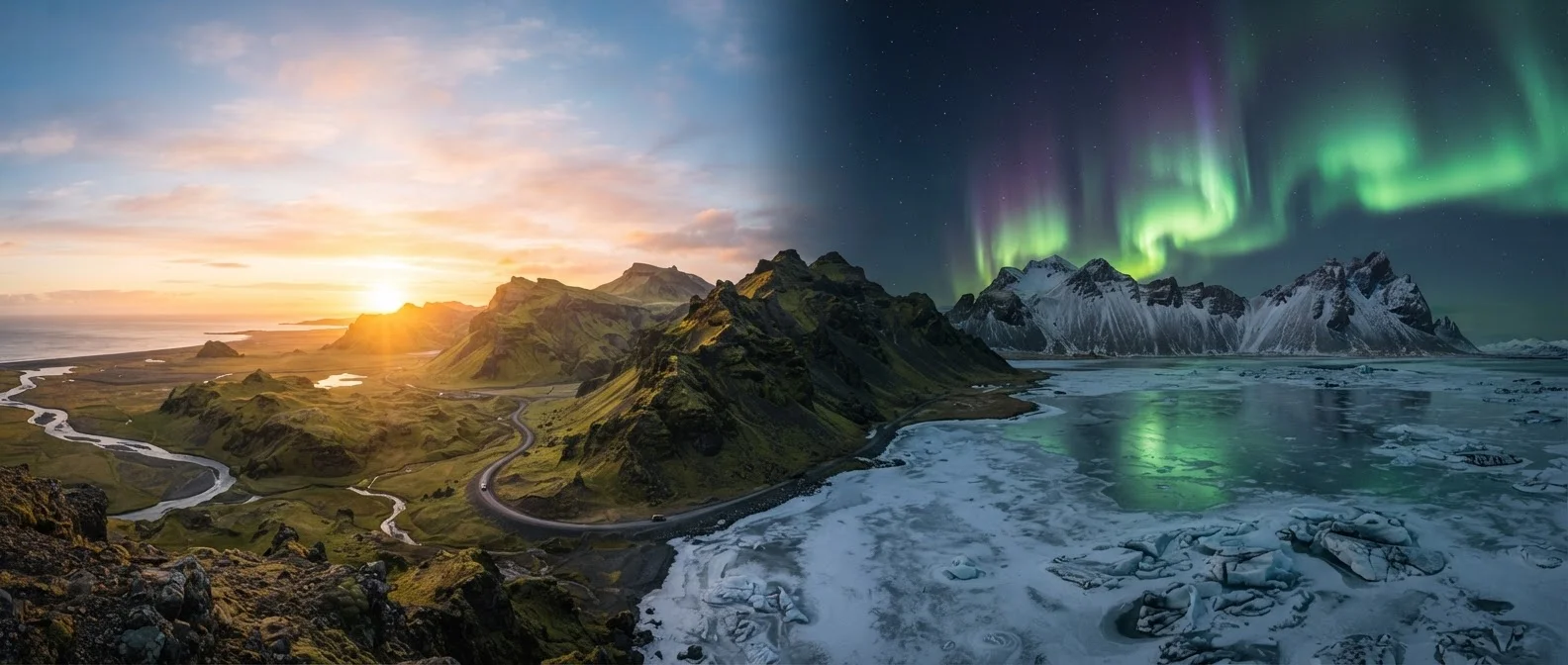
Photo credit: QuickInsights.net
In this article
Midnight sun or northern lights? Break down what Iceland's two contrasting seasons deliver so you can pick the trip that matches your interests.
Key Takeaways
- Summer offers near-continuous daylight (midnight sun) and access to highland roads closed in winter.
- Winter is the prime season for northern lights viewing and guided glacier ice cave tours.
- Summer crowds peak in July and August; winter travel is generally quieter outside the holiday period.
- Puffins and whale watching are largely summer phenomena, while reindeer herds are more visible in winter.
- Both seasons require layered, waterproof clothing - Iceland's weather is unpredictable year-round.
- Road conditions in winter can be hazardous; a 4WD vehicle and local road alerts are strongly advised.
What Iceland's Summer Actually Looks Like
Icelandic summer - roughly late May through August - is defined by one extraordinary phenomenon: the midnight sun. At peak summer, Reykjavik sees around 22 hours of usable daylight, and the sun never fully sets. This fundamentally changes how you experience the country. You can hike Landmannalaugar at 10 p.m. in full light, drive remote sections of the Ring Road without worrying about darkness, and pack far more into each day than nearly any other destination allows.
The landscape is also at its most verdant. Lupine fields bloom in purple across the south, waterfalls run at full force from snowmelt, and the highland interior - including the famous F-roads - opens to traffic. These rough mountain tracks require a 4WD vehicle and are closed entirely in winter and spring. Without summer access, destinations like Landmannalaugar and Kerlingarfjöll are simply unreachable by road.
Wildlife is a major draw as well. Atlantic puffins nest on cliffs along the Westfjords and Vestmannaeyjar from roughly May to August. Whale watching tours from Húsavík and Reykjavik are most productive in summer, with humpbacks and minkes frequently spotted. For travelers who want Iceland's natural world in full, active bloom, summer is the undisputed season.
The tradeoff: summer is Iceland's busiest and most expensive period. Accommodations book out months ahead, and popular sites like the Blue Lagoon and Seljalandsfoss waterfall see heavy foot traffic. Planning well in advance is essential.
What Iceland's Winter Actually Delivers
Winter in Iceland - November through March - is a fundamentally different sensory experience. Darkness arrives early, temperatures hover around or below freezing, and the country takes on a stark, elemental quality that many travelers find more authentically Icelandic. It also unlocks two experiences that are simply unavailable in summer: the northern lights and natural glacier ice caves.
| Criterion | Summer | Winter |
|---|---|---|
| Daylight hours | Up to 22+ hrs (midnight sun) | 4-5 hrs near solstice |
| Northern lights visibility | Not possible | September-March window |
| Glacier ice caves | Closed (unsafe) | Open Nov-March |
| Highland F-roads | Open (4WD required) | Closed |
| Puffins & whale watching | Peak season | Generally unavailable |
| Crowd levels | High (peak in Jul-Aug) | Lower (except holidays) |
| Average Reykjavik temp | 50-59°F (10-15°C) | 28-35°F (-2-2°C) |
| Road conditions | Generally accessible | Ice/snow hazards common |
The aurora borealis requires dark skies and clear weather - two conditions that summer's midnight sun makes impossible. Winter nights, particularly away from Reykjavik's light pollution, provide genuine opportunities to see the lights from September through late March. No aurora sighting is ever guaranteed, as activity depends on solar conditions and cloud cover, but winter is the only window when it's possible at all.
Glacier ice caves are another winter exclusive. Guides lead tours into the crystal-blue interior of Vatnajökull, Europe's largest glacier, from roughly November through March. Warmer months make the ice unstable and unsafe for entry. These tours are led by certified local guides and should be booked through reputable operators - solo exploration of glaciers is dangerous regardless of season.
66°N
Iceland's approximate latitude
Sitting just below the Arctic Circle, Iceland's extreme latitude is the direct cause of both midnight sun and polar night conditions.
~2M
Annual international visitors
Iceland's tourism surged significantly in the 2010s; the majority of international arrivals historically concentrate in the June-August summer window.
8,100 km²
Size of Vatnajökull glacier
Vatnajökull is Europe's largest glacier by volume and the source of Iceland's most popular guided ice cave tours, accessible only in winter.
Winter travel also rewards those who enjoy Iceland's geothermal culture. Soaking in a hot spring or geothermal pool while snow falls around you is a genuinely memorable experience. The Golden Circle and South Coast remain accessible and far less crowded. That said, road conditions can be serious - ice, snow, and sudden storms are real hazards. Always check road.is (Iceland's official road and traffic information site) before driving, and consider a 4WD rental regardless of your planned route.
For travelers who enjoy destination contrasts shaped by light and season, pairing an Iceland winter trip with a warm-weather escape - much like choosing between the distinct islands explored in our guide to the Canary Islands - can make for a well-rounded travel year.
How to Match Your Travel Style to a Season
The honest answer is that neither season is objectively better - they cater to very different traveler motivations. Summer suits those who want to cover ground, be active outdoors across a wide geography, and experience Iceland's wildlife in its most visible form. Winter suits those drawn to dramatic atmospherics, rare natural phenomena, and a quieter, more contemplative version of the same landscape.
A few practical considerations cut across both seasons. Iceland's weather is famously unpredictable year-round - four seasons in a single afternoon is a local cliché that holds up. Layered, waterproof clothing is essential regardless of when you visit. Budget-wise, summer commands higher prices for accommodation and tours; winter can offer somewhat lower costs outside the Christmas and New Year period, though this varies and you should verify current pricing independently.
If your interests lean toward dramatic landscapes and region-by-region exploration - the kind of structured discovery that rewards travelers who like to understand what each area uniquely offers - Iceland shares that logic with destinations like New Zealand's South Island, where different regions serve entirely different travel styles.
Whatever season you choose, verify entry requirements, travel advisories, and road conditions with official Icelandic and U.S. government sources before your trip. Conditions and regulations can change, and no article should substitute for current, official guidance.

Author
Travel Editorial Team
Travel Editorial Team is the collective byline for our editorial team and contributor network. Articles published under this byline or an editorial pen name are researched, written, and reviewed according to our editorial standards for clarity, consistency, and independence before publication.
View all articles →