
New Zealand's South Island: A Region-by-Region Orientation for Travelers
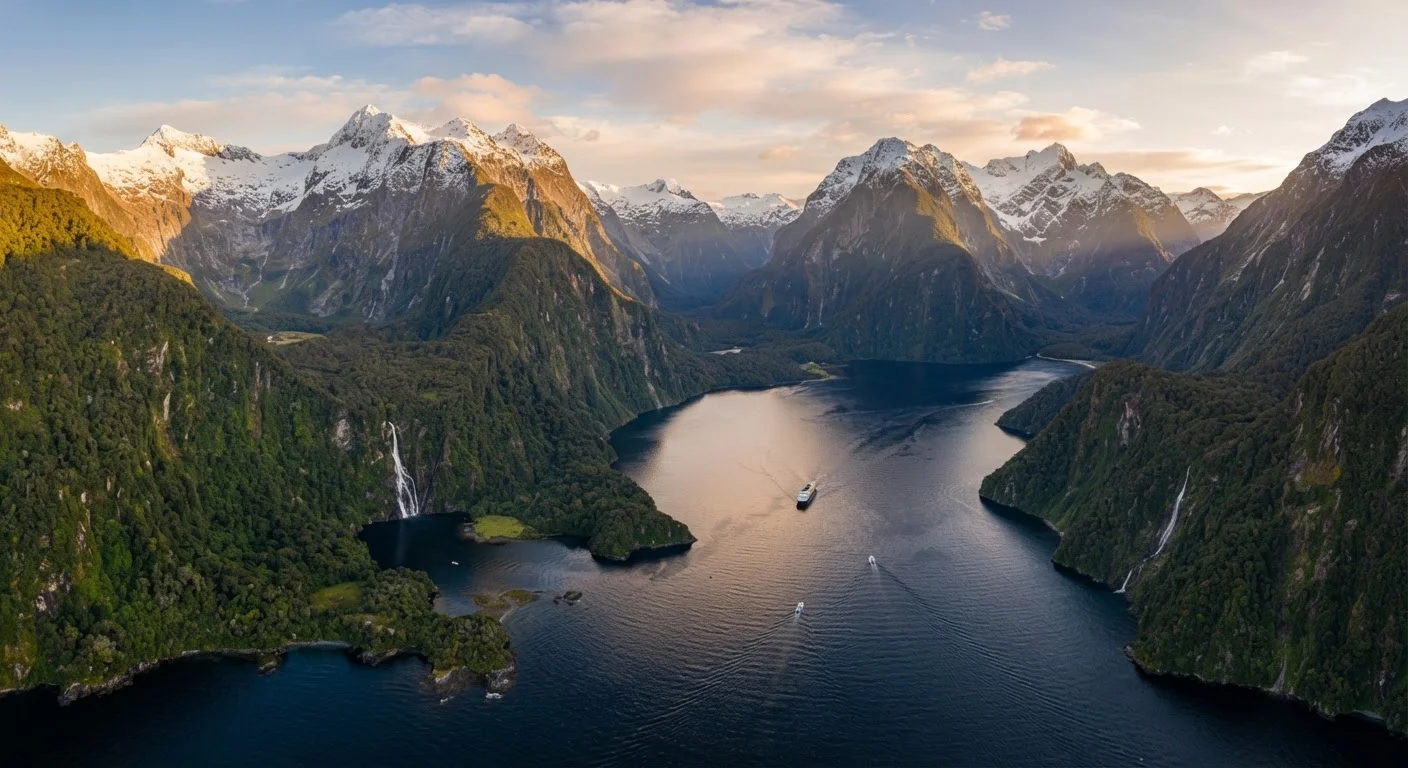
Photo credit: QuickInsights.net
In this article
Fiordland, Marlborough, Otago — the South Island packs in vastly different landscapes. Here's a clear-eyed look at each region and what it offers.
Why the South Island Requires Region-by-Region Thinking
New Zealand's South Island is roughly the size of the state of Georgia, yet it contains one of the most compressed concentrations of distinct landscapes on Earth. Travelers who treat it as a single destination often end up either racing between regions or anchoring in one place and missing everything else. A clearer approach: identify which region matches your priorities - scenery type, activity level, travel pace, and time of year - before you book anything.
This orientation covers the island's six main travel regions, what defines each one physically, and the kind of experience each supports. Like the contrasts explored in our look at Iceland's seasonal differences, what you get from a destination depends heavily on where and when you go.
| Total area | Approx. 58,000 sq miles (150,000 sq km) (Stats NZ) |
| UNESCO World Heritage sites | 1 (Te Wahipounamu, Southwest New Zealand) (UNESCO World Heritage List) |
| Highest peak | Aoraki/Mount Cook, 3,724 m (12,218 ft) (Land Information New Zealand) |
| Main entry airports | Christchurch (CHC), Queenstown (ZQN) |
| Wettest region | Fiordland - some valleys exceed 200 inches of annual rainfall (NIWA climate data) |
| Driest, sunniest region | Central Otago and Marlborough (NIWA climate data) |
Fiordland: Remote, Wet, and Extraordinary
Fiordland occupies the southwest corner and is the island's most dramatic and most remote region. It contains Milford Sound (properly a fjord), Doubtful Sound, and the Kepler and Routeburn Tracks - all within Fiordland National Park, a UNESCO World Heritage site. Annual rainfall here exceeds 200 inches in some valleys, which feeds the waterfalls that cascade directly into the fiords. That same weather means overcast days are common; clear days reveal views of near-mythological quality.
Fiordland rewards visitors who are comfortable with variable weather, multi-day hiking, or cruise-style exploration of the sounds. It is not suited to travelers seeking beach weather or urban amenities. The nearest sizable town is Te Anau, which serves as a practical base.
Fiord (Fjord)
A long, narrow inlet carved by glacial activity with steep sides. Milford Sound is technically a fiord despite its name. The spelling 'fiord' is the official New Zealand variant.
Great Walk
A category of premier multi-day hiking tracks managed by New Zealand's Department of Conservation. The South Island hosts several, including the Milford Track, Routeburn Track, and Kepler Track. Hut bookings are required and fill well in advance.
Rock Flour
Fine particles of rock ground by glaciers and carried into meltwater lakes, giving lakes like Tekapo and Pukaki their distinctive turquoise-blue color.
Drowned Valley
A coastal landform created when rising sea levels or land subsidence submerge a river valley, forming a sheltered inlet or sound. Marlborough Sounds is a large-scale example.
Otago and Queenstown: Adventure Hub and High Country
The Otago region stretches from the semi-arid Central Otago wine district to the alpine terrain around Queenstown and Wānaka. Queenstown has built its international reputation around adventure activities - bungee jumping, skydiving, jet boating, and winter skiing on nearby mountains. Wānaka, about an hour's drive north, offers similar alpine scenery with a noticeably quieter character.
Central Otago contrasts sharply: it's one of the driest, sunniest parts of the South Island, producing Pinot Noir in a landscape of schist rock tors and stone fruit orchards. The Otago Rail Trail, a long-distance cycling route through the high country, draws travelers who want a slower pace through that golden interior terrain. For readers who enjoy comparing dramatically different landscapes within one region, our feature on Japan's regional geographic diversity covers a similar dynamic.
Canterbury and the Southern Alps: Urban Gateway to Alpine Wilderness
Christchurch anchors Canterbury and serves as the South Island's largest city and most common entry point for international travelers. The city sits on the Canterbury Plains - flat, agricultural land that abuts the Southern Alps to the west. Aoraki/Mount Cook, New Zealand's highest peak at 3,724 meters, is roughly three hours from Christchurch by road.
The region suits travelers who want an urban base with practical services alongside access to glacier hikes (Franz Josef and Fox Glaciers lie further west on the Coast), stargazing at the Aoraki Mackenzie International Dark Sky Reserve, and lake scenery at Tekapo and Pukaki. The turquoise glacial-fed color of those lakes - caused by fine rock flour suspended in the water - is visually striking and unlike any color found in lowland lakes.
This kind of striking contrast within a compact area mirrors what visitors experience in Patagonia, as explored in our piece on what Patagonia actually demands of travelers.
Marlborough, Nelson, and the Top of the South
Marlborough sits at the northern tip and is best known internationally for Sauvignon Blanc - the Wairau Valley produces a large share of New Zealand's wine exports. The climate is dry and sunny relative to much of the South Island, making it a logical destination for food and wine travelers. Marlborough Sounds, a network of drowned river valleys, offers sea kayaking and the multi-day Queen Charlotte Track.
Nelson, just to the west, is the geographic center of New Zealand and has developed a reputation for arts, craft brewing, and proximity to three national parks: Abel Tasman, Kahurangi, and Nelson Lakes. Abel Tasman in particular draws high volumes of visitors for its coastal walking track and golden-sand beaches - a genuine rarity on the South Island. Travelers arriving by ferry from Wellington land at Picton, within Marlborough, making the top of the South a natural starting point for a longer circuit.
Travel conditions, entry requirements, and seasonal access can change. Always verify current information with official New Zealand government sources and your airline or transport provider before traveling.

Author
Travel Editorial Team
Travel Editorial Team is the collective byline for our editorial team and contributor network. Articles published under this byline or an editorial pen name are researched, written, and reviewed according to our editorial standards for clarity, consistency, and independence before publication.
View all articles →