
The Geography Behind Japan's Regional Diversity
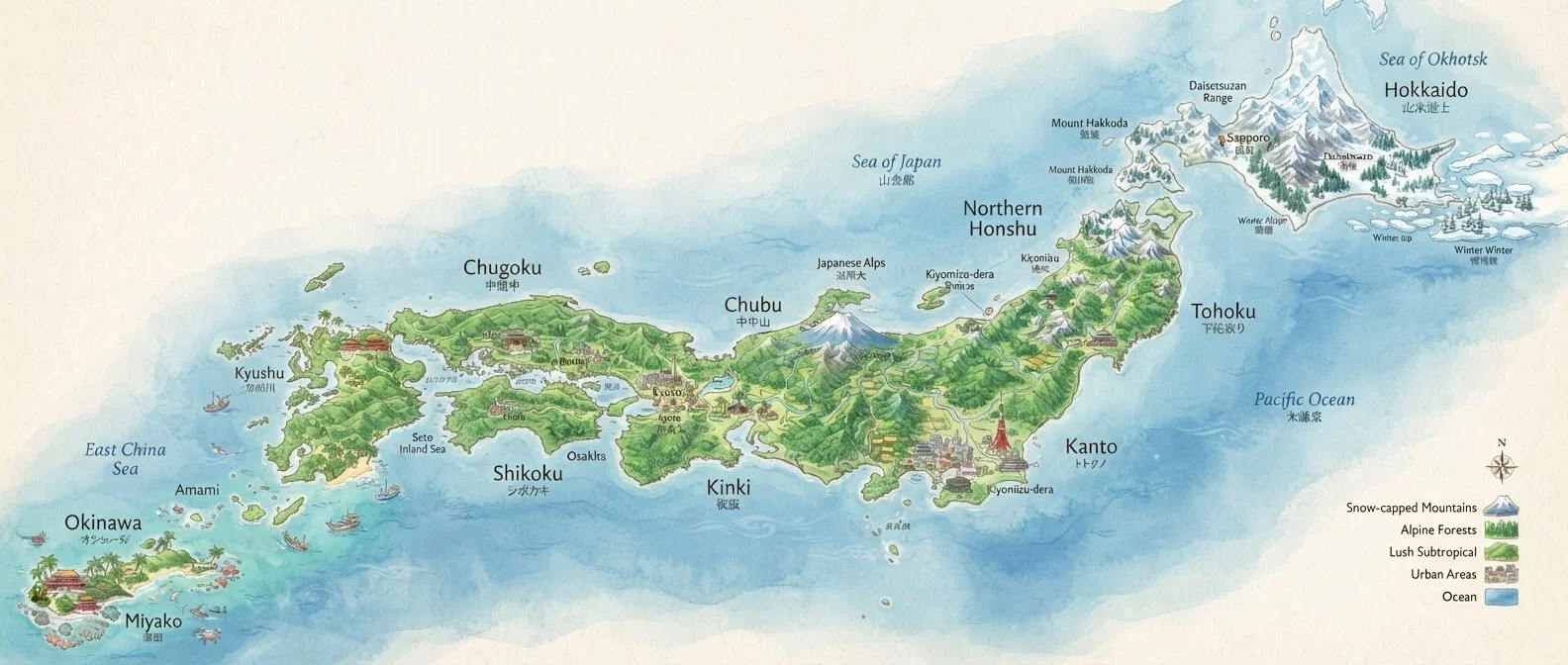
Photo credit: QuickInsights.net
In this article
From Hokkaido's snow country to subtropical Okinawa, explore how Japan's geography shapes wildly different travel experiences across its regions.
Key Takeaways
- Japan spans subarctic to subtropical climates across roughly 1,800 miles from north to south.
- Each of Japan's main regions offers distinctly different landscapes, cuisines, and cultural experiences.
- Hokkaido is known for heavy snowfall and outdoor adventure; Okinawa for warm water and tropical culture.
- The Japanese Alps on Honshu divide the country into climatically different Pacific and Sea of Japan coasts.
- Matching a trip to the right region and season significantly affects the quality of your experience.
- Geography influences everything from local food specialties to festival traditions across Japan.
Why Geography Shapes the Japan You'll Experience
Japan's landmass is deceptively compact on a world map, but the country stretches across nearly 25 degrees of latitude. That range puts Hokkaido in the same climatic zone as parts of New England, while Okinawa sits closer to Taiwan than to Tokyo. The practical result for travelers: the Japan you encounter in one region can feel like a completely different country from the Japan two stops up the Shinkansen line.
Beyond latitude, Japan's mountainous interior - particularly the Japanese Alps running through central Honshu - acts as a weather barrier. Pacific-facing coasts get summer typhoons and mild winters; Sea of Japan-facing coasts receive some of the world's heaviest winter snowfall. Travelers who understand these patterns can plan for the conditions that will actually greet them, rather than a generic idea of "Japan weather."
Verify Entry and Travel Conditions Before You Go
Visa requirements, regional access rules, and transportation schedules in Japan can change. Always check current entry requirements through official Japanese government sources and your own country's foreign affairs department before finalizing travel plans. Conditions at specific natural sites - especially volcanic areas - may also be subject to access restrictions.
Hokkaido: Japan's Snow Country and Wild North
Japan's northernmost main island is defined by space and cold. Hokkaido was sparsely settled until the late 19th century, so its cities feel less dense than Honshu's, and vast stretches of farmland, wetlands, and national parks remain intact. Winter brings reliable, powdery snowfall that has made the region a globally recognized skiing destination. In summer, Hokkaido's cooler temperatures are a relief from the humidity blanketing much of Japan, and its lavender fields and dairy farms create a landscape that surprises many visitors expecting a more traditionally "Japanese" aesthetic.
Wildlife is more visible here than almost anywhere else in Japan - red-crowned cranes, brown bears, and Blakiston's fish owls are native to the island. Travelers drawn to nature, outdoor recreation, or uncrowded landscapes will find Hokkaido a compelling alternative to the well-worn Kyoto-Tokyo corridor.
Honshu's Contrasts: Mountains, Megacities, and Historic Heartlands
Honshu is Japan's largest island and contains most of its population, yet its internal diversity is remarkable. The Kanto plain holds Tokyo and its surrounding cities - the most globally connected part of Japan. Travel west along the Tokaido Shinkansen corridor and you reach Kansai, home to Kyoto's temple districts, Osaka's street food culture, and Nara's free-roaming deer. These two regions together form the core of most international itineraries, and for good reason.
But Honshu's mountain interior - the Chubu and Tohoku regions - offers a quieter, less-visited Japan. Chubu's Japanese Alps hold historic post towns like Tsumago and Magome, and the rural Shirakawa-go district is recognized for its distinctive thatched-roof farmhouses. Tohoku, often overlooked, has rugged coastal scenery, traditional craft traditions, and summer festivals that rank among Japan's most vivid. Just as New Zealand's South Island rewards travelers who look beyond the obvious highlights, venturing into Honshu's less-trafficked regions pays off significantly.
~6,800
Islands in the Japanese archipelago
According to Japan's Geospatial Information Authority, the country comprises approximately 6,800 islands, though only a fraction are inhabited.
25°
Degrees of latitude Japan spans
Japan stretches from roughly 24°N (Okinawa) to 45°N (northern Hokkaido), producing dramatically different climate zones across its length.
73%
Of Japan's terrain that is mountainous
Japan's National Land Agency has noted that over 70% of the country's land area is mountainous, concentrating population in coastal plains and river valleys.
Kyushu, Shikoku, and Okinawa: Southern Warmth and Island Culture
Kyushu, Japan's southernmost main island, sits in a geothermally active zone - Beppu and Kurokawa are famous for their natural hot springs (onsen), and Mt. Aso holds one of the world's largest volcanic calderas. The food here leans richer and spicier than central Japan's, and the island has historically been a gateway for continental Asian influence.
Shikoku, the smallest of the four main islands, is best known for its 88-temple pilgrimage circuit - a walking route that has drawn spiritual travelers for over a thousand years. Its interior valleys are remote and scenic, making it a destination for those seeking a slower, more reflective pace.
Okinawa occupies its own cultural and geographic category entirely. The archipelago's subtropical climate, coral reefs, and indigenous Ryukyuan history make it feel distinct from mainland Japan. Local cuisine, music, and architecture all reflect centuries of independent culture before political incorporation into Japan. For travelers wanting warm water, beach scenery, and a unique cultural lens, Okinawa is unlike anywhere else in the country.
Match Your Season to Your Region
Japan's geographic diversity means that peak season varies widely by destination. Hokkaido's prime visit window for snow is January through March, while Okinawa's beaches are most enjoyable from May through October. Research regional seasonality before booking - the same calendar date can mean very different conditions depending on where in Japan you're headed.
Frequently Asked Questions

Author
Travel Editorial Team
Travel Editorial Team is the collective byline for our editorial team and contributor network. Articles published under this byline or an editorial pen name are researched, written, and reviewed according to our editorial standards for clarity, consistency, and independence before publication.
View all articles →