
Coastal vs. Inland Morocco: Matching Your Interests to the Right Part of the Country
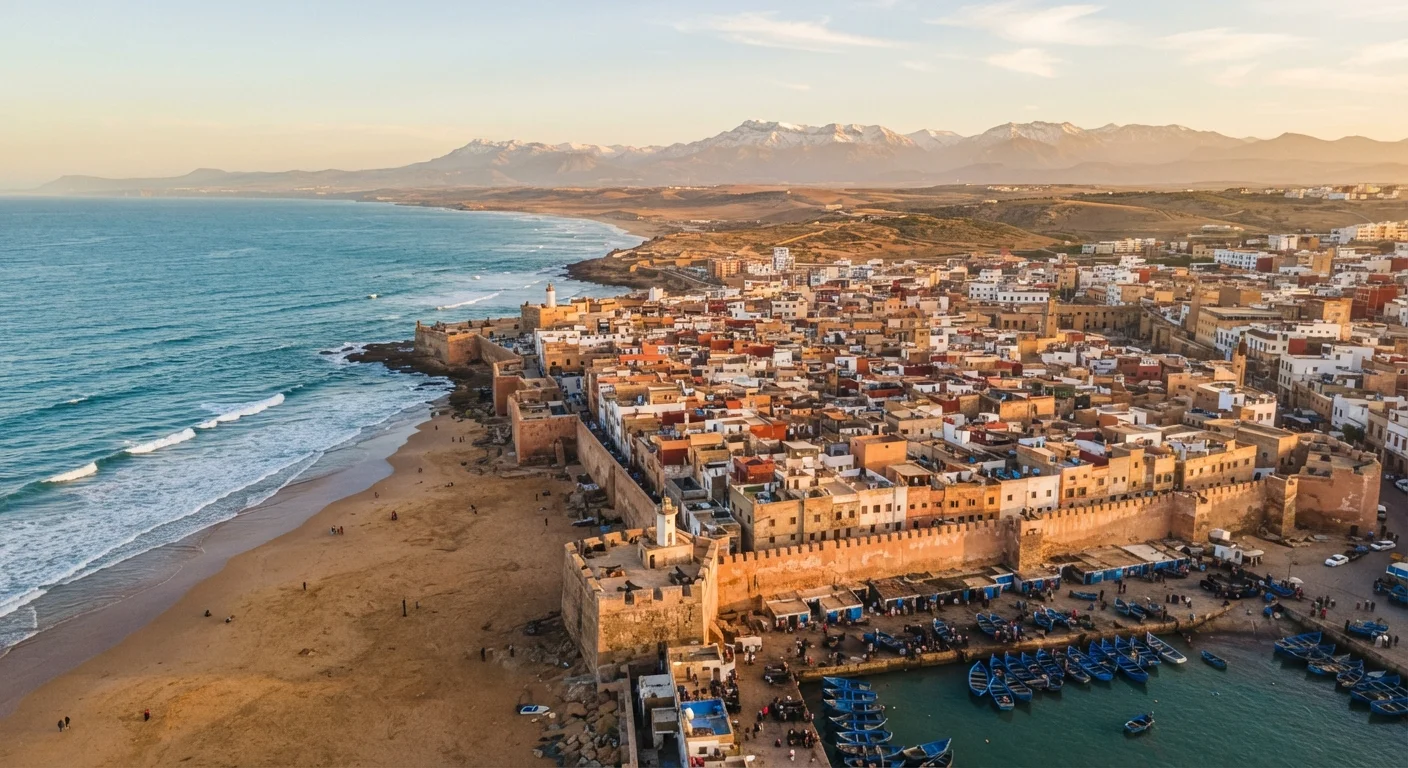
Photo credit: QuickInsights.net
In this article
Atlantic beaches or Saharan dunes? Medina souks or mountain trekking? Understand Morocco's geographic contrasts before deciding where to focus your trip.
Key Takeaways
- Morocco's coastal and inland regions offer fundamentally different travel experiences suited to different priorities.
- Atlantic coastal towns like Essaouira and Agadir emphasize beach relaxation, seafood, and water sports.
- Inland destinations including Marrakech, Fez, and Merzouga deliver imperial history, souks, and desert landscapes.
- The Atlas Mountains sit between coasts and desert, offering trekking and Berber cultural experiences.
- Many travelers combine coastal and inland stops - Morocco's compact geography makes this practical.
- Entry requirements, safety conditions, and travel advisories should be verified with official government sources before booking.
Understanding Morocco's Geographic Range
Morocco compresses an extraordinary range of terrain into a country roughly the size of California. The Atlantic coastline stretches more than 1,800 miles from Tangier in the north to the disputed Western Sahara in the south. Moving east, the land rises through the Middle Atlas and High Atlas mountain ranges before descending toward the pre-Saharan plains and eventually the full Sahara. This geography - not just the culture - is what makes the choice between coastal and inland travel so consequential.
First-time visitors often don't realize how different the experience is between, say, a week in a coastal town like Essaouira versus a week split between Marrakech and the Merzouga dunes. Understanding the distinction before you book shapes everything from packing decisions to realistic expectations. If you're weighing Morocco against other lesser-known African destinations, our guide to underestimated African destinations offers useful context on regional contrasts.
The Atlantic Coast: Rhythm, Seafood, and Surf
Morocco's Atlantic coast operates at a noticeably different pace than the medinas inland. The coastal towns tend to feel more open - literally wider streets, sea breezes, and a port culture that has blended Berber, Arab, and European influences over centuries.
Essaouira is the most distinctive coastal stop: a UNESCO-listed fortified port city with a whitewashed medina, consistent Atlantic winds that attract kitesurfers and windsurfers, and a thriving arts scene. Temperatures here rarely soar as high as inland cities in summer, making it a practical heat-escape option. Agadir, farther south, is Morocco's most developed beach resort area - broader beach, more resort infrastructure, and a more straightforward sun-and-sea holiday format. Asilah, in the north, draws visitors for its murals, cliffside walls, and comparatively calm atmosphere.
Seafood is a consistent coastal draw. Grilled sardines, fried calamari, and fresh-caught fish at harbor-side restaurants are reliable pleasures. That said, quality and hygiene vary - use judgment when selecting where to eat, and be cautious with raw or undercooked items if you have a sensitive stomach.
| Atlantic Coast | Imperial Cities (Inland) | Atlas Mountains | Saharan South | |
|---|---|---|---|---|
| Primary draw | Beaches, seafood, surf culture | History, souks, architecture | Trekking, Berber villages | Dunes, desert camps, stargazing |
| Summer heat | Mild, sea-moderated | Very hot (Marrakech, Fez) | Cool at altitude | Extreme heat |
| Pace | Relaxed, resort-friendly | Busy, immersive | Quiet, physical | Remote, unhurried |
| Best for first-timers | Yes, accessible entry point | Yes, core Morocco experience | With fitness prep | Best with local guide |
| Infrastructure | Well-developed in resort areas | Extensive tourist services | Moderate, basic in villages | Limited, tour-dependent |
| Ideal trip length | 3-5 days | 4-6 days per city cluster | 2-4 days | 2-3 days |
Inland Morocco: Imperial Cities, Souks, and the Desert
The phrase "inland Morocco" covers an enormous range. The imperial cities - Fez, Marrakech, Meknes, and Rabat - each carry centuries of dynastic history and are anchored by medinas that function as living ancient neighborhoods. Fez's medina is among the world's largest car-free urban areas; navigating it is intentionally disorienting, and that's part of the point. Marrakech is more tourist-facing but no less compelling, with its Djemaa el-Fna square serving as an evolving outdoor theater every evening.
Beyond the cities, the route toward Merzouga passes through the Draa Valley's palm oases, the gorges of the Todra and Dadès, and kasbahs (fortified earthen architecture) that feel genuinely unchanged in silhouette. The Erg Chebbi dunes outside Merzouga are the most accessible Saharan dune field in Morocco - visitors typically arrive for an overnight camel trek and desert camp experience, though expectations should be calibrated: this is organized tourism, not wilderness solitude.
Combine Zones for the Fullest Picture
Morocco's relatively compact road and rail network makes multi-zone itineraries genuinely practical. Rather than choosing strictly between coast and interior, consider anchoring in a city like Marrakech and making targeted excursions - a few days to Essaouira on the coast, a few days south toward the desert. This approach lets you experience the country's contrasts without sacrificing depth in any single area.
Those who find Morocco's combination of ancient cities and dramatic geography appealing may also enjoy reading about Portugal's Alentejo region, which shares a similarly unhurried pace rooted in landscape and history.
The Atlas Mountains: The Overlooked Middle Ground
The High Atlas is often treated as a corridor between Marrakech and the desert rather than a destination in itself - which means it's frequently undervisited. Toubkal, North Africa's highest peak at roughly 13,671 feet, is accessible to fit hikers without technical climbing experience (though altitude and weather demand genuine preparation). Imlil is the standard starting village and can be reached in about 1.5 hours from Marrakech by road.
The mountain villages here are predominantly Amazigh (Berber) communities, and the cultural experience is meaningfully different from the Arab-inflected medina cities. Accommodation ranges from basic mountain guesthouses to more developed lodges. Winter brings snow; summer brings cooler temperatures that contrast with the desert heat below. Anyone planning trekking in remote Atlas terrain should review our pre-trip checklist for remote destinations - infrastructure is thinner here than in the major cities.
Practical Factors: Climate, Logistics, and Combining Both
Morocco's climate varies dramatically by zone. Coastal towns are moderated by Atlantic influence - milder summers and cooler winters than the interior. Marrakech summers regularly exceed 100°F; the desert is hotter still. Fez, in its inland valley, can be brutally hot in July and August. Spring (March-May) and autumn (September-November) are widely considered the most comfortable travel windows across most of the country.
Getting between coastal and inland Morocco is generally feasible. A bus or train between Casablanca and Marrakech takes roughly three hours; domestic flights connect Casablanca to Agadir, Fez, and other cities. The most common challenge is time: travelers who allocate only a week often find they've rushed through more than they've absorbed.
A practical approach for a two-week itinerary might involve two or three days on the coast, four to five days across one or two imperial cities, and three to four days in the south or mountains. The same zone-matching logic used for the Canary Islands applies here: identify your primary interest first, then build outward from there.
Travel conditions, visa requirements, health advisories, and entry regulations can change. Verify current requirements with the U.S. Department of State and Morocco's official government sources before traveling.

Author
Travel Editorial Team
Travel Editorial Team is the collective byline for our editorial team and contributor network. Articles published under this byline or an editorial pen name are researched, written, and reviewed according to our editorial standards for clarity, consistency, and independence before publication.
View all articles →