
Portugal's Alentejo Region: Landscapes, Towns, and What Draws Travelers There
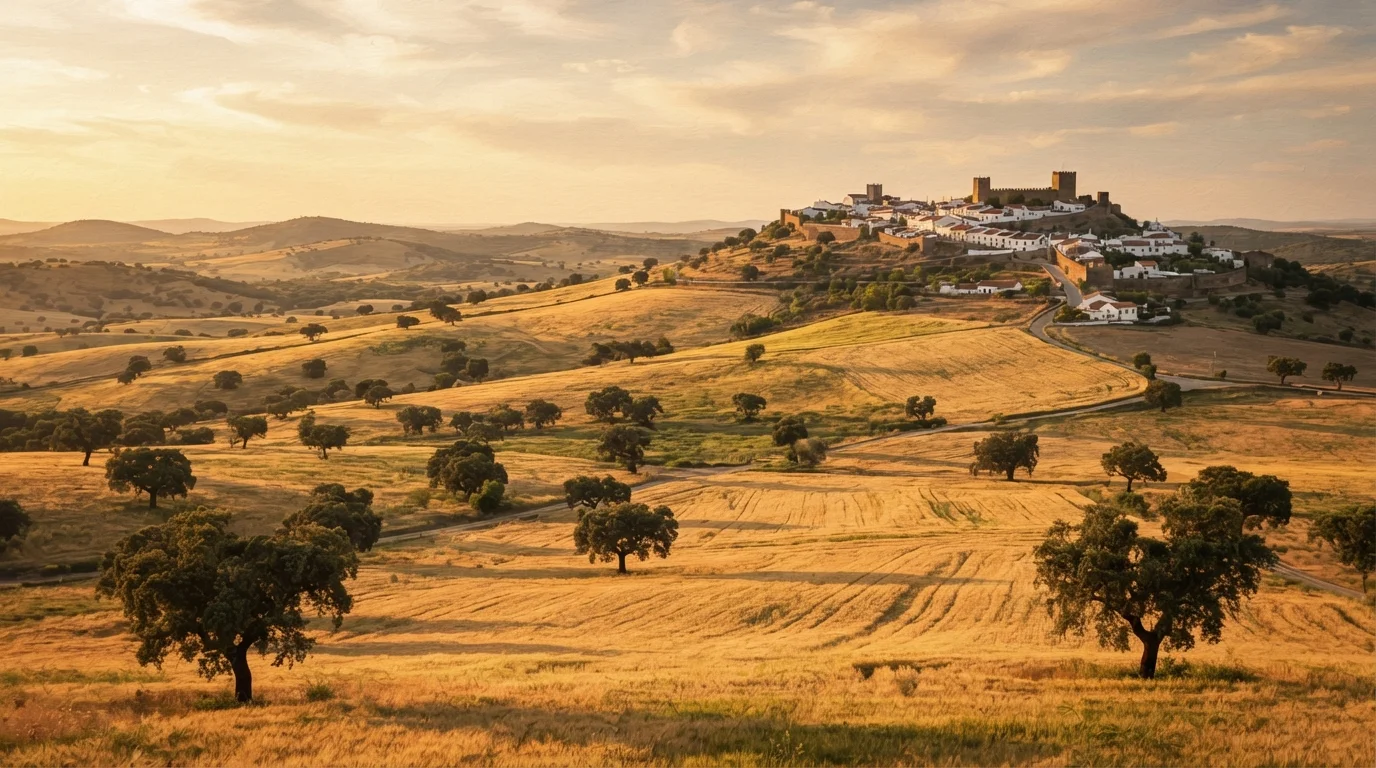
Photo credit: QuickInsights.net
In this article
Rolling cork forests, hilltop villages, and unhurried pace define Alentejo. Here's what makes this often-overlooked Portuguese region worth a closer look.
Key Takeaways
- Alentejo covers roughly a third of Portugal but holds less than 10% of its population, making it genuinely uncrowded.
- The region's cork oak forests supply a significant share of the world's cork production.
- Key towns - Évora, Marvão, and Monsaraz - each offer distinctly different experiences for travelers.
- Alentejo wine has earned international recognition, making it a serious draw for food-and-drink travelers.
- Summer heat is intense; spring and autumn are generally more comfortable for exploration.
What Is the Alentejo Region?
Alentejo - whose name translates roughly as "beyond the Tagus" - is a vast inland region stretching across central and southern Portugal. It occupies about a third of the country's land area yet is home to a relatively small share of the population, giving it a spaciousness that feels rare in Western Europe.
For travelers arriving from Lisbon's energy and density, Alentejo registers as a deliberate contrast: long roads through open countryside, small towns where life moves at its own pace, and a culture shaped by farming, olives, and cork. That unhurried quality is precisely what draws many visitors.
Alentejo Is Divided Into Sub-Regions
Administratively, Alentejo is split into Alto Alentejo, Alentejo Central, Baixo Alentejo, and Alentejo Litoral. Each has a different landscape character and set of attractions. When researching accommodation or activities, specifying the sub-region will make your search more accurate.
The Landscapes That Define Alentejo
The dominant image of Alentejo is the montado - a traditional agro-forestry system of gently rolling plains dotted with cork oak and holm oak trees. This landscape is not wilderness; it has been cultivated and managed for centuries, giving it a harmonious, almost parklike quality. Portugal supplies a substantial portion of the world's cork, and the Alentejo montado sits at the center of that industry.
In the northeast, the Serra de São Mamede creates a dramatic shift: forested hills, granite ridges, and sudden valleys replace the plains. In the coastal Alentejo (Alentejo Litoral), Atlantic beaches remain largely undeveloped - wider, wilder, and far less crowded than those in the Algarve to the south.
~33%
Share of Portugal's land area covered by Alentejo
Despite its size, Alentejo holds a small fraction of Portugal's total population, contributing to its uncrowded character.
~50%
Global cork supply from Portuguese cork oak forests
Portugal is the world's leading cork producer, and the Alentejo montado is central to that industry.
860m
Approximate elevation of Marvão village
Marvão sits on a granite ridge in the Serra de São Mamede, giving it panoramic views across the border into Spain.
The contrast between these zones means travelers with different interests - birding, hiking, beach relaxation, or simply scenic drives - can each find a natural environment that suits them.
Key Towns and What Each Offers
Alentejo's towns are its human anchor points, and each has a distinct character worth understanding before you plan an itinerary.
Évora
Évora is the region's largest city and a UNESCO World Heritage Site. Its walled historic center contains a Roman temple, a Gothic cathedral, and the unsettling Chapel of Bones - a medieval ossuary that draws visitors from across the world. Évora functions as a practical base for wider Alentejo exploration while offering enough history to justify several days on its own.
Marvão
Perched on a granite outcrop near the Spanish border, Marvão is one of the most visually striking hilltop villages in Portugal. Its medieval castle and narrow whitewashed streets sit at roughly 860 meters above sea level, looking out over the Serra de São Mamede. The village has only a small permanent population, which means visitors encounter a quiet, almost preserved atmosphere.
Monsaraz
Another fortified hilltop village, Monsaraz overlooks the Alqueva reservoir - one of Europe's largest artificial lakes. The combination of medieval architecture and the surrounding water creates a landscape that photographers and slow travelers find particularly compelling. The area around Alqueva has also developed a reputation as one of Europe's certified dark-sky destinations, making it worth considering for stargazers.
Beja and Serpa
Further south, Beja offers a Roman-era castle and a quieter urban experience, while Serpa - known for its distinctive aqueduct and local cheese - rewards visitors who prefer to explore without crowds.
When visiting hilltop villages like Monsaraz or Marvão, arrive before 10 a.m. or after 4 p.m. - the midday heat and any coach tour traffic diminish significantly outside those windows.
Early and late visits allow for a more authentic experience of these small villages and make the heat manageable, particularly in shoulder-season months.
Look for local markets (feiras) in smaller towns rather than relying solely on restaurants - they're where you'll find regional cheeses, honey, and cured meats at their source.
Alentejo's artisan food producers often sell at weekly markets rather than through conventional retail, making markets the most direct route to tasting authentic local products.
Food, Wine, and Local Culture
Alentejo cuisine is hearty, ingredient-led, and deeply regional. Açorda (a bread-based soup with garlic, olive oil, and egg), carne de porco à alentejana (pork with clams), and slow-cooked lamb dishes appear widely on local menus. Local olive oil is notable for its quality, and the region's black pork, raised on acorns in the montado, has a flavour profile distinct from industrially farmed alternatives.
Alentejo wine has moved from regional curiosity to internationally recognized category. The region's warm climate and particular soil conditions - especially around Évora, Reguengos de Monsaraz, and Portalegre - produce full-bodied reds and aromatic whites that now appear on wine lists far outside Portugal. Many quintas (estates) welcome visitors for tastings, providing a wine-focused travel experience grounded in the landscape rather than retail.
Culturally, Alentejo has its own folk singing tradition, cante alentejano, a form of polyphonic choral singing recognized by UNESCO as Intangible Cultural Heritage. Hearing it performed in a village setting - rather than staged for tourists - is an experience worth seeking out. The contrast with Morocco's equally layered interior culture illustrates how deeply inland regions often preserve a country's most distinctive traditions.
Practical Considerations Before You Go
Alentejo summers are genuinely hot - regularly exceeding 40°C (104°F) in July and August. Travelers sensitive to heat should plan visits for March through May or September through October, when temperatures are more manageable and the landscape is at its most photogenic.
The region is largely rural, and having a car gives access to villages and landscapes that public transport does not reach efficiently. Road conditions are generally good, but distances between points of interest can be significant. Plan driving time generously.
Most towns have limited accommodation capacity, so booking ahead - particularly during spring festivals and harvest season in autumn - is advisable. Évora has the widest range of lodging options; smaller villages may offer only a handful of guesthouses.
Entry requirements, health precautions, and any travel advisories for Portugal should be verified through official government sources before travel, as these can change. The Portuguese tourism authority and your home country's foreign affairs department are reliable starting points.
The information in this article is intended for general orientation and planning purposes. Prices, schedules, and local conditions vary and should be confirmed through official or current sources before travel.

Author
Travel Editorial Team
Travel Editorial Team is the collective byline for our editorial team and contributor network. Articles published under this byline or an editorial pen name are researched, written, and reviewed according to our editorial standards for clarity, consistency, and independence before publication.
View all articles →