
Choosing Between Costa Rica's Pacific and Caribbean Coasts
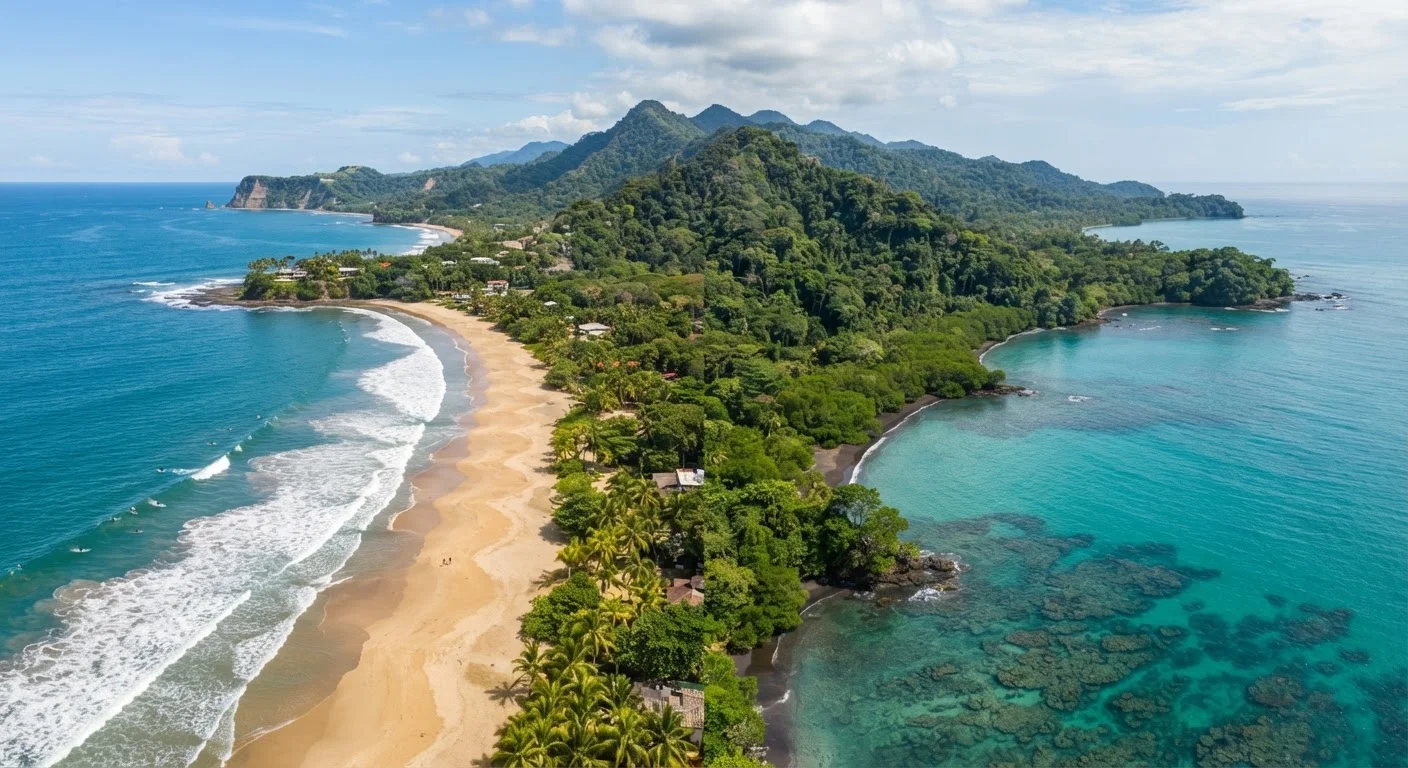
Photo credit: QuickInsights.net
In this article
Surf towns and dry forests on one side; reef diving and rainforest on the other. See how Costa Rica's two coastlines differ in character, climate, and access.
Key Takeaways
- The Pacific Coast has more developed tourism infrastructure and a pronounced dry season from December through April.
- The Caribbean Coast receives rain year-round but offers calmer seas and world-class reef snorkeling near Cahuita and Bocas del Toro.
- Wildlife experiences differ significantly: Pacific parks are known for dry-forest fauna, while the Caribbean hosts sea turtle nesting and poison dart frogs.
- Afro-Caribbean culture, including distinctive cuisine and music, gives the Caribbean side a unique cultural identity.
- Getting to the Caribbean Coast typically requires a longer overland journey from San José, affecting trip logistics.
- Both coasts carry safety and seasonal considerations - always verify current travel advisories before visiting.
Climate and Seasons: When Each Coast Shines
Costa Rica's two coastlines sit on opposite sides of the Continental Divide, which creates dramatically different rainfall patterns. The Pacific Coast experiences a clearly defined dry season from approximately December through April - locally called verano - making it the more predictable choice for travelers planning sun-dependent activities. The rainy season (May-November) brings lush green landscapes and fewer crowds, but afternoon downpours are common.
The Caribbean Coast operates on a different rhythm. Rainfall is distributed more evenly throughout the year, though the months of February-March and September-October tend to be relatively drier. This means the Caribbean rarely offers the guaranteed sunshine windows that the Pacific does - but it also means the jungle stays verdant and wildlife active year-round. Travelers should check forecasts close to departure and remain flexible.
| Criterion | Pacific Coast | Caribbean Coast |
|---|---|---|
| Dry Season | Dec-Apr (reliable) | Feb-Mar, Sep-Oct (partial) |
| Signature Wildlife | Monkeys, macaws, tapirs | Sea turtles, caimans, reef fish |
| Marine Activities | Surfing, sport fishing | Snorkeling, reef diving |
| Tourism Infrastructure | Well-developed | Smaller-scale, local |
| Access from San José | Flights + highway options | Long overland or boat routes |
| Cultural Identity | Spanish-colonial, surf culture | Afro-Caribbean, reggae, local cuisine |
Always verify current seasonal and safety conditions through official sources such as the U.S. Department of State or Costa Rica's Instituto Costarricense de Turismo before finalizing travel plans.
Wildlife and Nature: Two Distinct Ecosystems
Both coasts are extraordinary for wildlife, but they showcase different ecosystems. The Pacific side is anchored by flagship protected areas: Corcovado National Park on the Osa Peninsula is widely regarded as one of the most biodiverse places on Earth, home to tapirs, scarlet macaws, and all four of Costa Rica's monkey species. Manuel Antonio offers wildlife access in a more accessible setting.
The Caribbean lowlands deliver a wetter, denser rainforest experience. Tortuguero National Park - reachable only by boat or small plane - protects critical nesting habitat for green and leatherback sea turtles. Inland canals teem with caimans, river otters, and manatees. Closer to the Panama border, Cahuita National Park combines jungle trails with a protected coral reef just offshore.
500,000+
Sea turtle nests recorded at Tortuguero
Tortuguero National Park has recorded over half a million green turtle nests since systematic monitoring began, according to the Sea Turtle Conservancy.
2.6%
Share of Earth's biodiversity in Costa Rica
Despite covering roughly 0.03% of Earth's surface, Costa Rica is estimated to harbor approximately 2.6% of global biodiversity, according to the Costa Rican government's environmental data.
For wildlife-focused travelers, the choice often comes down to preference: dry-forest and Pacific marine fauna versus Caribbean lowland and reef species. Many visitors with two or more weeks choose to experience both.
Access, Infrastructure, and Getting Around
Practical logistics matter as much as scenery when choosing a coast. The Pacific Coast is generally easier to reach from San José. Domestic flights serve Liberia (for Guanacaste's northern beaches), Quepos (for Manuel Antonio), and the Osa Peninsula. The Costanera Sur highway provides a paved coastal connection to much of the south Pacific, though road quality varies in remote areas.
Reaching the Caribbean Coast typically means a longer overland journey. The route from San José to Puerto Viejo de Talamanca takes roughly four to five hours by bus or car through winding mountain roads. Tortuguero requires boat travel from Cariari or Moín. While the Caribbean's relative remoteness is part of its appeal, travelers with tight schedules should factor transit time carefully into their itinerary.
Accommodation options are more plentiful and varied on the Pacific, spanning hostels, boutique eco-lodges, and larger resort properties. The Caribbean offers smaller, often locally owned guesthouses and eco-lodges - a different but equally valid style of travel. Just as choosing between different geographic regions of another destination requires honest self-assessment of priorities, so does this decision - much like the process outlined in our guide to matching different Moroccan regions to your interests.
Culture, Cuisine, and Character
The two coasts carry distinct cultural identities rooted in their histories. The Pacific Coast - particularly Guanacaste - reflects Costa Rica's Spanish colonial and Chorotega indigenous heritage. Festivals, traditional horseback riding (tope), and marimba music are part of everyday life in smaller towns. The surf culture that has grown around beaches like Tamarindo and Santa Teresa adds a contemporary international layer.
The Caribbean Coast has a markedly different character shaped by Afro-Caribbean communities whose ancestors arrived from Jamaica and other Caribbean islands in the 19th and early 20th centuries. The local cuisine - rice and beans cooked in coconut milk, rondon stew, fresh seafood - is distinct from the rest of Costa Rica. Reggae and calypso form the soundtrack of towns like Puerto Viejo. This cultural richness is a genuine draw for travelers who want immersive, community-rooted experiences beyond typical resort tourism.
Deciding which coast fits your trip is ultimately an exercise in honest self-assessment - the same kind of thinking that helps travelers choose between very different regions anywhere in the world, from matching Canary Island personalities to traveler types to weighing Costa Rica's own Pacific and Caribbean offerings.

Author
Travel Editorial Team
Travel Editorial Team is the collective byline for our editorial team and contributor network. Articles published under this byline or an editorial pen name are researched, written, and reviewed according to our editorial standards for clarity, consistency, and independence before publication.
View all articles →