
Living Out of a Carry-On Across Multiple Countries: What Actually Works
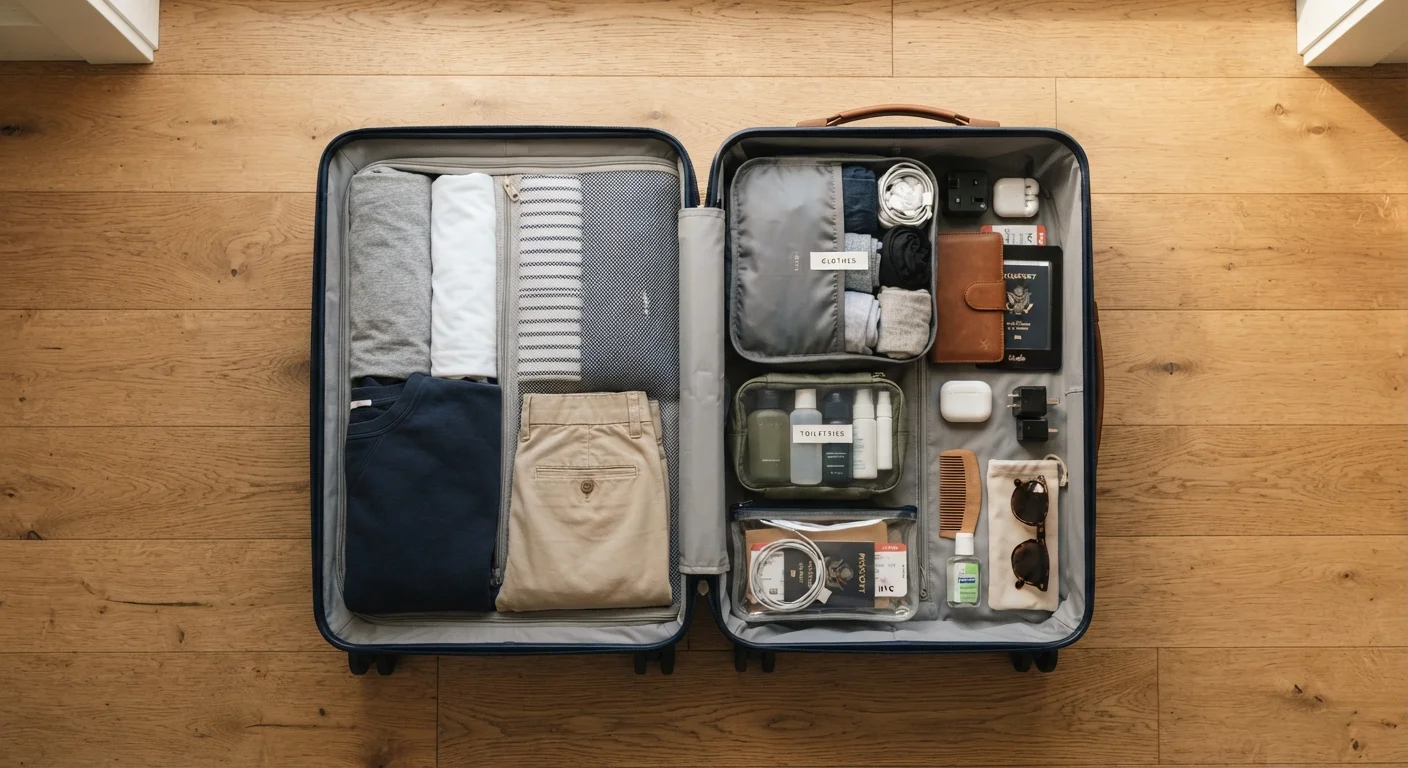
Photo credit: QuickInsights.net
In this article
Packing for back-to-back destinations is a skill. Learn the packing and logistics approaches that experienced multi-country travelers rely on.
Key Takeaways
- Choosing a versatile, neutral-toned wardrobe built around layering eliminates the need for excess clothing.
- Packing cubes and compression bags impose structure that makes unpacking and repacking faster at every stop.
- Identifying what you can buy or launder abroad lets you pack significantly lighter without going without.
- Knowing each destination's climate range and dress customs prevents packing the wrong items entirely.
- Carry-on constraints force intentional choices that ultimately make multi-country travel less stressful.
Why the Carry-On Constraint Actually Helps You
Checking a bag across multiple countries introduces friction at every turn - longer airport waits, checked bag fees that vary by airline and route, and the real risk of luggage arriving somewhere you've already left. Traveling with only a carry-on eliminates those variables entirely.
But the benefit goes further than logistics. The discipline of fitting everything into roughly 22 liters forces you to make deliberate choices about what you actually use versus what you bring out of habit. Most experienced multi-destination travelers report that once they committed to carry-on-only travel, they never went back - not because it's always easy, but because the trade-offs genuinely favor it.
For context on the broader planning decisions that affect packing, see the end-to-end international travel framework - it covers how destination sequence, climate overlap, and transit logistics all shape what you need to bring.
The Wardrobe System That Works Across Climates
The single biggest mistake multi-country travelers make is packing for individual destinations rather than building a unified system. The goal is a travel wardrobe where every item works with at least three others, and the combination of those items covers a realistic range of temperatures and social contexts.
Neutral colors - charcoal, navy, olive, cream - allow easy mixing. Merino wool and synthetic-blend fabrics resist odor, dry quickly, and compress well. A lightweight down or packable jacket handles both cool evenings and air-conditioned transit. The total clothing count that tends to work for most travelers on trips of one to four weeks: three or four tops, two bottoms, one layer, five days of underwear, and one pair of versatile shoes beyond what you're wearing.
Check local dress norms before you finalize your wardrobe choices - covering requirements at religious sites, formality expectations at restaurants, or beach cultures all affect what's actually practical to pack. Each destination has its own context, and respecting those norms matters both socially and practically.
Laundry Logistics and the Buy-As-You-Go Mindset
Access to laundry is one of the most underplanned aspects of multi-country travel. Most accommodation types - hostels, guesthouses, mid-range hotels, and short-term rentals - offer laundry facilities or can connect you with a local laundromat. In many parts of Southeast Asia, Central America, and Southern Europe, drop-off laundry services are inexpensive and return clothes within 24 hours.
Planning one laundry day every five to seven days transforms how much you need to pack. A small packet of travel laundry soap lets you hand-wash a few items in a sink when timing doesn't allow for a full laundry run.
The buy-as-you-go approach works for items that are genuinely cheaper abroad or that you'll use once - a locally appropriate scarf, sandals for a beach stop, or cold-weather layers for an unexpected altitude change. Budget travelers have long used this strategy intentionally; the key is accounting for it in your travel budget. The travel budget guide covers how to build in this kind of contingency spending without disrupting your overall plan.
Organization and Daily Packing Habits That Save Time
Packing cubes are the single most consistently recommended organizational tool among frequent multi-country travelers - not because they compress significantly, but because they let you extract what you need without disturbing the rest of your bag. A simple system: one cube for tops, one for bottoms and layers, one for electronics and cables, and a small toiletry bag that complies with carry-on liquid rules.
Keep your most-accessed items - travel documents, a backup card, your phone charger - in the same external pocket every single day. Consistency matters more than the specific location. This habit becomes especially important when you're moving through multiple transport modes in a single day.
Speaking of documents: protecting your money and travel documents deserves its own focused attention. Digital backups stored in secure cloud access and physical copies kept separate from originals are baseline habits for any multi-country trip.
Toiletries, Medications, and the TSA Liquid Rule
The 3-1-1 rule - containers of 3.4 ounces or less, in one quart-sized clear bag - applies on entry to the U.S. and on most international departures as well, though rules can vary. Solid versions of toiletries (shampoo bars, solid sunscreen, toothpaste tablets) eliminate the liquid calculation entirely and are now widely available.
Prescription medications should travel in their original labeled containers and be kept in your carry-on, never checked. For longer multi-country trips, carry documentation from your prescribing physician if you're carrying quantities that might raise questions at customs. Regulations around specific medications vary considerably by country - always verify requirements before departure through official government or embassy sources. The pre-departure checklist covers medication documentation alongside other commonly missed preparation steps.
For most toiletries you'll consume anyway - shampoo, conditioner, body wash - buying small local sizes at your first destination avoids the liquid calculation and reduces what you carry from home.

Author
Travel Editorial Team
Travel Editorial Team is the collective byline for our editorial team and contributor network. Articles published under this byline or an editorial pen name are researched, written, and reviewed according to our editorial standards for clarity, consistency, and independence before publication.
View all articles →