
Listing Price vs. Sale Price: Why the Gap Exists and What It Signals
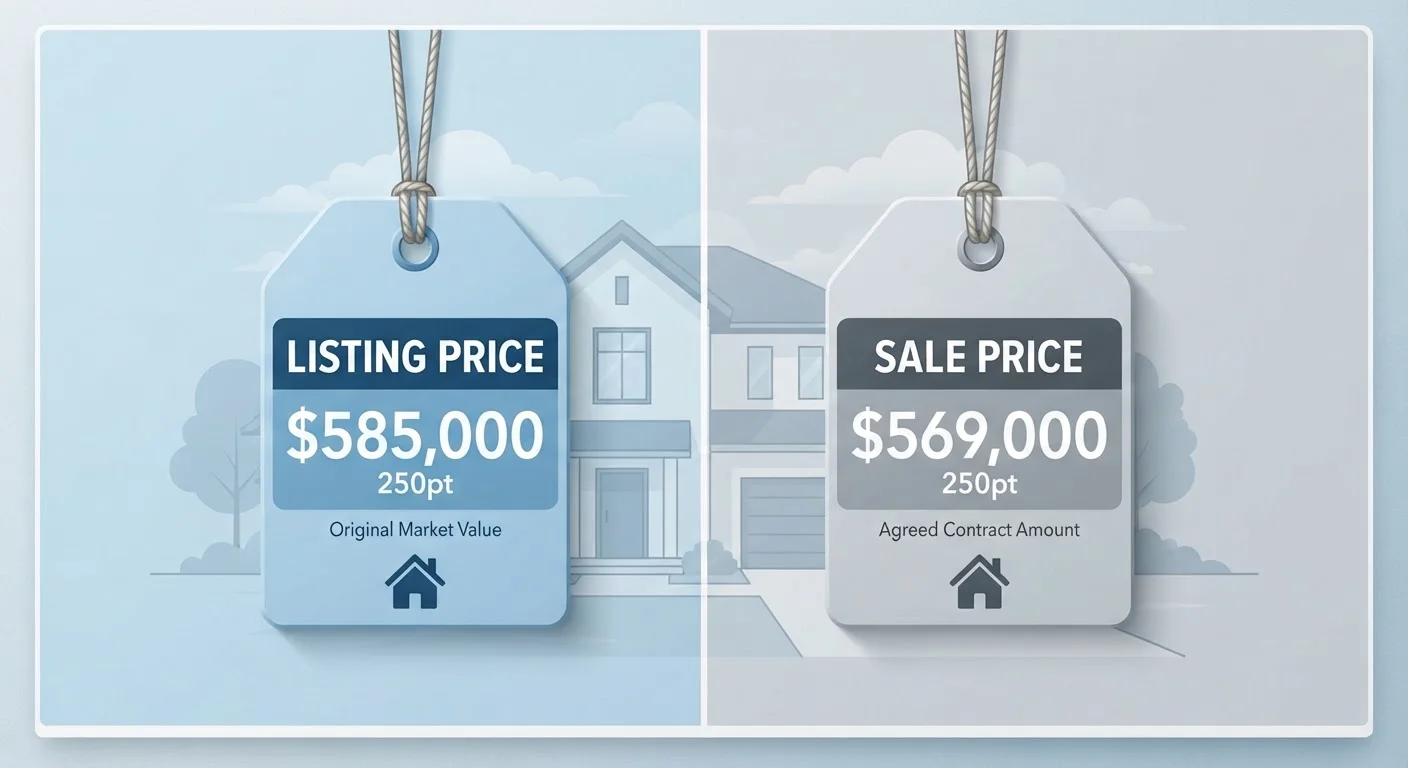
Photo credit: QuickInsights.net
In this article
The price a home lists at and the price it sells for are rarely identical. Understanding that gap helps sellers set smarter expectations.
Key Takeaways
- The listing price is what a seller asks; the sale price is what the market agrees to pay - they are rarely identical.
- A consistent gap between listing and sale prices in your area signals whether buyers or sellers hold the upper hand.
- Overpricing a listing often leads to a lower final sale price after extended days on market and price reductions.
- In competitive markets, homes sometimes sell above listing price when multiple buyers compete for limited inventory.
- Sellers should anchor their listing price in recent comparable sales data, not estimated future appreciation.
What Each Number Actually Represents
When a home hits the market, the listing price is the seller's opening declaration - a number shaped by comparable sales, agent input, property condition, and sometimes emotion. It is not a guaranteed value; it is an invitation to negotiate.
The sale price, by contrast, is what both parties formally agree upon after offers, counteroffers, inspections, and appraisals have run their course. It reflects the intersection of what a seller will accept and what a buyer will pay - in the actual market conditions of that specific moment.
These two numbers can diverge significantly. Understanding why that gap exists - and what direction it runs - tells sellers far more than either figure alone. If homes in your area consistently sell below asking price, buyers hold leverage. If they routinely close above listing price, competition among buyers is compressing supply. Market conditions shape everything from pricing to negotiation leverage, so reading that gap correctly is foundational to pricing strategy.
| Criterion | Listing Price | Sale Price |
|---|---|---|
| Set by | Seller and listing agent | Buyer-seller negotiation |
| Reflects | Seller expectations and strategy | Actual market demand and conditions |
| Validated by | Comparable active listings | Buyer willingness and often an appraisal |
| Can change? | Yes - via price reductions | Fixed once contract is executed |
| Used for | Marketing, initial positioning | Comps, tax records, future appraisals |
| Above or below in hot market | Lower than sale price | Higher than listing price |
| Above or below in slow market | Higher than sale price | Lower than listing price |
Why the Gap Forms - and What Drives It
Several forces determine how wide or narrow the listing-to-sale-price gap becomes:
- Market temperature: In a seller's market with low inventory, buyers compete aggressively, and sale prices frequently exceed listing prices. In a buyer's market with abundant supply, sellers often accept less than asking.
- Initial pricing accuracy: Homes priced close to true market value from day one tend to close nearer to - or above - asking price. Overpriced homes often sell for less in the end after extended time on market erodes buyer urgency.
- Inspection and appraisal findings: A buyer may negotiate a price reduction after a home inspection reveals deferred maintenance, or when an appraisal comes in below the agreed contract price.
- Seller motivation: A seller with a firm deadline - a job relocation or an accepted offer on another property - may accept a lower sale price to close efficiently.
~98-99%
Typical list-to-sale ratio in balanced markets
National Association of Realtors data has historically shown sale prices averaging within 1-2% of listing price in balanced market conditions, with wider swings in hot or cold cycles.
17+ days
Additional market time after a price cut
Industry research consistently shows that homes requiring a price reduction spend meaningfully more time on market than comparably priced homes that were correctly priced from the start.
100%+
List-to-sale ratio in peak competitive markets
During periods of very low inventory, it is not uncommon for sale prices in high-demand metros to exceed listing prices, sometimes by several percentage points.
Buyers and their agents track list-to-sale ratios closely. Learning to decode what a listing signals is equally important for buyers trying to understand whether a price is realistic before making an offer.
How Sellers Should Use This Data
Sellers who treat the listing price as a fixed target rather than a market signal are often disappointed at the closing table. A more effective approach involves treating both numbers as data points in an ongoing strategy.
Before listing, ask your agent to pull sold comps - the actual sale prices of comparable homes in your zip code over the past 90 days - rather than active listing prices, which reflect other sellers' hopes rather than proven market value. The sale price on a closed transaction is the only number that has been validated by a real buyer and, in most financed sales, an independent appraiser.
Once listed, monitor your days on market carefully. A home that sits beyond 30-45 days without serious offers is often priced above what buyers believe it is worth. A price reduction at that stage may be necessary, but it typically signals distress to active buyers - reinforcing why accurate initial pricing matters so much.
If you do receive multiple offers above your listing price, resist the temptation to evaluate bids by price alone. A higher price isn't always the strongest offer - contingencies, financing type, and proposed closing timelines all affect whether that sale price actually reaches the closing table.
This article is for general informational purposes only and does not constitute financial, legal, or real estate advice. Consult a licensed real estate professional for guidance specific to your property and market.
Why Appraisals Matter to the Gap
In most financed home purchases, a lender-ordered appraisal independently estimates the property's market value. If the appraised value comes in below the agreed sale price, the buyer's lender will typically only finance up to the appraised amount. This can trigger renegotiation or require the buyer to cover the difference in cash - making the appraisal a key checkpoint between a contract price and a closed sale price.

Author
Real Estate Editorial Team
Real Estate Editorial Team is the collective byline for our editorial team and contributor network. Articles published under this byline or an editorial pen name are researched, written, and reviewed according to our editorial standards for clarity, consistency, and independence before publication.
View all articles →