
Handling Multiple Offers: How Sellers Can Evaluate Competing Bids
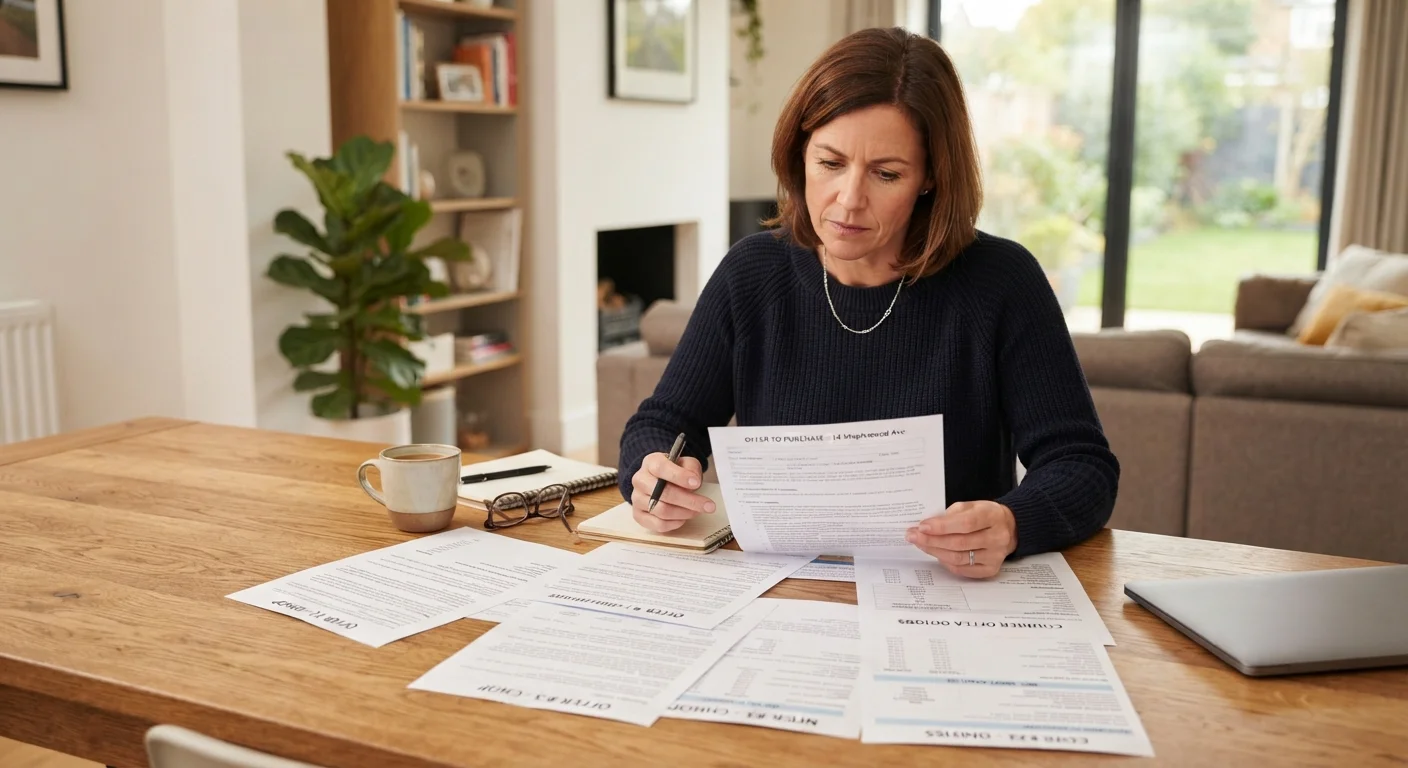
Photo credit: QuickInsights.net
In this article
A higher price isn't always the strongest offer. Learn what terms, contingencies, and financing types to weigh when bids stack up.
Key Takeaways
- The highest offer price is not always the strongest - financing type, contingencies, and timeline all matter significantly.
- Cash offers carry less transaction risk but may come in below asking price; weigh the trade-off carefully.
- Escalation clauses and waived contingencies shift risk from buyer to seller - understand each before accepting.
- Setting a clear offer deadline creates a fair, structured environment for comparing competing bids.
- Your listing agent is a critical partner in evaluating offer quality and negotiating favorable terms.
Why Multiple Offers Require a Framework, Not Just a Gut Reaction
Receiving multiple offers is a milestone most sellers hope for, but the experience can quickly become overwhelming. With three, five, or even ten bids arriving within days of listing, the temptation is to simply pick the highest number and move on. That instinct, however well-intentioned, often leads to regret.
A higher purchase price means nothing if the deal collapses during inspection, if a mortgage falls through at underwriting, or if the buyer demands repeated extensions that cost you weeks and carrying costs. Understanding how to evaluate competing offers as a complete package - not just a price tag - is what separates sellers who close smoothly from those who end up relisting.
This process pairs closely with smart pricing strategy from the start. As outlined in our analysis of overpricing risks, homes priced correctly tend to attract more serious, competitive offers - giving you a stronger position to work from when bids arrive.
What you will need
What to Look At in Every Offer
Each offer is a package of financial and contractual terms. Evaluate all of them together before drawing conclusions.
Purchase Price
Price matters, obviously. But note whether an offer includes an escalation clause - a provision that automatically increases the buyer's bid by a set increment above competing offers, up to a stated cap. Escalation clauses signal motivated buyers but require you to disclose the competing offer amount that triggered the escalation, which some sellers prefer to avoid.
Financing Type
Cash offers eliminate lender involvement entirely, reducing the chance of a deal falling apart due to loan denial or appraisal issues. Financed offers - whether conventional, FHA, or VA - introduce more variables. FHA and VA loans carry specific appraisal and property condition requirements that can complicate closings on older homes. For a broader look at how loan types differ, see the Mortgages & Financing hub.
Contingencies
Contingencies are conditions the buyer can use to exit the contract without penalty. Common ones include:
- Inspection contingency: Buyer can negotiate repairs or walk away based on findings.
- Financing contingency: Buyer can exit if their loan is not approved.
- Appraisal contingency: Buyer can renegotiate or cancel if the home appraises below the offer price.
- Home sale contingency: Buyer's purchase depends on selling their current home first.
Fewer contingencies generally favor the seller, but waived contingencies shift risk onto the buyer - and occasionally create legal or ethical complexity. Sellers should never pressure a buyer to waive contingencies inappropriately.
Home Sale Contingencies Carry Significant Risk
An offer contingent on the buyer selling their own home introduces a chain of uncertainty entirely outside your control. If their home sits on the market or their deal falls through, your transaction stalls. Unless the market is slow and options are limited, sellers in competitive situations typically decline or counter these offers with a 'kick-out clause' - a provision allowing you to continue marketing and accept another offer if the buyer can't remove the contingency within a set window. Discuss this option with your listing agent.
Earnest Money Deposit
A larger earnest money deposit (typically 1-3% of purchase price, though amounts vary by market) signals buyer commitment and gives you more financial protection if the deal falls through due to buyer default.
Closing Timeline
Does the proposed closing date match your needs? A buyer offering full asking price but requesting a 60-day close may be less attractive than a slightly lower offer with a 21-day close if you need to move quickly - or vice versa.
How to Structure the Multiple-Offer Process
A clear process protects you legally and positions you to get the best possible outcome.
Set an Offer Deadline Before Bids Arrive
Rather than reviewing offers as they trickle in, establish a clear offer deadline - typically 2-4 days after listing goes live. Communicate this through your agent and in the MLS remarks. This creates a structured window that encourages all interested buyers to submit their strongest offer simultaneously, giving you a clean, side-by-side comparison.
Create a Side-by-Side Comparison Spreadsheet
Ask your listing agent to organize all offers into a comparison sheet with columns for: purchase price, financing type, contingencies (and which are waived), earnest money amount, proposed closing date, and any special requests (rent-back agreements, personal property inclusions, etc.). Looking at all offers on the same template removes the cognitive distortion of reviewing each one in isolation.
Assess Net Proceeds, Not Just Offer Price
Factor in any seller concessions built into the offer. A buyer asking for $8,000 in closing cost assistance effectively reduces your net proceeds by that amount. Calculate the estimated net for each offer after concessions, commissions, and anticipated closing costs. Your agent can prepare a net sheet for each bid to make this comparison concrete.
Evaluate Financing Strength and Appraisal Risk
For financed offers, review the pre-approval letter carefully. Note the lender, loan type, and whether the buyer is pre-approved (underwriting reviewed) versus merely pre-qualified (a softer, less verified status). If your home is priced aggressively, assess which offers include an appraisal gap guarantee - a commitment from the buyer to cover any difference between the appraised value and the purchase price out of pocket.
Counter, Accept, or Call for Best and Final
Once you've evaluated all offers, you have three main options: accept the strongest offer outright, counter one or more offers on specific terms, or issue a 'best and final' request asking all serious buyers to submit their highest and best offer by a second deadline. Best-and-final rounds work well when two or three offers are closely matched. Work with your agent to choose the approach most likely to produce your desired outcome without unnecessarily alienating strong buyers.
What Sellers Often Overlook
Beyond the financial terms, a few qualitative factors can influence which offer is truly the safest choice.
Buyer's lender reputation: Pre-approval letters from well-established lenders carry more weight than letters from unknown online lenders who may have loose underwriting standards. Ask your agent whether they recognize the lender.
Proof of funds for cash offers: Any buyer claiming to pay cash should provide a bank statement or equivalent documentation confirming they have the funds available. Request this as part of your review process.
Communication quality: How quickly and professionally does the buyer's agent respond? Slow or unclear communication during the offer stage often foreshadows difficulties during the transaction itself.
For buyers reading this from the other side of the table, our guide on making a competitive offer without overextending your budget explains how experienced buyers think about structuring bids - context that can help sellers interpret what they're seeing.
Consider the Full Picture Before Countering
If one offer is stronger on price but weaker on terms, and another is slightly lower but cleaner, a targeted counter to the stronger-terms buyer can often close the gap. Your agent can help you craft a counter that improves your net proceeds without triggering a buyer withdrawal. Negotiation at this stage is normal and expected - don't feel locked into a binary accept-or-decline choice.

Author
Real Estate Editorial Team
Real Estate Editorial Team is the collective byline for our editorial team and contributor network. Articles published under this byline or an editorial pen name are researched, written, and reviewed according to our editorial standards for clarity, consistency, and independence before publication.
View all articles →