
Tracking Spending by Hand vs. Using an App
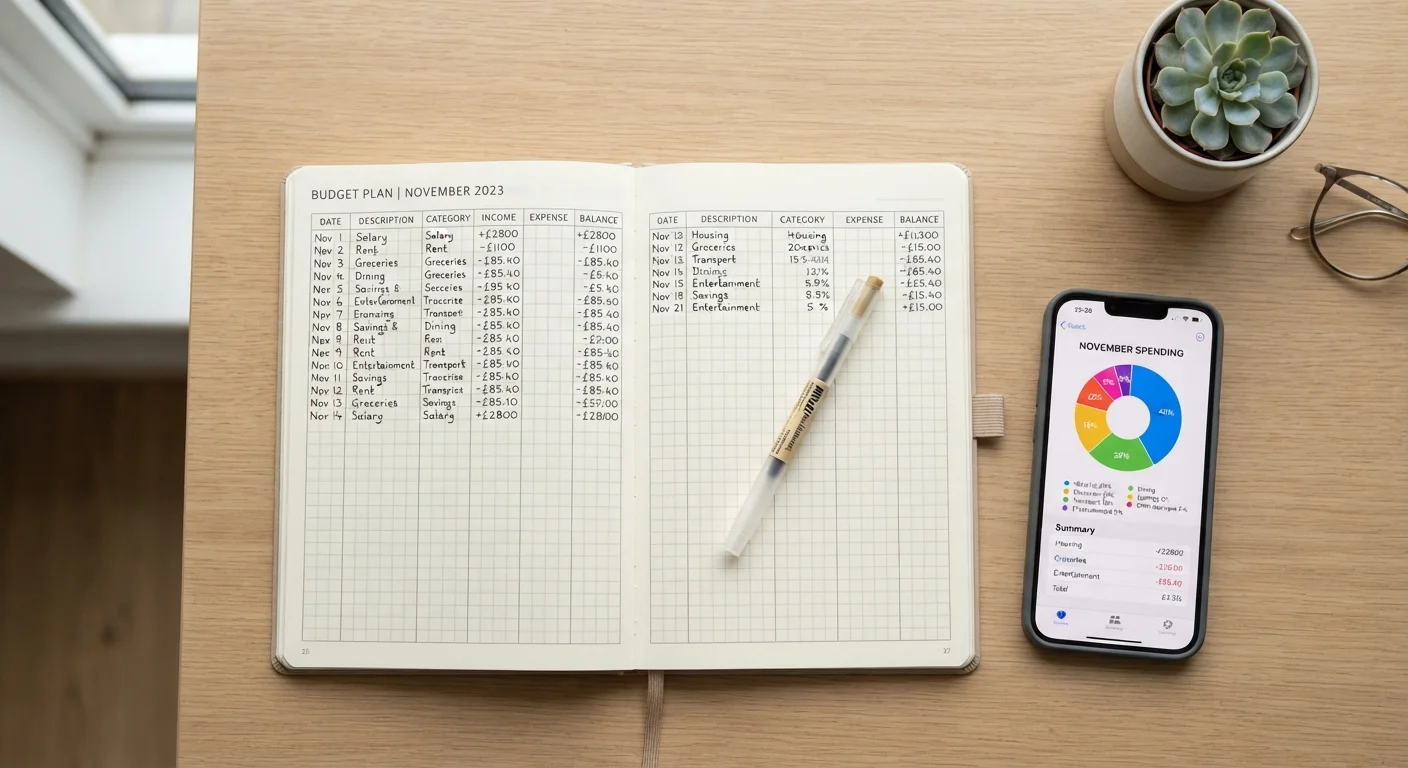
Photo credit: QuickInsights.net
In this article
Pen-and-paper budgeting builds awareness; apps automate the work. Explore the real trade-offs so you can choose the approach that actually sticks for you.
Key Takeaways
- Tracking by hand forces deliberate attention to each transaction, which can build stronger money awareness.
- Apps automate data entry and categorization, making consistency easier for busy people.
- Neither method works if you stop using it - sustainability matters more than the tool itself.
- Many people find a hybrid approach - partial manual review with app-assisted tracking - suits them best.
- The right method depends on your habits, tech comfort level, and what motivates you to stay on track.
Why the Tracking Method You Choose Actually Matters
Most people know they should track their spending. Far fewer keep doing it past the first month. The tool you use plays a real role in that drop-off - not because one method is objectively superior, but because different formats suit different brains and lifestyles.
This isn't a technical question. It's a behavioral one. Understanding what each approach demands from you - and what it gives back - makes it much easier to pick a method that sticks. For a broader foundation, see Personal Budgeting: The Complete Picture.
What Tracking by Hand Actually Looks Like
Manual tracking means writing down every expense - in a notebook, a printed template, or a simple spreadsheet you update yourself. You record the amount, the category, and often the date, then tally things up periodically.
The main advantage is friction - in a good way. When you have to write something down, you tend to notice it more. Research in behavioral economics consistently shows that the act of recording a purchase increases awareness of spending patterns. Many people describe a genuine shift in how they think about purchases once they start putting pen to paper.
The drawbacks are real, though. Manual tracking is time-consuming, easy to fall behind on, and only as accurate as your memory and receipts. Miss a few days and the system breaks down quickly. It also offers no automation - every insight has to be calculated by hand.
Consider Pairing Manual Review with App Data
Even if you use an app to capture transactions automatically, scheduling a weekly 10-minute review - where you read through each entry manually - can restore the reflective benefit of handwritten tracking. Awareness is the goal; automation is just one path to get there.
If you're drawn to manual tracking but worry about consistency, pairing it with a proven framework can help. The envelope budgeting method is one structure that translates well to a handwritten format.
What Using a Budgeting App Actually Looks Like
Budgeting apps typically connect to your bank accounts and credit cards, pulling transactions automatically. They categorize spending, display charts, and often send alerts when you approach a limit. Some let you set goals, track net worth, or flag unusual charges.
The core benefit is automation. You don't have to remember to log a coffee purchase - it's already there. This lowers the daily effort required to maintain a budget significantly, which helps many people stay consistent over time.
The trade-offs are worth understanding, though. Syncing your financial accounts with a third-party app raises legitimate privacy and security questions - it's worth reading any app's data practices carefully before connecting accounts. Apps can also create a false sense of control: if you're glancing at colorful charts without actually adjusting behavior, the data isn't doing much work. Auto-categorization errors are also common, requiring periodic manual corrections.
| Tracking by Hand | Using an App | |
|---|---|---|
| Setup effort | Low - just paper or a spreadsheet | Moderate - account linking, configuration |
| Daily time required | Higher - manual entry each day | Lower - transactions auto-imported |
| Spending awareness built | High - deliberate recording increases attention | Moderate - easy to skim without absorbing |
| Accuracy | Depends on memory and receipts | High, but auto-categorization errors occur |
| Privacy risk | Minimal - no accounts connected | Higher - third-party data access |
| Long-term consistency | Harder to maintain without discipline | Easier due to automation |
| Cost | Free or near-free | Free tiers available; some charge monthly fees |
Choosing What Works for Your Situation
A few honest questions can point you toward the right fit:
- Do you prefer tactile, deliberate activities? Manual tracking may reinforce your habits better.
- Is your schedule unpredictable or fast-paced? An app's automation removes daily decision-making from the equation.
- Have you tried one method and quit? That's useful data - switching approaches is reasonable, not failure.
- Are you tracking in an unusual context - like a trip? See building a travel budget that doesn't fall apart mid-trip for method-specific considerations.
Some people do well with a hybrid: use an app to capture transactions automatically, then review and annotate them manually once a week. This preserves the reflection of manual tracking with the completeness of automation.
Whatever you choose, the categories you track matter as much as the tool. Spending categories most people overlook - like subscriptions and irregular bills - can quietly derail any budget, regardless of format. And once the system is running, habits that keep a budget working long-term become the real differentiator.
This article is for general informational and educational purposes only and does not constitute personalized financial advice. Consult a qualified financial professional for guidance specific to your situation.

Author
Personal Finance Editorial Team
Personal Finance Editorial Team is the collective byline for our editorial team and contributor network. Articles published under this byline or an editorial pen name are researched, written, and reviewed according to our editorial standards for clarity, consistency, and independence before publication.
View all articles →