
Envelope Budgeting in a Digital World
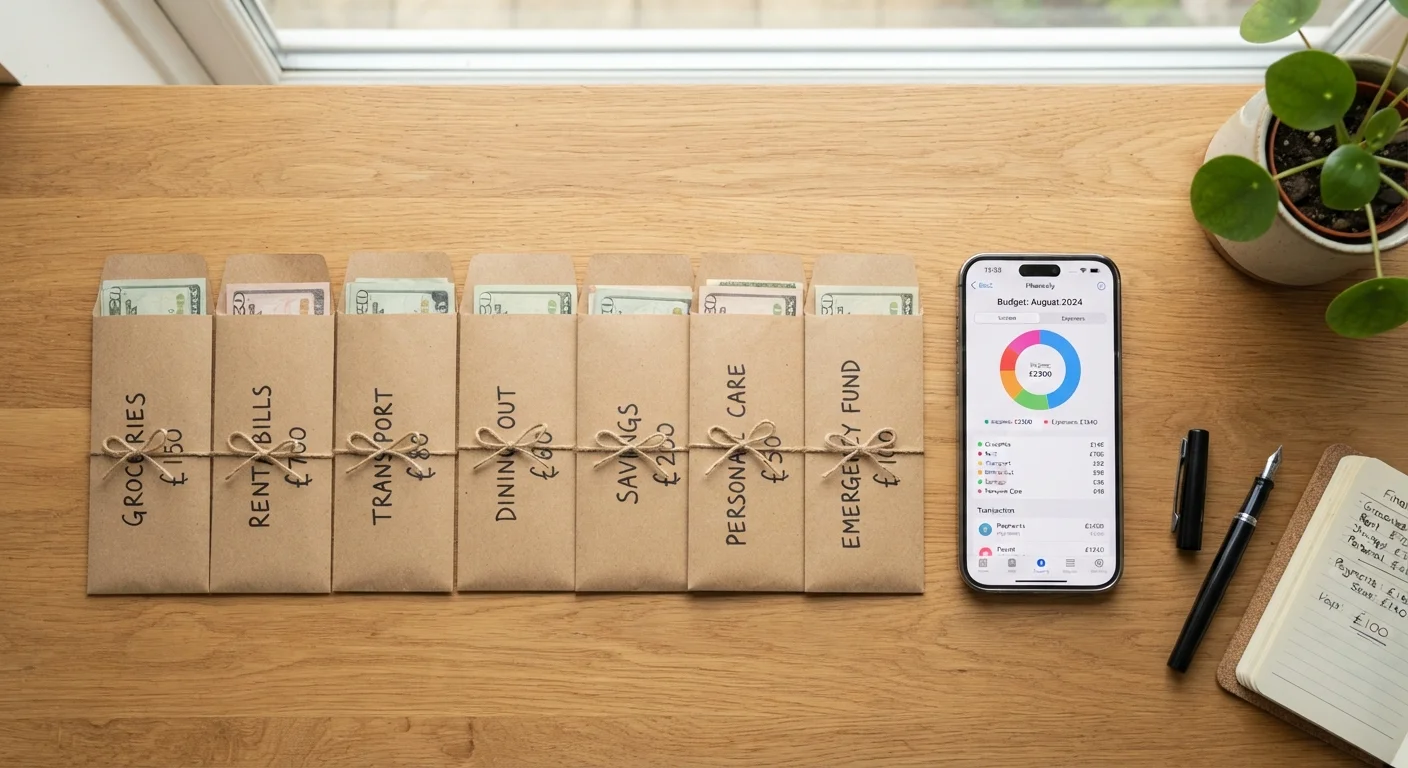
Photo credit: QuickInsights.net
In this article
The envelope method is one of the oldest spending controls around. See how the concept works, its limitations, and how people adapt it to cashless everyday life.
Key Takeaways
- Envelope budgeting assigns a fixed cash amount to each spending category before the month begins.
- When an envelope is empty, spending in that category stops - creating a hard, visible limit.
- Digital apps and virtual envelopes let you apply the same logic without carrying physical cash.
- The method works best for variable expenses like groceries, dining, and entertainment.
- It requires consistent upkeep and may feel rigid for people with irregular income.
Makes overspending immediately visible
When the grocery envelope is empty, you know - there's no ambiguity about whether you have room left. This tangibility is difficult to replicate with a running account balance.
Stops category creep before it starts
Discretionary spending categories like dining and entertainment tend to expand gradually without a hard cap. Pre-set envelope amounts prevent this drift by design.
Requires no complicated math or software
The system works with cash and labeled envelopes - nothing more. This low barrier makes it accessible to anyone regardless of comfort with technology or financial tools.
Builds genuine awareness of spending patterns
Physically handling cash and watching envelopes thin out creates a visceral connection to spending that digital transactions often lack. Many people find this awareness persists even after they stop using cash.
Encourages intentional allocation before spending occurs
Decisions are made at the start of the month when you're thinking clearly, not in the moment at the checkout counter - which reduces impulse-driven overspending.
Carrying cash is inconvenient and risky
Lost or stolen cash envelopes are not recoverable the way a disputed card charge might be. Many people also find that carrying category-specific cash for an entire month is genuinely cumbersome.
Doesn't cover fixed expenses naturally
Rent, insurance, and loan payments don't fit the envelope model well because they're already fixed and automatic. The method adds the most value for variable, discretionary categories.
Rigid structure can frustrate irregular spenders
Life doesn't follow neat monthly categories. An unexpected car repair or medical bill can blow up multiple envelopes at once, requiring manual rebalancing that feels discouraging.
Difficult with variable or irregular income
If your paycheck changes month to month, deciding how much goes in each envelope is a real challenge. The system assumes a reasonably predictable income baseline.
Requires consistent manual upkeep
You must replenish envelopes each pay period and track what's been spent. For people who want automation or minimal maintenance, this ongoing effort can feel like a burden.
How Envelope Budgeting Works
The envelope method is straightforward. At the start of each pay period, you divide your available spending money into physical envelopes - one for groceries, one for gas, one for dining out, and so on. Each envelope holds only what you've decided that category deserves. Once the cash is gone, that category is done for the month.
This simplicity is the whole point. Unlike tracking spending after the fact, envelope budgeting forces a decision before money is spent. You're not discovering you overspent on takeout at the end of the month - you can feel the envelope getting thin.
For a broader foundation in budgeting concepts before diving into a specific method, see our beginner's guide to budgeting. And if you want to compare envelope budgeting to other structured frameworks, zero-based budgeting vs. the percentage method is a useful reference.
Pros of the Envelope Method
The envelope method has endured for decades because it addresses real behavioral patterns around money - not just math.
Makes overspending immediately visible
When the grocery envelope is empty, you know - there's no ambiguity about whether you have room left. This tangibility is difficult to replicate with a running account balance.
Stops category creep before it starts
Discretionary spending categories like dining and entertainment tend to expand gradually without a hard cap. Pre-set envelope amounts prevent this drift by design.
Requires no complicated math or software
The system works with cash and labeled envelopes - nothing more. This low barrier makes it accessible to anyone regardless of comfort with technology or financial tools.
Builds genuine awareness of spending patterns
Physically handling cash and watching envelopes thin out creates a visceral connection to spending that digital transactions often lack. Many people find this awareness persists even after they stop using cash.
Encourages intentional allocation before spending occurs
Decisions are made at the start of the month when you're thinking clearly, not in the moment at the checkout counter - which reduces impulse-driven overspending.
These advantages are most pronounced for people who find that knowing their account balance doesn't stop them from spending. The physical or virtual boundary of an envelope adds friction that a general balance figure simply doesn't provide.
Cons of the Envelope Method
No budgeting system is universal. The envelope method has real drawbacks that prevent it from being a fit for everyone.
Carrying cash is inconvenient and risky
Lost or stolen cash envelopes are not recoverable the way a disputed card charge might be. Many people also find that carrying category-specific cash for an entire month is genuinely cumbersome.
Doesn't cover fixed expenses naturally
Rent, insurance, and loan payments don't fit the envelope model well because they're already fixed and automatic. The method adds the most value for variable, discretionary categories.
Rigid structure can frustrate irregular spenders
Life doesn't follow neat monthly categories. An unexpected car repair or medical bill can blow up multiple envelopes at once, requiring manual rebalancing that feels discouraging.
Difficult with variable or irregular income
If your paycheck changes month to month, deciding how much goes in each envelope is a real challenge. The system assumes a reasonably predictable income baseline.
Requires consistent manual upkeep
You must replenish envelopes each pay period and track what's been spent. For people who want automation or minimal maintenance, this ongoing effort can feel like a burden.
For people with highly variable income - freelancers, gig workers, or those with seasonal pay - deciding envelope amounts upfront is genuinely difficult. If this applies to you, the complete picture of personal budgeting covers approaches better suited to income that fluctuates month to month.
Adapting the Method for a Cashless Life
Most Americans rarely carry significant cash today, which makes the classic paper-envelope system impractical for everyday use. The core concept, however, doesn't require physical currency - it requires dedicated allocation.
Digital Envelope Tools: What to Know
Several budgeting apps are built around envelope-style category allocation, allowing users to set spending limits per category and receive alerts as they approach them. These tools don't require physical cash - instead, they link to your accounts and categorize transactions automatically. The trade-off is that the friction of handling physical money disappears, which some people find reduces the psychological impact of the system. Experimenting with both approaches for a month each can reveal which version you'll actually maintain.
Several budgeting apps replicate the envelope logic digitally, letting you assign portions of your income to named categories and tracking spending against each limit in real time. The mechanics differ, but the discipline is the same: you decide in advance, and the tool enforces it.
You can also simulate envelope budgeting with separate bank accounts or sub-accounts - one for groceries, one for discretionary spending - though managing multiple accounts adds its own administrative load. For a direct comparison of digital versus manual tracking approaches, tracking spending by hand vs. using an app lays out the real trade-offs.
~33%
Americans with a detailed monthly budget
Gallup polling has found that roughly one-third of U.S. adults maintain a detailed household budget, highlighting how many people lack a structured spending plan.
12%
U.S. cash transactions by volume
According to the Federal Reserve's Diary of Consumer Payment Choice, cash accounted for roughly 12% of U.S. transaction volume in recent survey years, underscoring why digital adaptations of cash-based methods matter.
Making It Stick Over Time
Starting an envelope budget is easier than maintaining one. The most common failure points are not refilling envelopes consistently, raiding one envelope to cover another without adjusting the plan, and giving up after the first month when categories don't feel right.
Category amounts almost never work perfectly on the first try. Treat the first two or three months as a calibration period rather than a pass/fail test. Adjust amounts that are chronically too low - that's useful data, not failure.
For guidance on the habits that keep any budget running past the first month, habits that keep a budget working long-term covers the practices that make the difference. Building savings alongside your spending plan is also worth attention - the Saving & Debt hub offers practical guidance on both fronts.
This article is for general informational and educational purposes only and does not constitute personalised financial advice. Consult a qualified financial professional for guidance specific to your situation.

Author
Personal Finance Editorial Team
Personal Finance Editorial Team is the collective byline for our editorial team and contributor network. Articles published under this byline or an editorial pen name are researched, written, and reviewed according to our editorial standards for clarity, consistency, and independence before publication.
View all articles →