
Spending Categories Worth Tracking That Most People Overlook
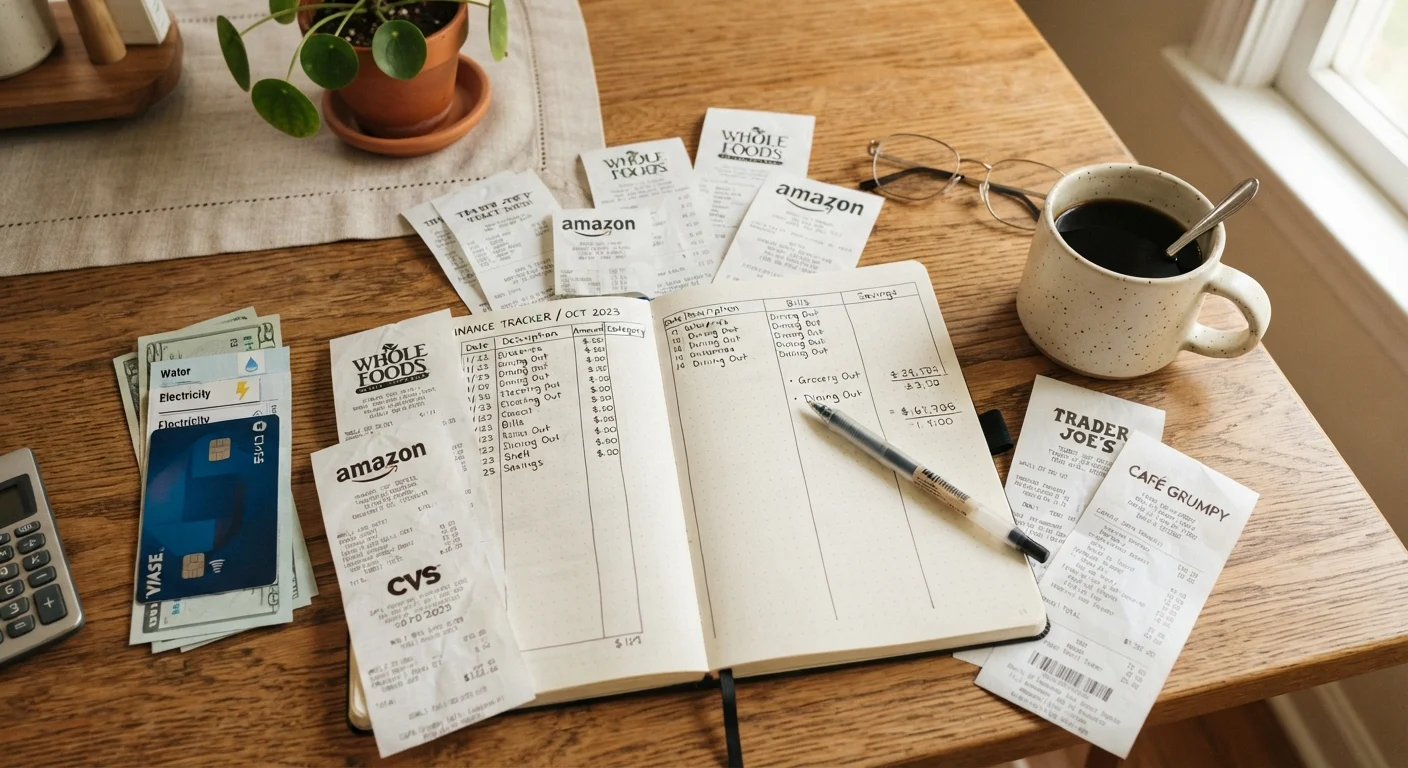
Photo credit: QuickInsights.net
In this article
Subscriptions, ATM fees, irregular bills — some costs quietly derail budgets because people forget to account for them. Here are the categories worth a closer look.
Key Takeaways
- Many budget leaks come from spending categories people simply never create a line for.
- Irregular and annual expenses are among the most common budget-busters for American households.
- Tracking overlooked categories once often reveals recurring savings opportunities worth hundreds of dollars.
- Small recurring charges - like subscriptions and bank fees - add up significantly over a full year.
- A complete budget accounts for both predictable and unpredictable spending across all areas of life.
Why Some Costs Always Seem to Catch You Off Guard
Most people can name their big monthly bills without blinking: rent, car payment, utilities, groceries. But budgets don't fail on the obvious stuff. They fail on the costs that show up every few months, the charges you forgot you authorized, and the small fees that seem too minor to track - until you add them up.
If you've ever reached the end of a month wondering where your money went despite following your budget closely, the answer is probably hiding in one of these overlooked categories. Understanding how fixed, variable, and discretionary expenses differ is a useful foundation - but even a solid framework misses costs that don't fit neatly into any standard bucket.
The categories below are worth adding to your tracking system. None of them are exotic. They're just easy to ignore until they become a problem.
Subscription services and recurring memberships
Streaming platforms, cloud storage, fitness apps, meal kit services, news sites - these charges are small individually, often ranging from $5 to $20 a month. But households typically carry more active subscriptions than they realize, and many people are paying for services they rarely or never use. Pull up your bank and credit card statements and search for recurring charges. You may find subscriptions you forgot to cancel after a free trial or memberships that auto-renewed.
Create a single line in your budget labeled "subscriptions" and total everything that hits monthly, quarterly, or annually. Reviewing this list a couple of times a year is a straightforward way to reclaim money with minimal effort.
Most households carry more active subscriptions than they realize - and pay for some they never use.
Annual and semi-annual bills
Car registration, insurance premiums paid twice a year, professional memberships, domain renewals, Amazon Prime - these costs are real but easy to forget because they don't show up every month. When they arrive, they can feel like an unplanned expense even though they're entirely predictable.
The fix is simple: list every annual or semi-annual expense you pay, divide the total by 12, and set aside that amount each month into a dedicated savings buffer. That way, when the bill arrives, the money is already there. This is sometimes called "sinking funds" - a common personal finance strategy worth adopting.
Annual bills feel like surprises only because most people don't budget for them monthly in advance.
Bank fees and ATM charges
Out-of-network ATM fees typically run $3-$5 per transaction from your bank, plus a fee from the ATM owner - meaning a single withdrawal can cost $6 or more. Monthly maintenance fees, overdraft charges, and wire transfer fees also add up quietly. These aren't dramatic line items, but $10-$30 a month in avoidable fees is $120-$360 a year.
Track these for a month or two and you'll see the pattern clearly. Many banks waive fees under certain conditions, and some accounts are specifically structured to minimize them - understanding your options is worth the time.
A single out-of-network ATM withdrawal can cost $6 or more once both fees are counted.
Vehicle costs beyond the monthly payment
If you own a car, your monthly payment is just the starting point. Oil changes, tire rotations, registration, parking, tolls, and unexpected repairs all belong in your budget. Many people track their car payment faithfully but treat everything else as an irregular surprise. The result is a category that consistently runs over.
A reasonable approach is to estimate your annual vehicle maintenance and incidental costs, divide by 12, and budget that amount monthly. The true cost of car ownership includes far more than the sticker price or loan amount.
Car owners who only budget for their monthly payment routinely underestimate their true vehicle costs.
Personal care and grooming
Haircuts, salon visits, razors, skincare products, nail care - these are real, recurring expenses that rarely appear in budget templates. For many households, personal care spending runs $50-$150 per month or more when everything is counted together. Because each individual purchase seems small, the category tends to get absorbed into a vague "miscellaneous" bucket where it's never properly tracked.
Give personal care its own line. Once you see the actual monthly number, you can decide whether it reflects your priorities - and adjust if it doesn't.
Personal care costs are real and recurring, yet rarely get their own dedicated budget line.
Gifts and celebrations
Birthdays, holidays, weddings, baby showers, graduations - social giving is a meaningful part of life, but it can easily derail a monthly budget when it isn't planned for. The average American household spends a substantial amount on gifts annually, and the bulk of it is concentrated in predictable windows (the holiday season, graduation season) that shouldn't really catch anyone off guard.
Estimate how much you typically spend on gifts and events over a year, then budget a monthly amount accordingly. This turns a recurring budget disruptor into a managed, expected expense. For a broader look at your overall financial picture, a monthly financial checkup can help you catch this kind of drift before it compounds.
Gift and celebration spending is predictable enough to budget for - most people just never do.
Out-of-pocket health expenses
Even with insurance, healthcare costs can surprise you: copays, prescriptions, dental work, vision care, over-the-counter medications, and amounts applied toward your deductible. These vary month to month, which makes them feel unpredictable - but most people have a reasonable sense of their average annual health spending if they look back at a full year of statements.
Tracking this category separately from insurance premiums gives you a clearer picture of your true healthcare spending. If you have access to a Health Savings Account (HSA) or Flexible Spending Account (FSA), understanding how those interact with your out-of-pocket costs is worth exploring with a qualified advisor. For broader guidance on managing these kinds of variable costs, saving and debt resources can provide additional context.
Out-of-pocket healthcare costs are highly variable but still worth estimating and tracking separately.
Making These Categories Part of Your Regular Routine
The goal isn't to obsess over every dollar - it's to eliminate the surprises that knock your budget sideways. Once you've identified your overlooked categories, the next step is building them into a system you'll actually maintain. Whether you prefer pen-and-paper tracking or a digital tool, both approaches can work as long as they capture all your real spending - not just the obvious items.
Start With One Month of Real Data
Before adding new categories to your budget, spend one month simply recording every transaction - even the small ones. Most people are surprised by what they find. Real spending data is more useful than any budget template because it reflects your actual life, not an idealized version of it. Once you see where your money is actually going, building accurate categories becomes straightforward.
A monthly review is the simplest way to catch drift early. Use a monthly budget reset checklist to compare what you planned against what you actually spent, category by category. And if you want to make these habits stick beyond a single month, the practices that keep a budget working long-term are worth reading next.
This article is for general informational purposes only and does not constitute personalized financial advice. Consider speaking with a qualified financial professional about your specific situation.

Author
Personal Finance Editorial Team
Personal Finance Editorial Team is the collective byline for our editorial team and contributor network. Articles published under this byline or an editorial pen name are researched, written, and reviewed according to our editorial standards for clarity, consistency, and independence before publication.
View all articles →