
Reading a Renovation Estimate: What the Line Items Actually Mean
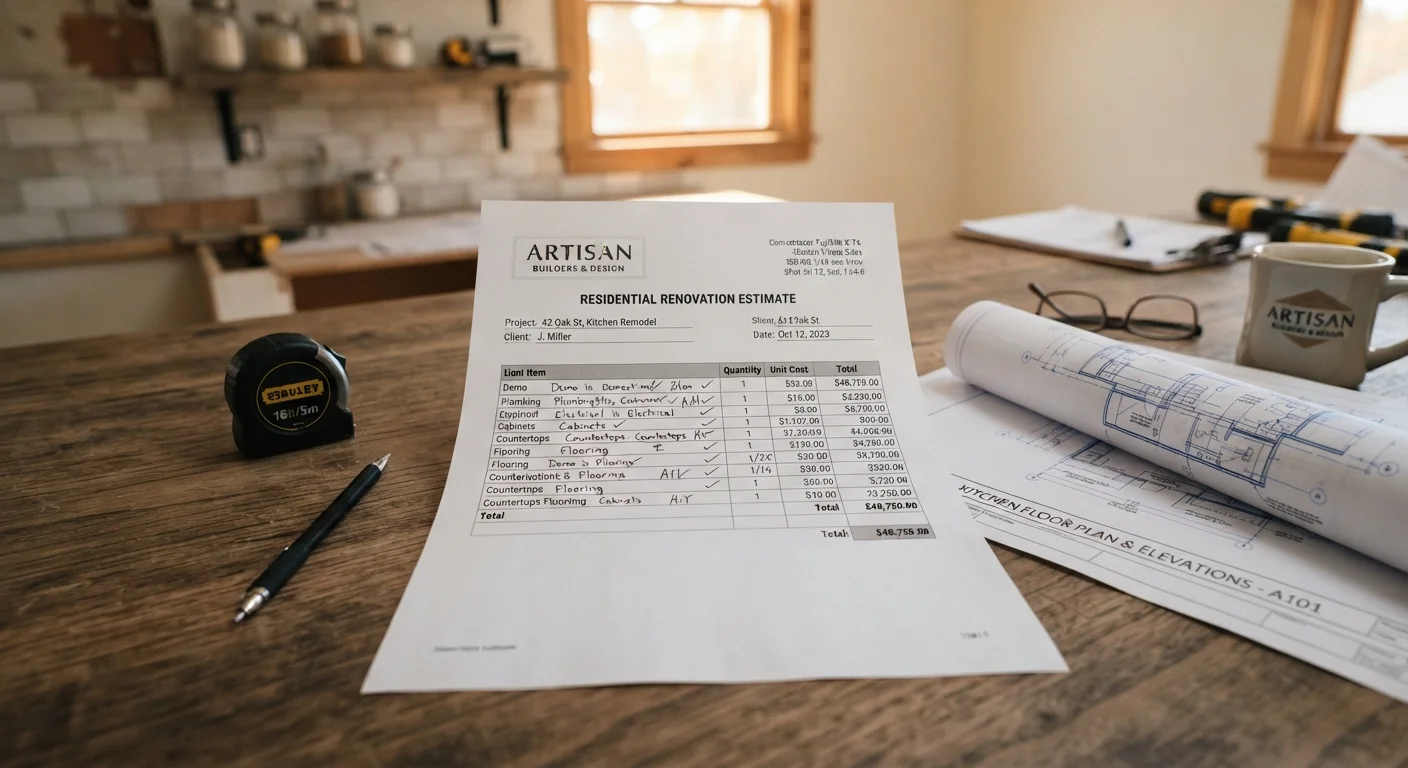
Photo credit: QuickInsights.net
In this article
Contractor estimates can be confusing. This guide breaks down common line items so you can compare bids with confidence.
Key Takeaways
- Renovation estimates typically include labor, materials, overhead, and profit as separate line items.
- Understanding each category helps you compare multiple bids on equal footing.
- Allowances and exclusions are common sources of budget surprises - always clarify them upfront.
- A lower bid isn't always better; scope and inclusions matter more than the bottom line.
- Asking specific questions before signing protects you from unexpected charges later.
Why Estimates Look So Different From Each Other
If you've requested bids from multiple contractors, you've likely noticed they don't look anything alike. One might be a two-page itemized breakdown; another, a single paragraph with a lump sum. Neither format is inherently better, but detailed estimates are far easier to evaluate - and to hold a contractor accountable to.
The variation isn't just cosmetic. Contractors structure their pricing differently based on business model, project type, and how much risk they want to absorb. Understanding the common categories that appear across most estimates is your first step toward comparing them fairly. If you're new to the process, our first renovation primer gives helpful background on what to expect before you start collecting bids.
What you will need
The Core Line Items - Decoded
Labor
This covers the cost of the workers completing the job - whether that's the contractor's own crew or subcontractors they hire for specialized trades like plumbing or electrical. Labor is often the largest portion of an estimate and varies significantly by region and trade. Some contractors list labor and materials bundled together; others separate them. Separated line items give you more visibility into where your money is going.
Materials
This includes everything physically installed in your home - lumber, drywall, flooring, fixtures, fasteners, and so on. Contractors typically mark up materials above their cost; a markup of 10-20% is common, though it varies. Some estimates will show a materials subtotal without itemizing individual products, which is fine - but you should confirm whether your selected finishes are included or listed separately as allowances.
Allowances
An allowance is a placeholder dollar amount for items not yet selected at bid time - for example, tile, light fixtures, or cabinet hardware. Be very cautious here.
Watch for Unusually Low Allowances
Allowances - placeholders for items like fixtures or tile that you haven't selected yet - are often set unrealistically low to make a bid appear competitive. If you later choose materials that cost more than the allowance, you'll pay the difference out of pocket. Always ask what the allowance amount is based on and whether it reflects realistic market pricing.
Overhead and Profit
Contractors legitimately charge for running a business: insurance, licensing, vehicles, office costs, and a reasonable profit margin. This is sometimes listed explicitly as a percentage or folded into labor and materials rates. Seeing it as a line item is actually a transparency signal - it means the contractor isn't hiding margin elsewhere.
Permits and Fees
Most structural, electrical, plumbing, and HVAC work requires permits from your local building department. A responsible contractor will include permit costs in their estimate. If permits are absent, ask why - skipping required permits can create serious problems when you sell your home or file an insurance claim. Always verify permit requirements through your local building department independently.
Exclusions
Often found at the bottom of an estimate, exclusions define what the contractor is not responsible for. Common exclusions include hazardous material removal (like asbestos or lead paint), unforeseen structural issues, or work beyond a defined scope. Read these carefully - exclusions can significantly affect your total cost if conditions are discovered mid-project.
Create a Side-by-Side Bid Comparison
When reviewing multiple estimates, build a simple spreadsheet with each contractor's line items as columns. This makes it much easier to spot where bids differ in scope, not just in price. A $5,000 gap often reflects missing scope rather than a contractor being cheaper.
How to Review and Compare Estimates Step by Step
Read the entire estimate before asking any questions
Go through the estimate from top to bottom without stopping. Note anything unfamiliar, vague, or missing. Don't call the contractor yet - your first pass is about building a complete picture and identifying gaps, not reacting to individual numbers.
Check whether labor and materials are separated
Look for distinct line items for labor versus materials. If everything is bundled into a single number, ask the contractor to break it out. This helps you understand where your money is going and makes it easier to compare against other bids.
Identify every allowance and what it covers
Make a list of every allowance in the estimate. For each one, ask the contractor what the amount is based on and whether it reflects typical pricing for the product category. If you have a specific product in mind, share it so the allowance can be adjusted to match reality before you sign.
Review the exclusions section carefully
Read every exclusion and ask yourself whether the excluded scenario is plausible for your project. For older homes especially, exclusions around hazardous materials or concealed structural conditions can represent real risk. Ask your contractor how change orders for excluded items would be priced and documented.
Confirm permits are included and accounted for
Ask specifically which permits the contractor will pull and whether permit fees are included in the estimate. Confirm this matches what your local building department says is required for the scope of work. Do not allow a contractor to suggest skipping permits to reduce cost - it creates liability for you as the homeowner.
Compare bids on scope, not just price
Once you have two or more estimates, list them side by side. For each line item category - labor, materials, allowances, permits - compare what each contractor is offering. A lower total often means something is excluded, an allowance is understated, or subcontractor costs haven't been factored in yet. Price alone is rarely a reliable signal of value.
After the Estimate: What Comes Next
Once you understand the estimate, you're in a much stronger position to have a productive conversation with your contractor - or to walk away if something doesn't add up. Keep in mind that the estimate will typically be formalized into a contract, which should reflect all agreed-upon line items, payment schedules, and change-order procedures.
If your renovation is tied to financing, our mortgages and financing hub can help you understand how renovation loans, home equity lines, and other options work. And if you're thinking about whether this project makes financial sense at all, it's worth reading our piece on ROI vs. enjoyment before you commit.
For larger multi-room or whole-home projects, planning a whole-home renovation covers how to sequence work, manage timelines, and keep communication on track across multiple contractors and trades.

Author
Home & Garden Editorial Team
Home & Garden Editorial Team is the collective byline for our editorial team and contributor network. Articles published under this byline or an editorial pen name are researched, written, and reviewed according to our editorial standards for clarity, consistency, and independence before publication.
View all articles →