
Tire Rotation, Balancing, and Alignment: Why All Three Are Different
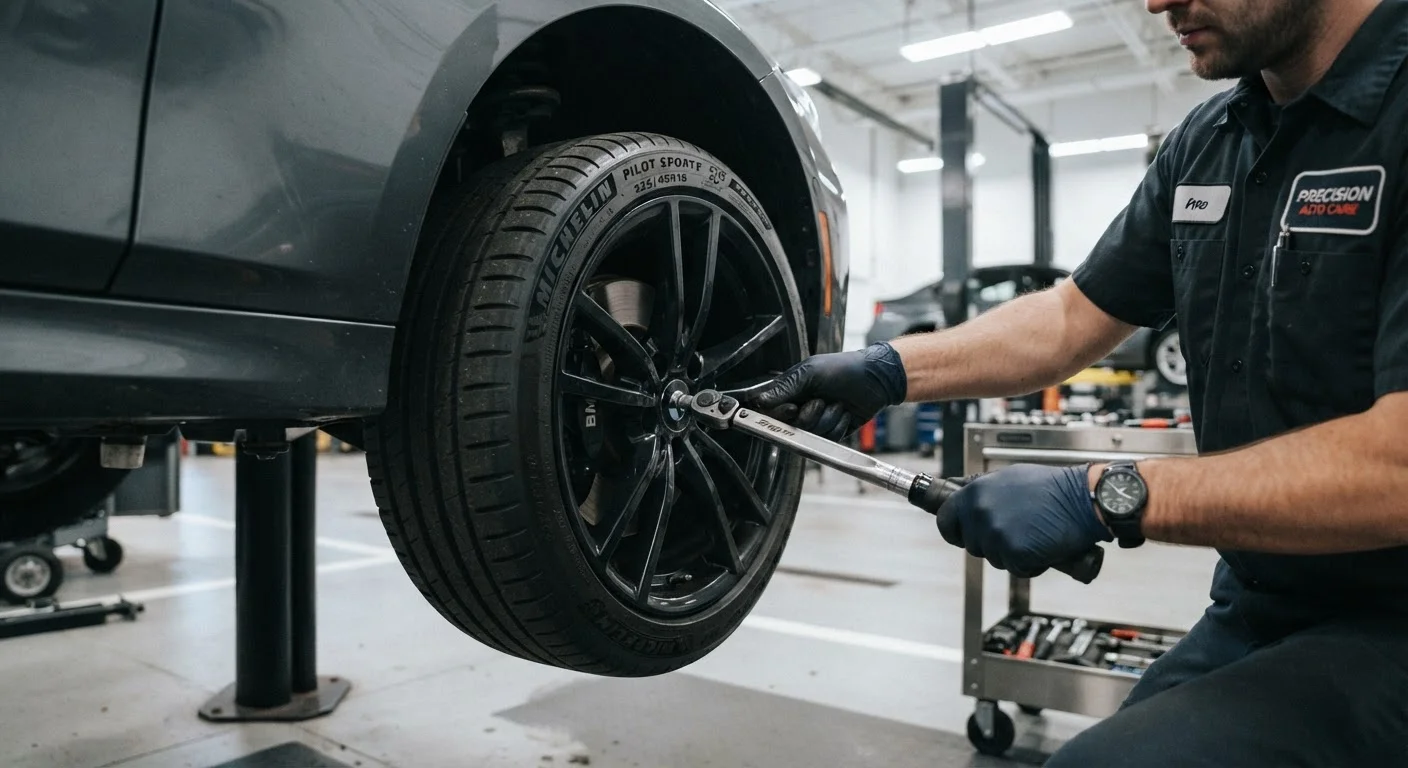
Photo credit: QuickInsights.net
In this article
These three services sound similar but solve different problems. Learn what each one does and when your car actually needs it.
Key Takeaways
- Tire rotation moves tires between positions to even out tread wear; it does not fix vibration or pulling.
- Balancing corrects weight imbalances in a wheel-and-tire assembly that cause steering-wheel vibration.
- Alignment adjusts the angles of your wheels relative to the vehicle frame to prevent pulling and uneven wear.
- All three services are preventive - skipping any one can accelerate tire wear and compromise handling.
- Each service has a distinct trigger: rotation is mileage-based, balancing follows vibration symptoms, alignment follows impacts or pulling.
- A car can need all three at once, or just one - they are not interchangeable.
Three Services, Three Different Jobs
These three terms appear on service menus together so often that many drivers assume they're variations of the same task. They're not. Each one addresses a completely separate problem, uses different equipment, and has its own recommended schedule. Treating them as interchangeable is one of the more common - and costly - misconceptions in routine car care.
Understanding the distinction isn't just a matter of automotive trivia. It determines whether you're spending money on the right service at the right time, or paying for something that won't fix the actual problem your car is experiencing. See our complete guide to maintenance schedules for a broader look at how these services fit into your vehicle's overall upkeep.
| Criterion | Tire Rotation | Balancing & Alignment |
|---|---|---|
| What it fixes | Uneven tread wear across tires | Vibration (balance) or pulling/angle issues (alignment) |
| What's actually done | Tires moved to different wheel positions | Weights added to wheel; suspension angles adjusted |
| Equipment used | Floor jack, torque wrench | Spin balancer; computerized alignment rack |
| Primary trigger | Mileage interval (typically every 5,000-7,500 miles) | Symptoms, new tires, or hard impact |
| Symptom it addresses | No obvious symptom - preventive | Vibration at speed; car pulling to one side |
| Effect on tire life | Extends life by equalizing wear | Prevents premature edge or spot wear |
| Can it substitute for the other? | No - won't fix vibration or pulling | No - won't equalize positional wear |
Tire Rotation: Moving Tires to Even the Wear
Rotation means physically removing each tire and reinstalling it in a different position - front-left to rear-left, for example, or in an X-pattern across axles. The goal is simple: no single tire should absorb more wear than the others.
Why does wear differ by position? On front-wheel-drive vehicles, the front tires handle both propulsion and steering forces, so they wear significantly faster than the rear tires. On rear-wheel-drive vehicles, the rear tires take the brunt of acceleration. All-wheel-drive vehicles are more balanced, but still develop positional wear differences over time.
Most manufacturers recommend rotation every 5,000 to 7,500 miles - conveniently lining up with many oil-change intervals. Skipping rotations doesn't cause immediate problems, but over time you'll end up replacing two tires long before the other two are finished, which is a straightforward waste of money. Rotation cannot fix vibration or a pulling problem - those require different interventions entirely.
~$0.01/mile
Estimated cost of skipped rotation in premature tire wear
Industry estimates suggest irregular rotation can reduce tire lifespan by 15-25%, adding meaningful cost over a set's lifetime.
5,000-7,500 mi
Typical tire rotation interval
Most vehicle owner's manuals specify this range; check your specific make and model for the manufacturer's recommendation.
1-2x per year
Recommended alignment check frequency
Many alignment shops and automotive organizations suggest an annual alignment inspection, or after any significant road impact.
Balancing: Correcting Weight Distribution in the Wheel Assembly
A tire and wheel together are not perfectly uniform. Small variations in rubber density, rim weight, and valve stem placement create heavy spots. When a wheel spins at speed, those heavy spots cause the assembly to wobble rhythmically - which you feel as a vibration, usually in the steering wheel between 55 and 70 mph.
Balancing is done on a spin-balancing machine. The technician mounts the wheel, spins it, and the machine identifies where and how much small adhesive or clip-on weights need to be added to counteract the heavy spot. The process takes minutes per wheel and is relatively inexpensive.
Common triggers for a balance check include: a new set of tires (always balance when mounting new rubber), noticeable steering-wheel vibration at highway speeds, or after hitting a significant pothole that could have dislodged an existing weight. Rotation won't fix an imbalance; the heavy spot travels with the tire regardless of which corner it's on.
Alignment: Adjusting the Angles Your Wheels Sit At
Alignment has nothing to do with the tires themselves - it's about the geometry of your suspension. Specifically, alignment refers to the angles at which your wheels contact the road, measured along three axes: camber (tilt inward or outward), toe (pointing inward or outward), and caster (the steering pivot angle). When these angles drift from the manufacturer's specification, your car handles differently and your tires wear unevenly.
The clearest symptom is a car that pulls to one side when you let go of the steering wheel on a flat, straight road. A steering wheel that sits noticeably off-center at highway speeds is another signal. Tires with wear concentrated on one edge - rather than across the full tread surface - often point to a camber or toe problem.
Alignment drifts naturally over time from road impacts, worn suspension components, and even minor curb strikes. It's not something you'll feel the moment it goes off - it happens gradually. Most manufacturers suggest checking alignment once a year or after any significant suspension impact. If you need help recognizing when professional service is the right call rather than a DIY fix, see when to take your car to a mechanic.
Alignment vs. Suspension: Know the Difference
Alignment adjusts the angles of your existing suspension components - it does not repair worn or damaged parts. If a ball joint, tie rod, or control arm bushing is worn, alignment cannot compensate for that movement, and the adjustment won't hold. A qualified mechanic should inspect suspension components before or alongside any alignment service, particularly on higher-mileage vehicles.
When You Need One, Two, or All Three
It's entirely possible to need all three services in a single shop visit - or to need just one. They don't automatically go together. A car with great alignment and no vibration may simply be due for a rotation. A car that recently hit a pothole may need balancing and an alignment check, but its rotation interval might not be due yet.
The practical framework is straightforward: rotation is mileage-triggered, balancing is symptom-triggered (vibration) or event-triggered (new tires, pothole), and alignment is symptom-triggered (pulling, off-center wheel) or time/event-triggered (annual check or after a hard impact). When a shop recommends all three together without explaining why each one is needed, it's reasonable to ask what specific symptom or interval justifies each service.
Keeping these three straight also helps when evaluating vehicle purchases. Whether you're leasing or buying a car, understanding the ongoing maintenance costs - including these routine services - gives you a more accurate picture of long-term ownership expense.

Author
Autos & Vehicles Editorial Team
Autos & Vehicles Editorial Team is the collective byline for our editorial team and contributor network. Articles published under this byline or an editorial pen name are researched, written, and reviewed according to our editorial standards for clarity, consistency, and independence before publication.
View all articles →