
How Deductibles Shape Your Auto Insurance Strategy
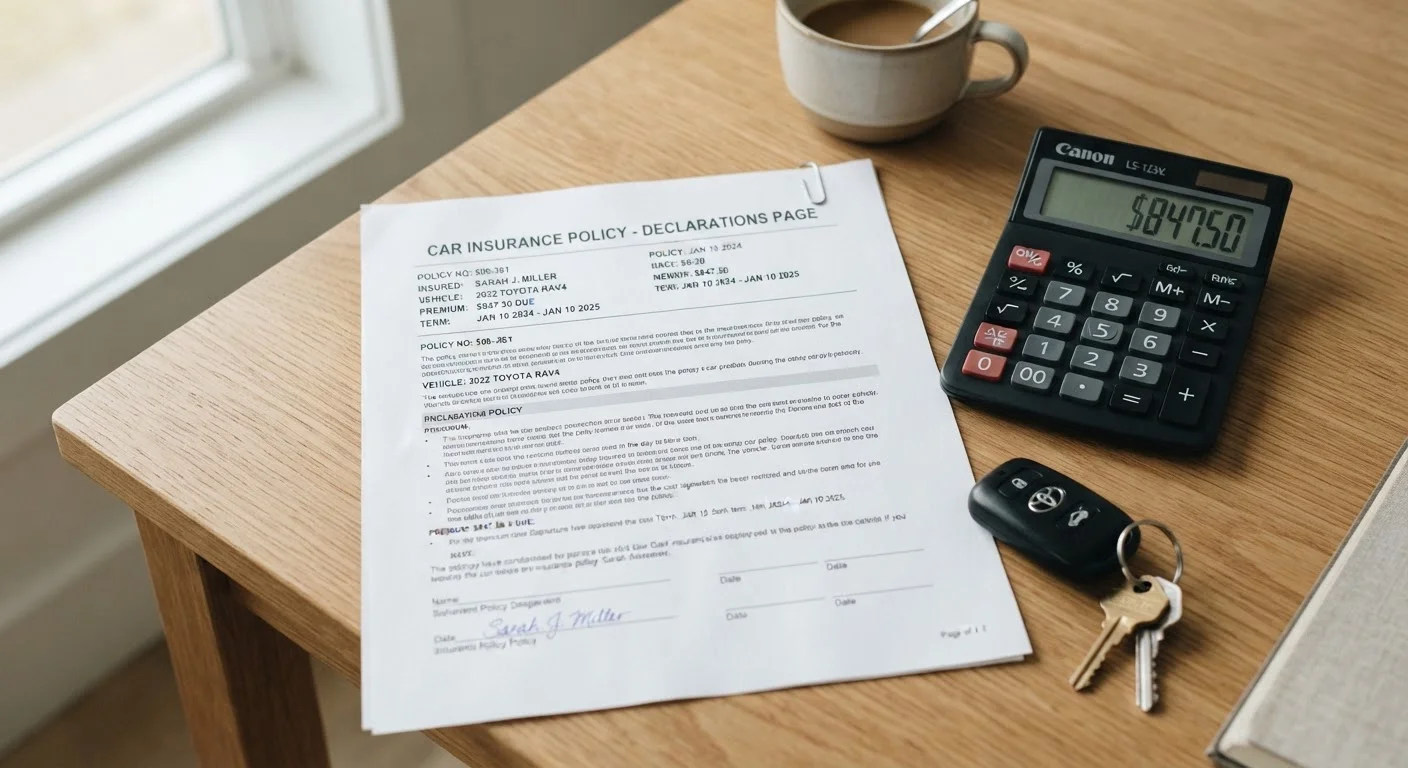
Photo credit: QuickInsights.net
In this article
A higher deductible lowers your premium — but that trade-off has limits. Understand how to choose a deductible that fits your finances.
Key Takeaways
- A higher deductible lowers your monthly premium but increases your out-of-pocket cost after a claim.
- Deductibles apply specifically to collision and comprehensive coverage, not liability.
- Your emergency savings should be able to cover your chosen deductible comfortably.
- The right deductible depends on your vehicle's value, your driving habits, and your financial cushion.
- Raising a deductible only makes financial sense if the premium savings eventually outweigh the added risk.
The Basic Trade-Off Every Driver Should Understand
Your deductible and your premium move in opposite directions - raise one and the other typically falls. This inverse relationship is the central mechanic of how insurers price collision and comprehensive coverage. When you agree to absorb a larger share of repair costs yourself, the insurer's financial exposure shrinks, and they reflect that in a lower premium.
But this trade-off has a practical limit. A deductible is only useful if you can actually pay it when you need to. Choosing a $1,500 deductible to save $20 a month on premiums creates real risk if a fender-bender would drain your bank account. For a broader look at how these coverage types fit together, see Auto Insurance Decoded.
$500
Most commonly chosen collision deductible
Industry data consistently shows $500 as the modal deductible selected by U.S. drivers purchasing collision coverage.
~15-30%
Typical premium reduction from doubling deductible
Moving from a $500 to a $1,000 deductible can reduce collision premium costs by roughly 15-30%, though actual savings vary by insurer and driver profile.
1 in 8
U.S. drivers filing a collision claim each year
According to industry estimates, approximately one in eight insured drivers files a collision claim in a given year, making deductible affordability a realistic concern.
How to Find the Right Deductible for Your Situation
Three factors should guide your deductible decision: your emergency savings, your vehicle's current market value, and how frequently you're likely to file a claim.
- Emergency savings: Your deductible should sit comfortably within what you can access within a few days. If you have $600 in accessible savings, a $1,000 deductible is a financial hazard, not a smart choice.
- Vehicle value: If your car's market value is relatively low, a high deductible combined with comprehensive and collision premiums may mean you're paying more in coverage costs than you'd ever recover in a claim. This is explored in depth in when dropping full coverage makes sense.
- Claim history and driving environment: Drivers who frequently navigate high-traffic urban areas or live in regions with severe weather may file claims more often, making a lower deductible more practical despite its higher premium cost.
Match Your Deductible to Your Savings Buffer
A useful rule of thumb: your deductible should not exceed the amount you could access within 48 to 72 hours in an emergency. Before adjusting your deductible, check your actual liquid savings - not your total net worth. Accessibility matters as much as the amount.
Running the Math: Does a Higher Deductible Pay Off?
The question isn't just whether a higher deductible saves money - it's whether it saves money in time. If moving from a $500 deductible to a $1,000 deductible cuts your annual premium by $150, you'd need to go four or more claim-free years to come out ahead on that $500 deductible increase.
This calculation assumes you never file a claim during that window. File a single claim, and the math resets entirely. The breakeven analysis is simple but often skipped. To compare quotes across different deductible levels accurately, shopping for auto insurance without getting overwhelmed walks through a practical approach.
For a refresher on the terminology that appears throughout your policy, the auto insurance terms glossary is a useful reference.
Common Mistakes Drivers Make With Deductibles
The most frequent error is choosing a deductible based solely on the lowest available premium without considering whether that deductible amount is actually payable. A close second is setting the same deductible for both collision and comprehensive without thinking through how those two risks actually differ for your situation.
Some drivers also overlook that deductibles are per-claim. If two separate incidents occur in the same year, you pay the deductible twice - once for each event. Building that possibility into your financial planning prevents unpleasant surprises.
Deductibles Don't Apply to Every Claim
Liability coverage - which pays for damage or injury you cause to others - carries no deductible on your end. Deductibles are specific to first-party coverages like collision and comprehensive, where your own insurer pays for damage to your vehicle. Understanding this distinction prevents confusion when reviewing your policy documents.
This article provides general insurance information for educational purposes and does not constitute personalized insurance or financial advice. Coverage terms, deductible options, and premium impacts vary by insurer, state, and individual circumstances. Consult a licensed insurance agent to evaluate your specific policy options.
Frequently Asked Questions

Author
Autos & Vehicles Editorial Team
Autos & Vehicles Editorial Team is the collective byline for our editorial team and contributor network. Articles published under this byline or an editorial pen name are researched, written, and reviewed according to our editorial standards for clarity, consistency, and independence before publication.
View all articles →