
What Travel Advisories Actually Mean - and When to Take Them Seriously
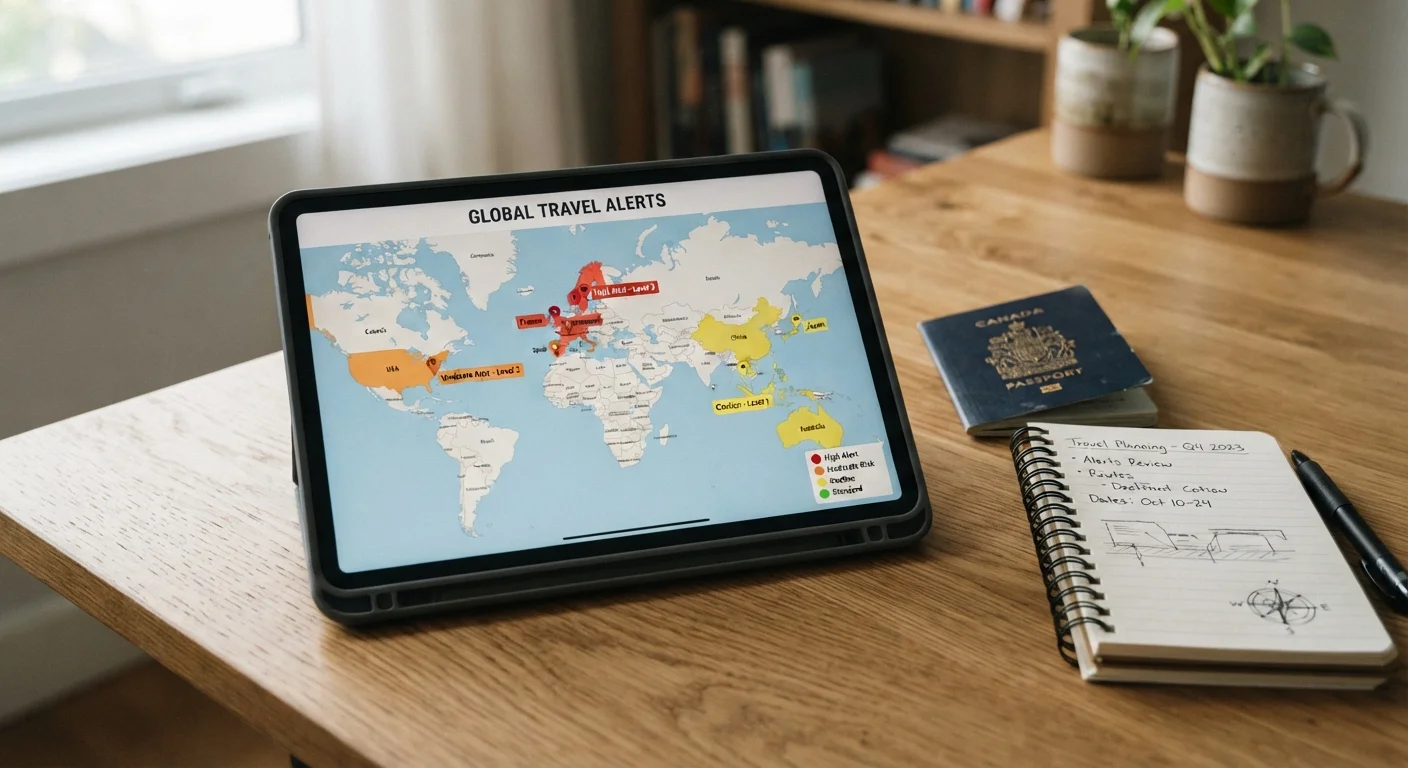
Photo credit: QuickInsights.net
In this article
Government travel advisories use tiered warning levels that many travelers misread. Here's how to interpret them and act accordingly.
Key Takeaways
- The U.S. State Department uses a four-level advisory scale ranging from "Exercise Normal Precautions" to "Do Not Travel."
- Level 1 and 2 advisories cover a wide range of destinations and do not mean a place is unsafe to visit.
- Advisories apply country-wide but often include region-specific guidance within a country.
- Other countries' governments publish their own advisories, which sometimes differ from U.S. ratings for the same destination.
- Advisory levels should be one input in your decision, not the only factor.
How the Four-Level System Works
The U.S. Department of State publishes travel advisories for every country in the world, each assigned one of four levels. The system is designed to give travelers a quick orientation - but the level number is only a starting point.
- Level 1 - Exercise Normal Precautions: The lowest advisory level. Conditions are broadly comparable to what you'd exercise at home. This doesn't mean risk-free; it means no unusual or elevated threats have been identified.
- Level 2 - Exercise Increased Caution: Something specific - a crime pattern, civil tensions, or a health concern - warrants extra vigilance. Many popular destinations carry Level 2 ratings.
- Level 3 - Reconsider Travel: Serious risks are present. The State Department advises Americans to carefully weigh whether the trip is necessary. Some areas within a country may be rated Level 3 while others in the same country carry a lower rating.
- Level 4 - Do Not Travel: Reserved for the most dangerous conditions - active armed conflict, extreme civil unrest, or situations where the U.S. government has severely limited ability to assist citizens in distress.
Each advisory page also includes a written breakdown of why the level was assigned. That text is where the real information lives. A Level 2 country rated for petty theft requires a different response than a Level 2 country with isolated terrorism concerns.
4 Levels
U.S. State Department advisory scale
The State Department's tiered system ranges from Level 1 (Exercise Normal Precautions) to Level 4 (Do Not Travel), covering every country worldwide.
200+
Countries with active U.S. travel advisories
The State Department maintains and regularly updates travel advisories for more than 200 countries and territories on travel.state.gov.
Level 2
Rating held by many popular travel destinations
A number of widely visited countries - including some in Western Europe and Latin America - carry Level 2 advisories due to crime or isolated security concerns.
What Advisories Don't Tell You
Travel advisories reflect a government's formal assessment - but they have real limitations that every traveler should understand.
They're country-wide labels for places that aren't uniform. A country might receive a Level 3 advisory largely because one region near a border is volatile, while major tourist areas remain stable. The advisory text usually breaks this down by region, but the headline number alone won't tell you that.
They can lag behind reality. Advisory levels are updated based on official reporting and intelligence, which takes time. A sudden political flare-up may not be reflected immediately. Conversely, a country that has stabilized significantly may still carry an elevated rating from a previous period of unrest.
They don't account for your specific itinerary or risk tolerance. A solo traveler with no local contacts, limited language skills, and unfamiliarity with a region faces different risks than an experienced traveler with local connections and strong situational awareness - even in the same country at the same advisory level.
For a deeper look at how official ratings and on-the-ground reality can diverge, see Destination Risk vs. Travel Advisory Level.
Advisory Levels Can Affect Your Travel Insurance
Some travel insurance policies exclude coverage for incidents that occur in countries under a Level 3 or Level 4 advisory - or may void coverage if you travel there against a "Do Not Travel" warning. Always read your policy documents carefully before booking, and consult your insurer if your destination carries an elevated advisory. This is general information; for advice specific to your policy and situation, speak with a licensed insurance professional.
How to Use Advisories as a Decision-Making Tool
An advisory level shouldn't be your only input - it should be one layer in a broader research process. Here's a practical framework for putting advisories to work.
- Read the full advisory text, not just the level. The written summary tells you which risks triggered the rating, which regions to avoid, and any specific precautions recommended.
- Compare across sources. Check the UK, Canadian, or Australian advisories for the same destination. Divergence between governments doesn't mean one is wrong, but consensus on a high rating is a meaningful signal. See key safety terms and agency resources for a full list of where to look.
- Check the date and recent updates. Advisory pages show when they were last reviewed. If there's been significant news about your destination, verify whether the advisory has been updated to reflect it.
- Register with STEP. The Smart Traveler Enrollment Program at travel.state.gov lets you register your trip with the nearest U.S. embassy. In a crisis, this significantly improves the government's ability to reach you with alerts or assistance.
- Factor in your personal situation. Health conditions, language ability, travel experience, and your specific itinerary all affect how relevant a given risk is to you. Advisories are written for a general audience; your judgment fills in the rest.
Travel advisories work best when you treat them the way you'd treat a weather forecast - useful, worth consulting, but not a substitute for looking out the window. If you're heading somewhere with political volatility, also read how to monitor conditions during political unrest.
Frequently Asked Questions

Author
Travel Editorial Team
Travel Editorial Team is the collective byline for our editorial team and contributor network. Articles published under this byline or an editorial pen name are researched, written, and reviewed according to our editorial standards for clarity, consistency, and independence before publication.
View all articles →