
The Anatomy of a Mortgage Payment: Principal, Interest, Taxes, and Insurance
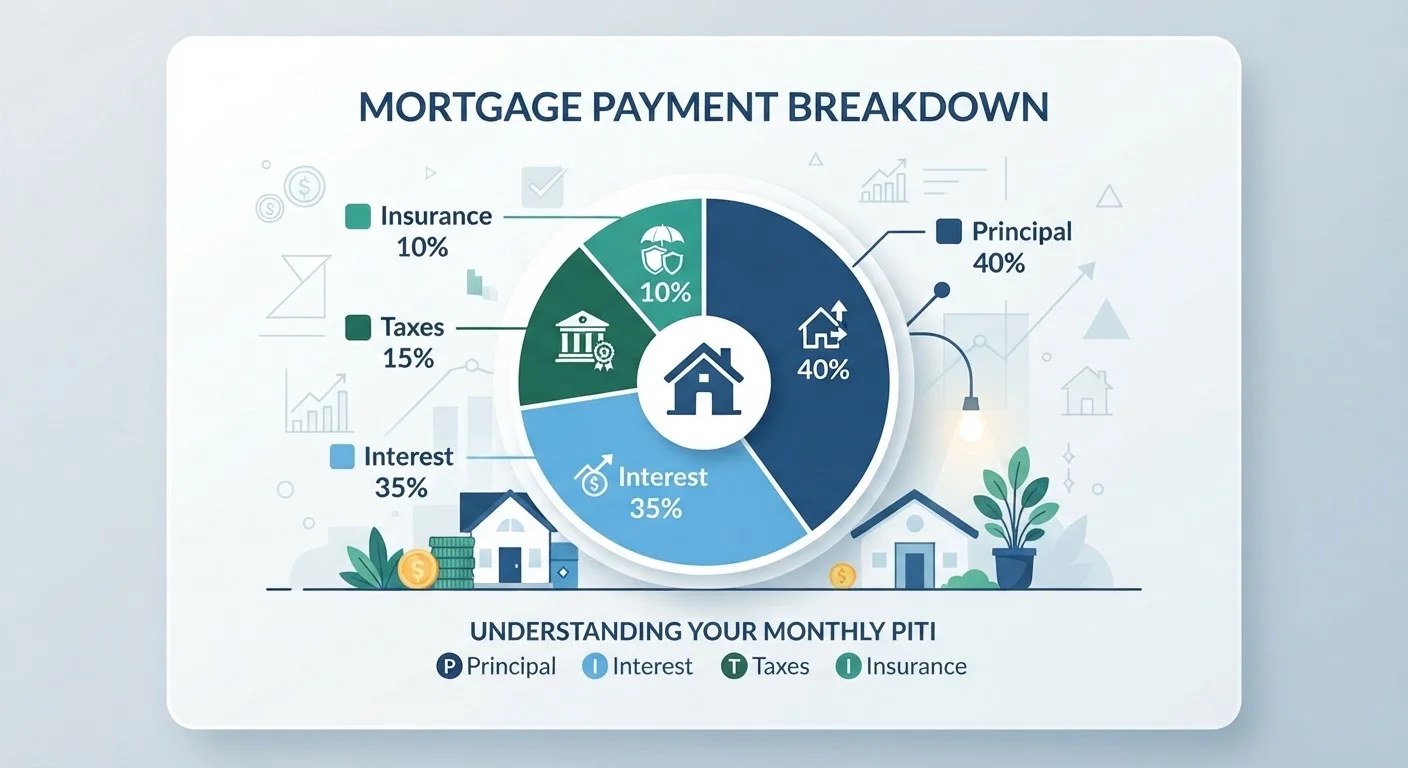
Photo credit: QuickInsights.net
In this article
A plain-language breakdown of every component inside your monthly mortgage bill and how each one is calculated.
Key Takeaways
- Your monthly mortgage payment typically combines four components: principal, interest, property taxes, and homeowner's insurance.
- Early in a loan's life, most of each payment goes toward interest rather than reducing your loan balance.
- Property taxes and insurance are usually collected by your lender and held in an escrow account on your behalf.
- PMI - private mortgage insurance - is added to payments when a borrower puts down less than 20%.
- Understanding each component helps you budget accurately and evaluate loan offers more clearly.
Principal: The Portion That Builds Your Equity
The principal is the portion of your monthly payment that directly reduces the amount you owe on your loan. If you borrowed $300,000 to purchase a home, that $300,000 is your principal balance. Each payment chips away at this number - but how much depends on where you are in your loan term.
Because of how mortgage amortization works, early payments apply very little to principal. On a 30-year fixed loan, the first few years of payments are weighted heavily toward interest. Over time, that ratio flips, and more of each dollar goes toward building equity. Your lender can provide a full amortization schedule - a table showing exactly how each payment is allocated across the life of the loan. See our mortgage glossary for a clear definition of amortization and related terms.
Interest: The Cost of Borrowing
Interest is the fee your lender charges for extending the loan - expressed as an annual percentage rate (APR) and calculated monthly against your remaining balance. On a $300,000 loan at a 7% annual rate, your first month's interest charge would be roughly $1,750 (7% ÷ 12 months × $300,000).
Because interest is calculated on your outstanding balance, it decreases slightly with each payment as your principal shrinks. This is why the early years of a mortgage feel expensive: a large balance means a large interest charge, leaving less room for principal reduction.
~80%
Of first payment going to interest
On a typical 30-year fixed mortgage, the majority of early payments cover interest rather than reducing the principal balance, due to standard amortization.
0.5%-1.5%
Typical annual PMI cost range
According to the Urban Institute and industry sources, PMI premiums generally fall in this range as a percentage of the loan amount annually, varying by lender and borrower profile.
1 in 5
First-time buyers who underestimate PITI
Industry surveys consistently find that many first-time buyers budget only for principal and interest, overlooking taxes and insurance when estimating their monthly housing costs.
The interest rate structure you choose - fixed or adjustable - shapes this calculation significantly. Fixed-rate vs. adjustable-rate mortgages work very differently over time, and understanding both helps you evaluate which loan type fits your situation. You can also explore mortgage points - upfront payments that reduce your interest rate over the loan term.
Taxes and Insurance: The Escrow Components
The final two components of a PITI payment are collected by your lender and held in an escrow account - a dedicated account your servicer manages to pay bills on your behalf when they come due.
Property Taxes
Local governments assess property taxes annually based on the assessed value of your home. Rather than paying a lump sum once or twice a year, most mortgage borrowers contribute roughly one-twelfth of their annual tax bill with each monthly payment. Your servicer pays the tax authority directly when the bill comes due. Tax rates vary significantly by location, which is why two similar homes in different counties can have very different monthly payments.
Homeowner's Insurance
Lenders require you to carry homeowner's insurance to protect the property - their collateral - against damage from fire, weather, and other covered events. Like taxes, the annual premium is divided into monthly installments and collected through escrow. If your property is in a federally designated flood zone, your lender may also require a separate flood insurance policy.
Private Mortgage Insurance (PMI)
If your down payment was less than 20%, most lenders add PMI to your monthly payment. This insurance protects the lender - not you - in case of default. PMI typically ranges from 0.5% to 1.5% of the loan amount annually and is removed once you reach sufficient equity. For a broader look at how insurance-related costs accumulate, see our article on ongoing costs of homeownership that first-timers often underestimate.
Request Your Loan Estimate Early
When comparing mortgage offers, ask each lender for a Loan Estimate - a standardized three-page form required by federal law. It breaks down your projected PITI payment, estimated closing costs, and loan terms in a consistent format, making side-by-side comparisons straightforward.
How the Four Components Add Up in Practice
Consider a home purchased for $350,000 with a 10% down payment ($35,000), leaving a loan balance of $315,000 at a 7% fixed rate for 30 years. A rough monthly breakdown might look like this:
| Component | Estimated Monthly Amount |
|---|---|
| Principal & Interest | ~$2,096 |
| Property Taxes (varies) | ~$400 |
| Homeowner's Insurance | ~$120 |
| PMI (approx. 0.8%) | ~$210 |
| Total PITI | ~$2,826 |
These figures are illustrative. Actual amounts depend on your specific loan terms, local tax rates, insurance premiums, and lender requirements. Always request a Loan Estimate from your lender - a standardized document that shows your projected PITI before you commit to a loan. For a full walkthrough of the fees that appear at closing, see closing costs decoded.
This article is for general informational and educational purposes only and does not constitute personalized financial, mortgage, tax, or legal advice. Consult a licensed mortgage professional or financial adviser for guidance specific to your situation.
Frequently Asked Questions

Author
Real Estate Editorial Team
Real Estate Editorial Team is the collective byline for our editorial team and contributor network. Articles published under this byline or an editorial pen name are researched, written, and reviewed according to our editorial standards for clarity, consistency, and independence before publication.
View all articles →