
Why Minimum Payments Are a Trap-and What to Do Instead
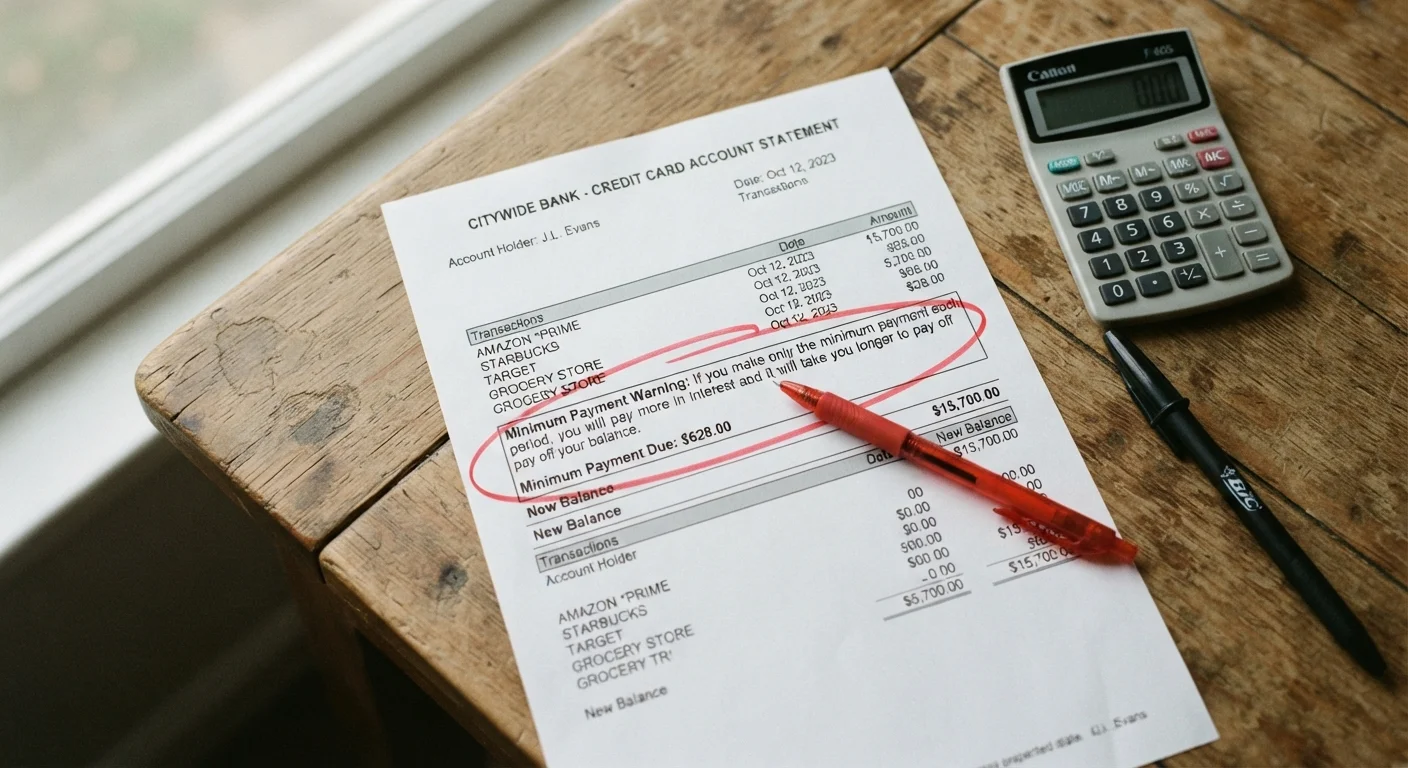
Photo credit: QuickInsights.net
In this article
Making only minimum payments keeps balances alive for years. Learn how the math works and what payment strategies actually make a dent in principal.
Key Takeaways
- Minimum payments are designed to maximize interest income for lenders, not to help you pay off debt quickly.
- A significant portion of each minimum payment goes toward interest, leaving little to reduce your actual balance.
- Structured repayment strategies-like the avalanche or snowball method-can cut years off your payoff timeline.
- Even a modest increase above the minimum payment can dramatically reduce total interest paid.
- Balancing debt repayment with saving is possible, but minimum-only payments make the math much harder.
How Minimum Payments Are Calculated-and Why It Matters
Credit card issuers typically set minimum payments as either a flat dollar amount (often $25-$35) or a small percentage of the outstanding balance-usually around 1% to 2%-whichever is greater. At first glance, this seems manageable. In practice, it's a structure that keeps balances alive for a very long time.
Here's why: when a minimum payment is calculated as a percentage of a shrinking balance, the required payment shrinks alongside the debt. That sounds helpful, but it means you're making smaller and smaller payments while interest keeps compounding on the remaining balance. On a $3,000 balance at 20% APR (annual percentage rate), paying only the minimum each month can stretch repayment beyond a decade and cost more in interest than the original debt itself.
Understanding how credit card interest actually works is the first step toward making smarter payment decisions. Interest accrues daily on most cards, so every month you carry a balance, the cost grows.
10+ years
Typical payoff timeline on minimum payments alone
Consumer Financial Protection Bureau analyses have illustrated that a several-thousand-dollar balance at a high APR, paid at minimum only, can take more than a decade to retire.
~1-2%
Minimum payment as share of balance
Most major card issuers set minimums at roughly 1%-2% of the outstanding balance, meaning most of each early payment covers interest rather than principal.
Common Mistakes People Make With Minimum Payments
Most people aren't lazy or careless about their credit card debt-they're simply working with incomplete information or under real financial pressure. Below are the most frequent errors that keep borrowers stuck.
Treating the minimum payment as the intended monthly payment.
Why it happens: Card statements present the minimum payment prominently, and issuers are not required to emphasize how long it will take to pay off the balance at that rate.
Continuing to spend on a card while trying to pay it down.
Why it happens: Carrying a card for everyday purchases while making monthly payments feels like progress, but new charges can easily outpace what you're paying off.
Ignoring the interest rate and focusing only on the balance.
Why it happens: The balance is the most visible number, but the interest rate determines how fast debt grows. People often underestimate how much a 20%+ APR accelerates costs.
Making only the minimum payment because "it's better than missing a payment."
Why it happens: This reasoning is technically true but can become a mental permission slip to never increase payments, especially when finances feel stretched.
Misunderstanding how minimum payments interact with 0% promotional periods.
Why it happens: Cardholders who transfer balances to a 0% APR card sometimes pay only the minimum, assuming they have time to pay it off before interest kicks in.
If you're also trying to save while carrying debt, these mistakes compound the problem. See our practical framework for doing both at once for a realistic approach to managing competing priorities.
What to Do Instead: Strategies That Actually Reduce Principal
The goal is to pay more than the minimum-consistently-and to direct that extra money toward principal. Even an additional $25 or $50 per month can meaningfully shorten your payoff timeline and reduce total interest. Here are approaches worth understanding:
- Fixed payment strategy: Instead of letting your minimum shrink as your balance drops, lock in a fixed monthly payment from the start and keep paying that amount until the debt is gone.
- Avalanche method: Pay minimums on all cards, then direct any extra funds to the card with the highest interest rate first. This minimizes total interest paid.
- Snowball method: Pay minimums on all cards, then put extra funds toward the smallest balance first. This builds psychological momentum through early wins.
Both structured approaches beat minimum-only payments by a wide margin. Our breakdown of the snowball vs. avalanche methods can help you decide which fits your situation.
Don't Skip Payments to Fund Other Goals
It can be tempting to pay only the minimum-or less-when money is tight and a savings goal feels urgent. Missing payments or paying late triggers penalty fees, damages your credit score, and can trigger penalty APR rates that make the debt even harder to escape. Protect your payment history above almost everything else.
If managing multiple balances feels overwhelming, debt consolidation is another option worth understanding-though it comes with trade-offs. And once you have a repayment plan, building a budget that includes both debt payments and savings will help you stay on track long-term.
This article is for general informational and educational purposes only and does not constitute personalized financial or legal advice. Consult a qualified financial professional for guidance specific to your situation.

Author
Personal Finance Editorial Team
Personal Finance Editorial Team is the collective byline for our editorial team and contributor network. Articles published under this byline or an editorial pen name are researched, written, and reviewed according to our editorial standards for clarity, consistency, and independence before publication.
View all articles →