
Snowball vs. Avalanche: Two Strategies for Paying Down Debt
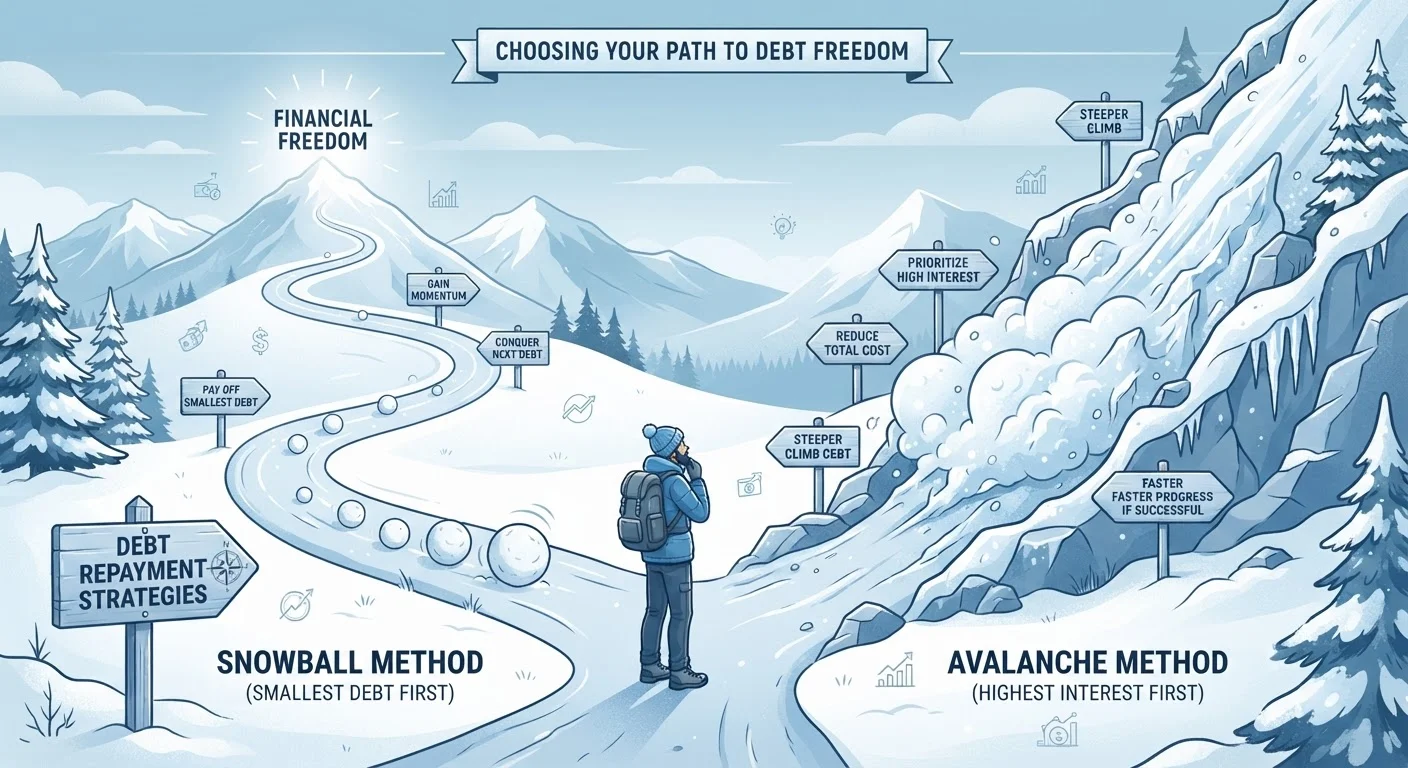
Photo credit: QuickInsights.net
In this article
The snowball and avalanche methods both reduce debt—but in different ways. Understand how each works and which approach suits your situation.
Key Takeaways
- The snowball method targets your smallest debt balance first, building momentum through quick wins.
- The avalanche method targets your highest-interest debt first, reducing total interest paid over time.
- Mathematically, the avalanche method typically costs less - but the snowball method often wins on follow-through.
- Both strategies require paying more than the minimum on your chosen target debt each month.
- The best method is the one you'll actually stick with long enough to finish.
How Each Method Actually Works
Both the snowball and avalanche methods share the same core mechanic: you pay minimums on all your debts, then direct any extra money toward one specific target debt. Where they differ is which debt gets that extra payment first.
The Debt Snowball starts with your smallest balance, regardless of interest rate. Once that balance is gone, you roll its payment into the next-smallest debt. The name comes from how payments accumulate - like a snowball picking up size as it rolls. The psychological payoff is real: eliminating a debt account, even a small one, creates a sense of accomplishment that keeps many people on track.
The Debt Avalanche starts with the debt carrying the highest annual percentage rate (APR). Once that's paid off, you move to the next-highest rate. This approach is mathematically optimal - it limits how long high-interest balances have to compound, which typically means paying less overall. The trade-off is that your highest-rate debt might also carry a large balance, meaning progress can feel slow at first.
Why minimum payments keep you in debt longer explains why simply making the minimum on every account is the slowest and most expensive path - both methods are designed to break that cycle.
Side-by-Side Comparison
Here's a direct look at how the two strategies stack up across the factors that matter most to most borrowers.
| Criterion | Debt Snowball | Debt Avalanche |
|---|---|---|
| Priority target | Smallest balance first | Highest interest rate first |
| Total interest paid | Typically more | Typically less |
| Speed of first payoff | Usually faster | Can take longer |
| Motivational structure | Quick wins, frequent milestones | Delayed gratification required |
| Best rate spread scenario | Similar rates across debts | Wide gap between rates |
| Complexity | Simple to track | Requires knowing all APRs |
One detail worth noting: the total interest gap between the two methods depends heavily on how different your interest rates are. If you have a credit card at 24% APR alongside a personal loan at 8%, the avalanche has a bigger advantage. If your rates are clustered close together, the difference shrinks considerably.
~$1,000+
Potential interest savings with avalanche vs. snowball
Consumer finance researchers estimate the gap varies widely based on balances and rate differences, but can exceed $1,000 on a typical multi-debt household profile.
Higher
Completion rates linked to early payoff milestones
Behavioral economics studies, including work referenced by the Harvard Business Review, suggest that eliminating accounts - not just reducing balances - significantly boosts follow-through.
Choosing What Works for You - and Sticking With It
Financial research consistently finds that behavior matters more than math when it comes to debt payoff. A strategy you abandon after three months because it feels discouraging will cost more than a slightly less efficient strategy you follow for two years.
If you've tried to pay off debt before and lost steam, that's useful self-knowledge. It suggests the snowball's early wins may be worth the small additional cost in interest. If you're highly goal-oriented and can visualize long-term savings as motivation, the avalanche is a reasonable fit.
You don't have to choose purely one or the other, either. Some people start with the snowball to clear one or two small accounts, then switch to avalanche logic for the remaining balances. What matters is that you have a consistent plan and aren't just paying minimums across the board.
If you're also trying to save while carrying debt, balancing debt payoff and saving simultaneously requires a clear framework - and knowing your repayment method is a key piece of that. For a structured monthly approach, building a budget around both savings and debt payments can help you carve out room for both goals.
Once you've made meaningful progress, it's also worth understanding what paying off debt does to your credit score - the results can be more nuanced than people expect.
This article is for general informational purposes only and does not constitute personalized financial or legal advice. For guidance specific to your financial situation, consider consulting a licensed financial professional.

Author
Personal Finance Editorial Team
Personal Finance Editorial Team is the collective byline for our editorial team and contributor network. Articles published under this byline or an editorial pen name are researched, written, and reviewed according to our editorial standards for clarity, consistency, and independence before publication.
View all articles →