
The Five Factors Behind Your FICO Score
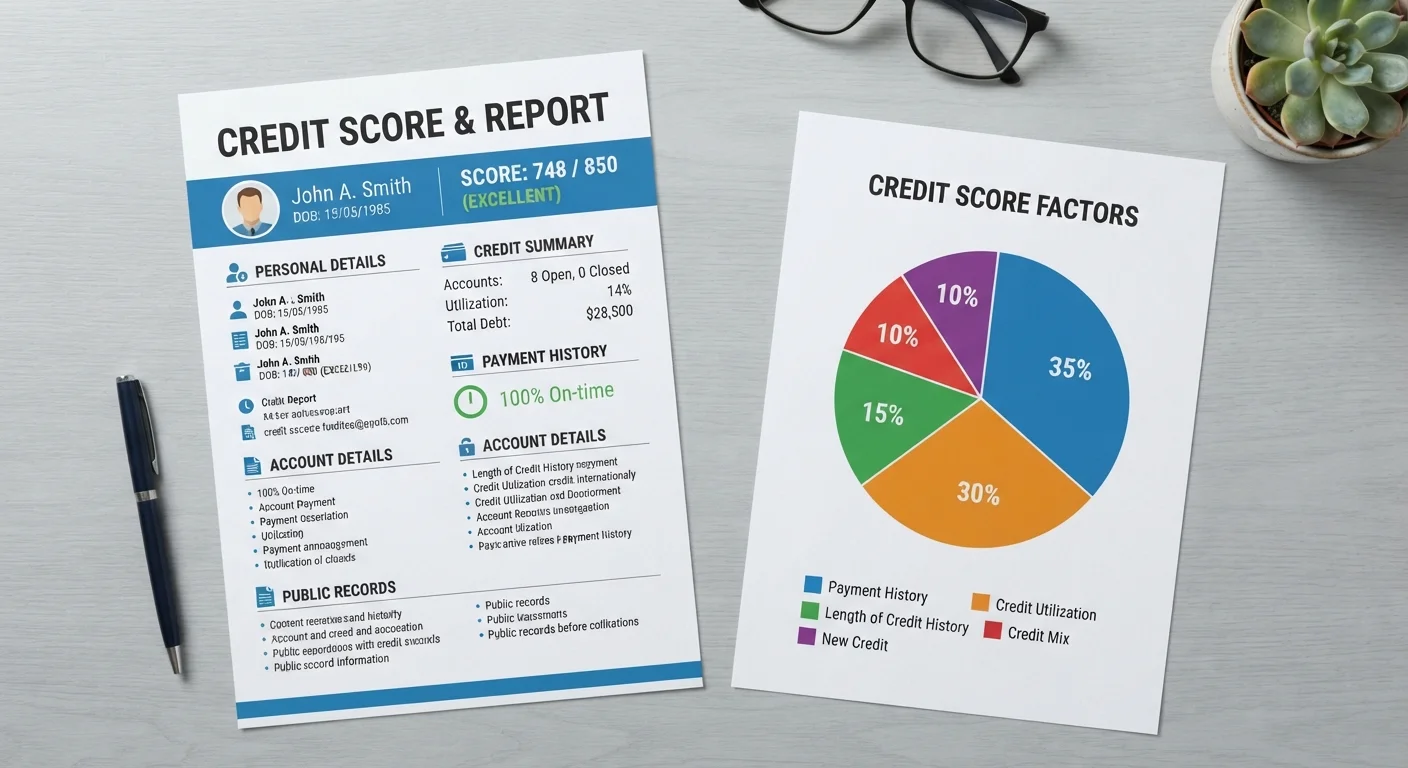
Photo credit: QuickInsights.net
In this article
FICO scores are built from five weighted categories. This reference breaks down each factor, its relative weight, and what behaviors move it up or down.
How FICO Scores Are Built
Your FICO score - the most widely used credit scoring model in the United States - is a three-digit number ranging from 300 to 850. Lenders use it to quickly assess how likely you are to repay borrowed money. The score isn't mysterious: it's calculated from five specific categories of information pulled from your credit report. Understanding those categories, and how much each one matters, puts you in a much stronger position to manage your credit deliberately.
For broader context on what the number itself means and how lenders interpret it, see Credit Scores Explained.
The Five Factors, Ranked by Weight
1. Payment History - 35%
The single largest factor. Lenders want to know whether you pay on time. Late payments, collections, and bankruptcies all drag this category down. Even one 30-day late payment can meaningfully lower a strong score. Consistent on-time payments over months and years build it back up.
2. Amounts Owed (Credit Utilization) - 30%
This measures how much of your available revolving credit you're currently using - your credit utilization ratio. Using a high percentage of your available credit signals financial strain to lenders. Keeping utilization below 30% is a common guideline, though lower is generally better. For a deeper look, credit utilization explained in full covers the mechanics and meaningful ranges.
3. Length of Credit History - 15%
Older accounts help your score. FICO looks at the age of your oldest account, your newest account, and the average age of all accounts. Closing old accounts can shorten your average history - something worth knowing before you cancel a card you rarely use.
4. Credit Mix - 10%
Having experience with different types of credit - revolving accounts (credit cards) and installment loans (auto, mortgage, student loans) - shows lenders you can manage varied obligations. You don't need to open accounts just for variety, but a healthy mix developed over time does contribute positively.
5. New Credit (Recent Inquiries) - 10%
When you apply for new credit, lenders typically run a hard inquiry, which can temporarily lower your score by a few points. Multiple applications in a short window outside of rate-shopping periods can compound this effect. FICO generally groups rate-shopping inquiries for mortgages and auto loans made within a short period into a single event - but the specifics depend on the FICO version used.
FICO Versions May Vary
There are multiple versions of the FICO scoring model, and lenders may use different versions depending on the type of credit being evaluated. The five-factor framework and general weightings described here apply broadly across FICO models, but the exact calculation can differ slightly by version. Always check which score version a lender is using when you want to understand their specific criteria.
What This Means in Practice
Because payment history and amounts owed together account for 65% of your score, those two areas deserve your first attention. Automating minimum payments eliminates the risk of accidental lateness. Paying down revolving balances reduces utilization. Together, those habits address the majority of what drives your score.
The remaining 35% - history length, credit mix, and new inquiries - is largely managed by patience and restraint. Keeping older accounts open, avoiding unnecessary applications, and letting your credit profile age naturally all contribute without requiring active effort beyond awareness.
Your credit score has direct consequences for borrowing costs. See how it affects auto loan interest rates and mortgage eligibility and rates. Once you've built a strong score, these habits help protect it over the long term.
This article is for general informational purposes only and does not constitute personalized financial or credit advice. Consult a qualified financial professional for guidance specific to your situation.

Author
Personal Finance Editorial Team
Personal Finance Editorial Team is the collective byline for our editorial team and contributor network. Articles published under this byline or an editorial pen name are researched, written, and reviewed according to our editorial standards for clarity, consistency, and independence before publication.
View all articles →