
Pressure-Treated Wood vs. Composite Decking: Long-Term Maintenance Compared
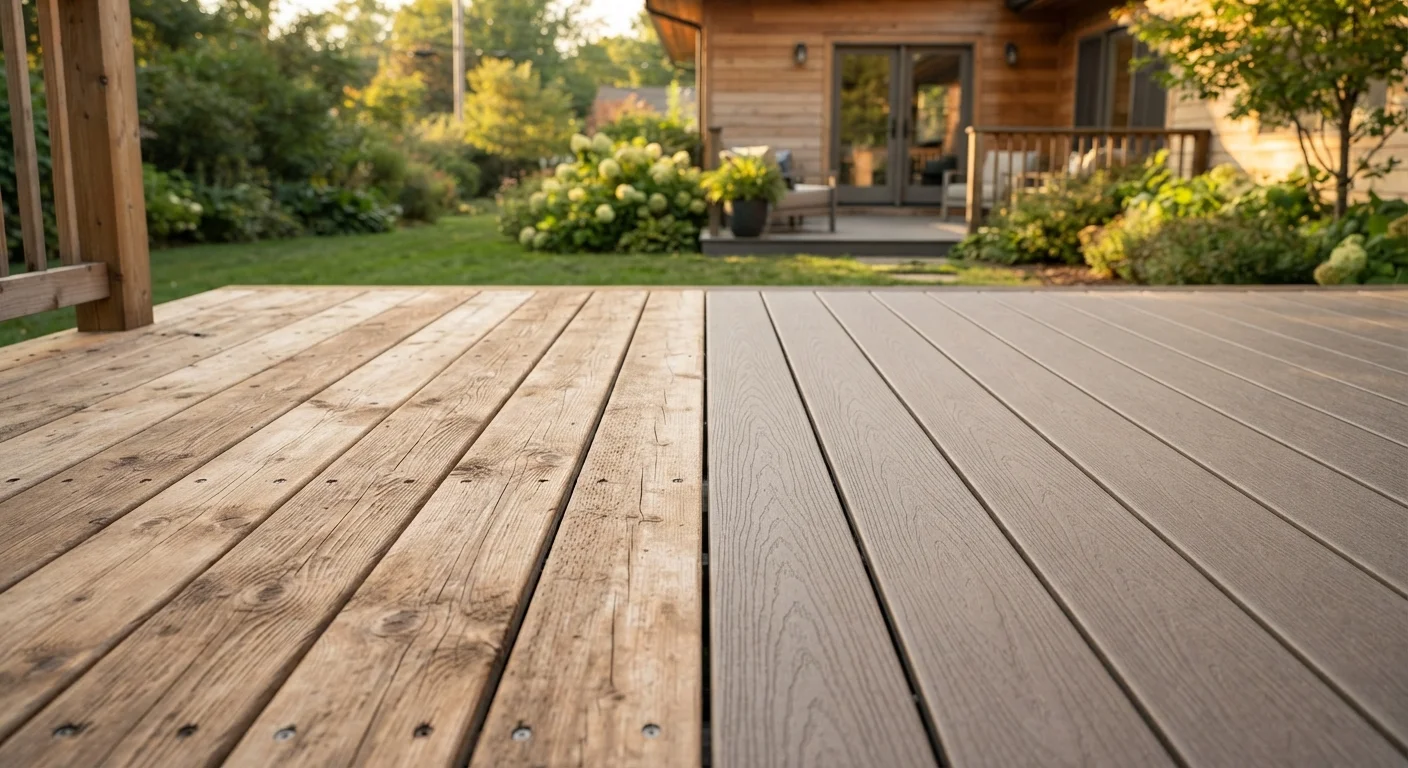
Photo credit: QuickInsights.net
In this article
Choosing decking material affects years of upkeep. Compare the real maintenance demands of pressure-treated wood and composite decking side by side.
Key Takeaways
- Pressure-treated wood requires annual cleaning, staining, or sealing to prevent rot and splintering.
- Composite decking demands less frequent upkeep but is not entirely maintenance-free.
- Long-term costs and time investment differ significantly between the two materials.
- Climate and sun exposure heavily influence how each material ages and performs.
- Understanding both options helps homeowners plan smarter and avoid expensive repairs.
Why Maintenance Should Drive Your Decking Decision
When comparing decking materials, most homeowners focus on upfront cost and appearance - but the bigger financial and time commitment often comes after installation. A deck that looks identical in year one can diverge dramatically by year five, depending on which material you chose and how consistently you maintain it.
Pressure-treated wood (PT wood) and composite decking are the two most common choices for American homeowners, and both have genuine strengths. The real question is: which maintenance schedule fits your lifestyle and local climate? Understanding what each material actually demands year after year is the most empowering thing you can do before building or replacing a deck.
For broader guidance on reducing outdoor upkeep across your entire yard, see our guide to designing easy-to-maintain outdoor spaces.
Pressure-Treated Wood: What Upkeep Actually Looks Like
Pressure-treated lumber is infused with chemical preservatives that resist rot and insects, but those treatments don't protect the surface from moisture, UV rays, or foot traffic. Left unsealed, PT wood will gray, crack, warp, and splinter within a few seasons.
Annual Tasks
- Cleaning: Wash the surface each spring using a deck cleaner or diluted oxygen bleach solution to remove mold, mildew, and grime. A stiff-bristle brush or low-pressure wash works well for most surfaces.
- Inspection: Check every board for soft spots, raised fasteners, cracking, and signs of rot - especially where boards meet the ledger or posts contact soil.
- Staining or sealing: Most PT decks need a fresh coat of penetrating stain or sealant every one to three years depending on sun exposure and foot traffic. Skipping this step accelerates surface degradation significantly.
Every 5-10 Years
- Sand rough or splintered boards before refinishing.
- Replace boards that show deep cracking or soft rot - delaying this creates structural and safety risks.
- Re-drive or replace popped fasteners and check joist connections.
Don't Skip the Drying Period on New PT Wood
New pressure-treated lumber is often still wet from the treatment process when purchased. Applying stain or sealer to wood that hasn't dried sufficiently - typically at least 60 to 90 days, or until the wood passes a simple water-bead test - prevents the finish from penetrating properly. Sealing too early can trap moisture inside the board and accelerate cracking rather than prevent it.
New PT lumber should be allowed to dry for several months before staining, as fresh-cut wood is too saturated to accept most sealants. Staining too early can trap moisture and accelerate deterioration.
Composite Decking: Lower Labor, Different Demands
Composite decking is manufactured from a blend of wood fiber and plastic, capped with a protective outer layer on most modern products. It resists rot, insects, and splintering - but it is not impervious to dirt, mold, or staining.
Routine Tasks
- Biannual cleaning: Sweep off debris regularly and wash with mild soap and water or a composite-approved cleaner twice a year. Letting organic material sit in the grooves between boards encourages mold growth.
- Stain response: Grease, tannins from wet leaves, and certain foods can stain composite surfaces. Prompt cleanup - ideally within hours - prevents permanent marks.
- No staining or sealing required: Unlike wood, composite boards do not need periodic stain or sealant applications. This is the single largest labor savings over time.
Long-Term Considerations
- Composite boards can fade over years of UV exposure, though capped composites resist this better than uncapped versions.
- Scratches on capped composite are difficult to repair invisibly - replacement of individual boards may be necessary.
- Expansion and contraction in temperature extremes can loosen hidden fasteners over time; periodic checks are worthwhile.
Clean Between the Boards
On composite decks, the grooves between boards are the most common spot for mold to take hold. Use a putty knife or specialized groove-cleaning brush to clear out leaves, seeds, and debris at least twice a year. This single habit prevents most composite mold and staining issues before they start.
Side-by-Side Maintenance Comparison
The table below summarizes the core maintenance differences between pressure-treated wood and composite decking across the criteria that matter most over a 10-to-20-year ownership horizon.
| Pressure-Treated Wood | Composite Decking | |
|---|---|---|
| Cleaning Frequency | Annual deep clean required | Twice-yearly mild wash sufficient |
| Sealing / Staining | Every 1-3 years | Not required |
| Splinter / Surface Risk | High if unsealed or aging | Low; smooth capped surface |
| Rot & Insect Resistance | Moderate; depends on sealing | High; built-in resistance |
| Board Replacement Ease | Easy; standard lumber available | Moderate; color matching can be tricky |
| UV / Fade Resistance | Grays without UV sealant | Good to excellent with capped products |
| Annual Labor Investment | Several hours per season | One to two hours per season |
| Typical Lifespan (maintained) | 15-25 years | 25-30+ years |
One factor the table can't fully capture is the cumulative labor difference. Homeowners who consistently maintain PT wood decks can keep them looking excellent, but that consistency requires real time investment every year. Composite decks reduce that burden considerably - though they still reward attentive owners who clean them seasonally.
Climate's Role in Long-Term Performance
Where you live matters as much as what you choose. In humid climates - the Southeast, Pacific Northwest, and Great Lakes regions - PT wood decks face elevated mold and rot risk, making annual sealing especially critical. In dry, high-UV climates like the Southwest, UV bleaching and surface cracking are the primary threats to both materials, though composite boards with UV-inhibiting caps hold up better.
In regions with significant freeze-thaw cycles, PT wood is more vulnerable to board cupping and fastener heaving. Composite's dimensional stability gives it an advantage in these conditions, provided proper gapping was installed to allow for thermal expansion.
Regardless of material, shaded decks in any climate accumulate moisture and debris more readily, increasing mold risk. Regular sweeping and seasonal cleaning become even more important on covered or tree-shaded structures.

Author
Home & Garden Editorial Team
Home & Garden Editorial Team is the collective byline for our editorial team and contributor network. Articles published under this byline or an editorial pen name are researched, written, and reviewed according to our editorial standards for clarity, consistency, and independence before publication.
View all articles →