
Synthetic vs. Conventional Motor Oil: What the Difference Means for Your Engine
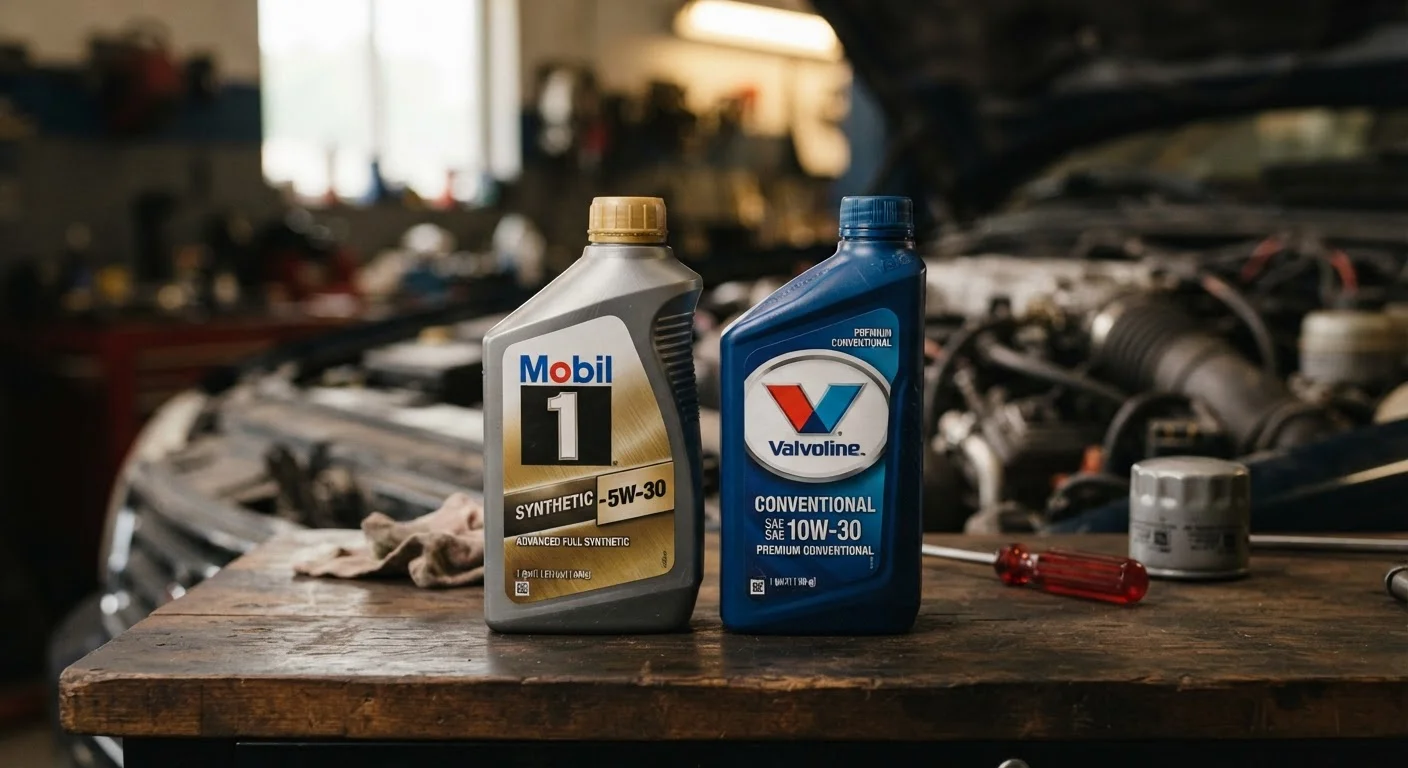
Photo credit: QuickInsights.net
In this article
Motor oil choices affect engine wear and service intervals. Here's what distinguishes synthetic from conventional oil and how to decide which fits your vehicle.
Key Takeaways
- Synthetic oil is chemically engineered; conventional oil is refined directly from crude petroleum.
- Synthetic oil generally lasts longer between changes - often 7,500 to 15,000 miles versus 3,000 to 7,500 for conventional.
- Your owner's manual specifies which oil type and viscosity grade your engine actually requires.
- Synthetic oil costs more per quart but fewer changes can offset the higher upfront price over time.
- Switching between the two is safe in most modern engines - blended (synthetic-conventional) oils also exist.
How Each Oil Is Made - and Why It Matters
Conventional motor oil starts as crude petroleum pumped from the ground. Refiners process it to remove impurities and adjust its molecular structure, but the result still contains naturally occurring variations in molecule size and some residual contaminants.
Synthetic motor oil is built differently. Chemists start with a base stock - often derived from natural gas or petroleum compounds - and use controlled chemical processes to construct uniform, precisely sized molecules. The result is an oil engineered to specific performance targets from the start.
That molecular uniformity is the core advantage of synthetic oil: it flows more consistently, resists thermal breakdown longer, and leaves fewer deposits inside an engine. Conventional oil, by contrast, performs reliably within its design limits but degrades more quickly under sustained heat and heavy use.
| Criterion | Synthetic Motor Oil | Conventional Motor Oil |
|---|---|---|
| Base material | Chemically engineered molecules | Refined crude petroleum |
| Typical change interval | 7,500-15,000 miles | 3,000-7,500 miles |
| Cost per quart | Higher (roughly 2-4× more) | Lower upfront cost |
| Cold-temperature flow | Flows faster at low temps | Thicker in cold conditions |
| Heat resistance | Stable across wide range | Breaks down faster under heat |
| Deposit formation | Fewer deposits over time | More deposits with age |
| Required for some engines? | Yes - check owner's manual | Not specified for modern turbos |
Service Intervals and Real-World Cost
One of the most practical differences is how often you need to change each oil. Conventional oil is typically changed every 3,000 to 7,500 miles, depending on the vehicle and driving conditions. Synthetic oil is generally rated for 7,500 to 15,000 miles per change, with some full-synthetic formulations and specific vehicles extending even further under certain conditions.
That longer interval doesn't automatically make synthetic oil cheaper - it costs roughly two to four times more per quart. But when you account for fewer oil changes per year, the cost difference narrows considerably for many drivers. The math varies by vehicle, service cost, and how many miles you drive annually.
Your vehicle's maintenance schedule is the most reliable guide to the correct interval for your specific engine. Following manufacturer recommendations - not informal rules of thumb - protects both your engine and any applicable warranty.
7,500-15,000 mi
Typical synthetic oil change interval
Most major synthetic oil formulations are rated for extended intervals, though the appropriate interval for your vehicle depends on manufacturer specifications.
2-4×
Price premium of synthetic over conventional per quart
The cost gap varies by brand and viscosity grade; fewer annual changes with synthetic can offset the higher per-quart price for many drivers.
75,000+ miles
Threshold where high-mileage oil formulas become relevant
High-mileage synthetic blends include additives such as seal conditioners designed to address the characteristics of aging engine components.
Performance Under Stress: Cold Starts, Heat, and Engine Wear
Engine wear is highest during cold starts, when oil hasn't yet circulated fully through moving parts. Synthetic oil flows measurably better at low temperatures - a property measured by its SAE cold-cranking viscosity rating. In sub-freezing conditions, this difference is significant: thinner oil reaches critical parts faster, reducing metal-on-metal contact during the first seconds after ignition.
At the other extreme, high engine temperatures cause conventional oil to thin and oxidize more quickly. Synthetic oil's engineered structure resists this breakdown, maintaining a more stable protective film across a broader temperature range. For turbocharged engines - which run considerably hotter than naturally aspirated ones - this heat stability is especially relevant.
High-mileage vehicles (typically those over 75,000 miles) may also benefit from synthetic or synthetic-blend oils formulated with seal conditioners, which can help slow minor oil consumption as engine seals age.
Making the Right Choice for Your Vehicle
The single most important step is checking your owner's manual. Some modern engines - particularly turbocharged, direct-injection, and certain high-compression designs - require full synthetic oil to meet manufacturer specifications. Using conventional oil in these engines isn't just suboptimal; it can void warranty coverage or cause premature wear.
For vehicles where either type is acceptable, the choice comes down to your driving profile. Frequent short trips, very cold climates, towing, and high-mileage use all favor synthetic. Light-duty driving in moderate climates on a consistent change schedule is where conventional oil remains a reasonable option.
Synthetic-blend oils - a mixture of synthetic and conventional base stocks - offer a middle ground in both protection and price, and are worth considering if full synthetic feels unnecessary but conventional seems insufficient for your conditions.
Regardless of which oil you use, maintaining the correct oil level between changes matters as much as the oil type itself. Check your dipstick periodically and address any significant consumption with a qualified mechanic rather than simply topping off repeatedly without investigation.
This article provides general educational information about motor oil types and is not a substitute for your vehicle manufacturer's specific recommendations. Always consult your owner's manual and a qualified mechanic for guidance suited to your vehicle's needs.

Author
Autos & Vehicles Editorial Team
Autos & Vehicles Editorial Team is the collective byline for our editorial team and contributor network. Articles published under this byline or an editorial pen name are researched, written, and reviewed according to our editorial standards for clarity, consistency, and independence before publication.
View all articles →