
Reading a Destination Wrong: How Traveler Expectations Lead to Avoidable Disappointment
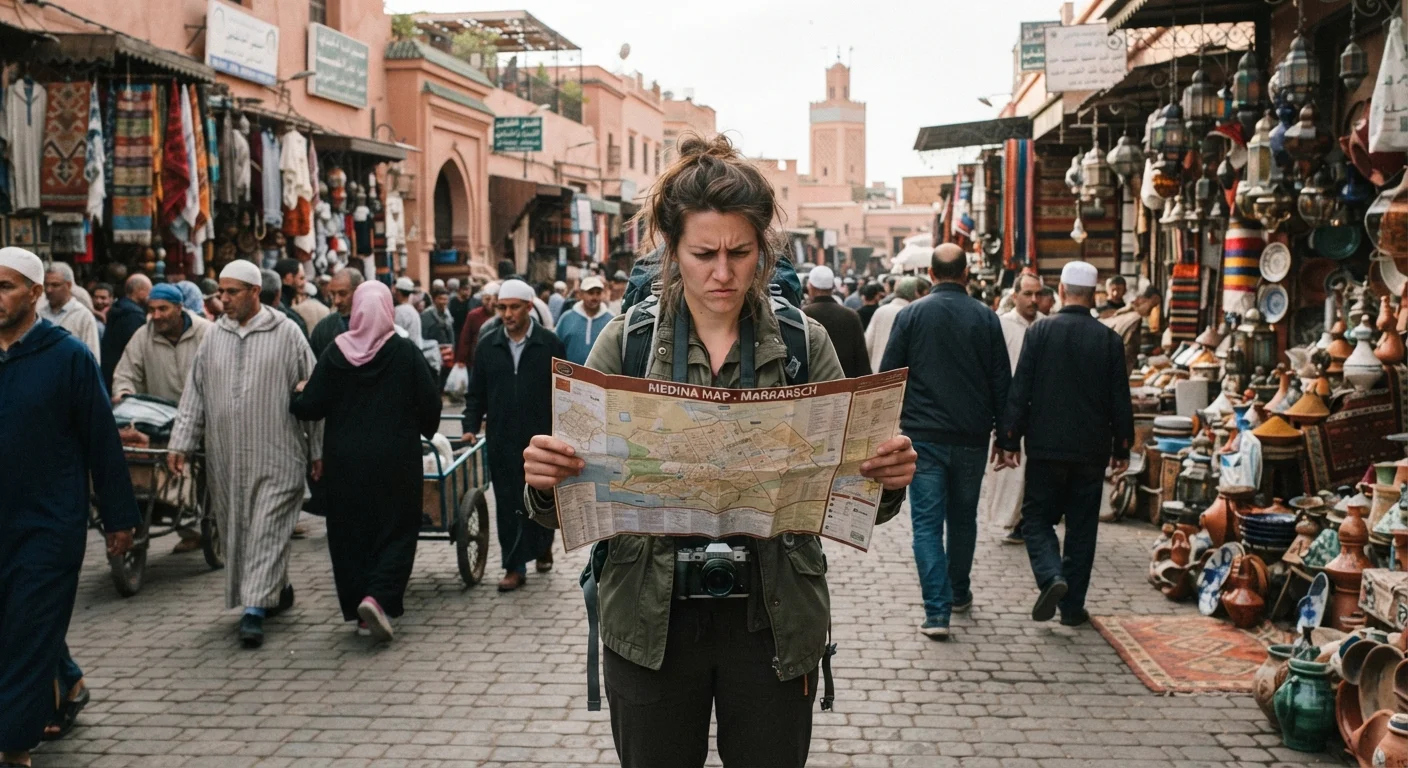
Photo credit: QuickInsights.net
In this article
Many trip frustrations stem from misreading a destination before arrival. Here are the patterns that set travelers up for disappointment — and how to avoid them.
Key Takeaways
- Mismatched expectations, not bad destinations, are behind most travel disappointments.
- Sourcing research from a single type of media creates blind spots about what a place is actually like.
- Climate, culture, crowd levels, and pace of life vary widely - even within the same country.
- Researching a destination's character, not just its attractions, helps travelers find the right fit.
- Verifying entry requirements and local norms with official sources prevents avoidable friction.
Why Destination Misreading Is So Common
Most trip disappointments don't come from bad luck or bad planning - they come from a gap between what a traveler expected and what a destination actually offers. That gap usually forms long before departure, shaped by curated travel content, secondhand recommendations, and assumptions borrowed from other trips.
The problem isn't that travelers are careless. It's that the information most easily available - social media imagery, review aggregates, glossy travel features - tends to flatten destinations into idealized versions of themselves. What's left out is often just as important as what's shown.
Assumptions Can Undermine Your Entire Trip
Disappointment abroad rarely comes from a destination failing you - it comes from arriving with a version of a place that doesn't exist. The mental image formed before departure shapes every experience on the ground. When reality diverges sharply from that image, even genuinely wonderful destinations can feel like letdowns. Building a more accurate picture before you leave is one of the highest-value investments in any trip.
Understanding the patterns that create expectation gaps is one of the most practical tools a traveler can develop. The mistakes below are among the most common - and the most fixable.
Common Mistakes That Set Travelers Up for Disappointment
Treating a destination's highlight reel as its everyday reality.
Why it happens: Search algorithms and social feeds surface the most dramatic, photogenic content - which naturally skews toward rare conditions or heavily curated moments. Travelers absorb this as representative.
Ignoring how the season fundamentally changes a destination's character.
Why it happens: Trip dates are often driven by work schedules or flight prices rather than a destination's actual conditions. Travelers assume any time of year delivers a similar experience.
Projecting a single country's culture onto an entire region.
Why it happens: Marketing materials and travel media often lump neighboring countries together, and travelers lack the contextual knowledge to distinguish between them.
Underestimating how pace and density affect the travel experience.
Why it happens: Itineraries are frequently built around a checklist of sites rather than a realistic sense of travel time, city size, or how much a traveler can absorb per day.
Skipping research on local laws, customs, and entry requirements.
Why it happens: Travelers familiar with domestic or well-trodden international routes often assume general travel knowledge transfers everywhere. Visa rules, dress codes, photography restrictions, and behavioral norms vary dramatically.
Assuming remote or less-visited destinations offer the same infrastructure as popular ones.
Why it happens: The romance of off-the-beaten-path travel is well-marketed but the logistical realities - limited medical facilities, unreliable transport, patchy connectivity - are rarely part of that narrative.
Across all of these patterns, the underlying issue is similar: travelers are working from an incomplete or inaccurate mental model of the destination. The solution isn't to lower your expectations - it's to build more accurate ones.
Curated Content Isn't a Complete Picture
Social media and travel influencer content are optimized for visual appeal, not accuracy. Iconic shots often require specific seasons, early morning arrivals, or selective framing to eliminate crowds. Basing your expectations solely on this content sets you up for surprise. Cross-reference with travel forums, destination-specific government tourism sites, and recent traveler reviews to build a more realistic picture.
Building a More Honest Picture Before You Go
Effective destination research draws from multiple source types. Start with authoritative reference points - government tourism boards, official entry requirement pages, and destination-specific travel advisories. Then layer in firsthand accounts from travel forums and long-form writing, which tend to surface the friction and nuance that highlight-driven content leaves out.
Pay particular attention to seasonality, infrastructure level, cultural expectations, and the realistic pace of getting around. A destination that sounds manageable in a listicle can feel entirely different on the ground when transit is slow, crowds are dense, or the weather is extreme.
~70%
Travelers reporting unmet expectations
Research by travel industry analysts has consistently found that a significant majority of travel disappointments are linked to expectation gaps rather than service failures at the destination.
3-5x
Increase in crowd levels during peak season
Visitor volume at popular destinations can multiply several times over between off-peak and peak periods, dramatically changing the character of the experience.
The goal of pre-trip research isn't to eliminate surprise - spontaneity is part of travel's appeal. It's to arrive with a foundation accurate enough that the real place can exceed it. That shift in approach tends to produce genuinely better trips, not just fewer complaints.
For additional trip planning strategies, explore our full planning hub for frameworks that hold up across destination types and travel styles.

Author
Travel Editorial Team
Travel Editorial Team is the collective byline for our editorial team and contributor network. Articles published under this byline or an editorial pen name are researched, written, and reviewed according to our editorial standards for clarity, consistency, and independence before publication.
View all articles →