
Negotiating a Car Price Without Feeling Outgunned
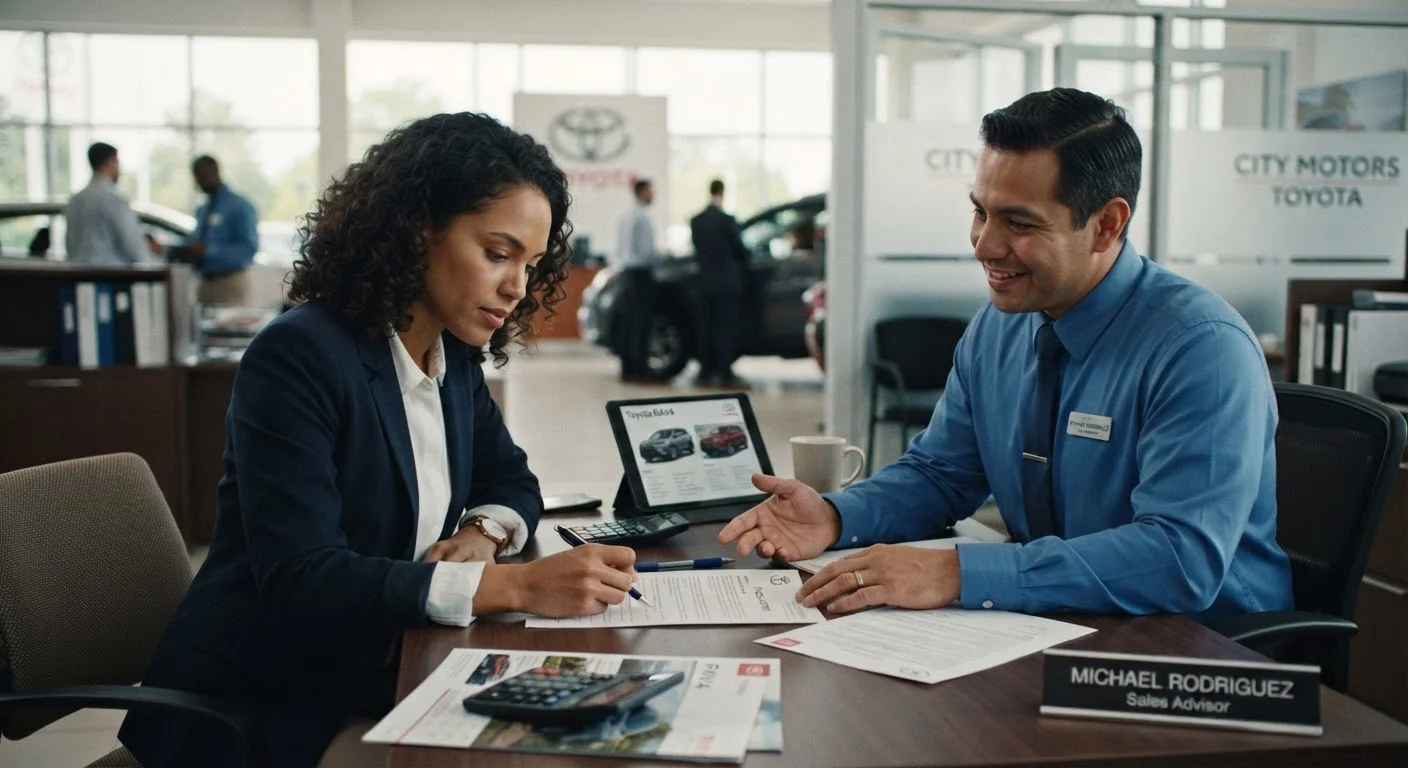
Photo credit: QuickInsights.net
In this article
Dealership sales teams negotiate daily. These strategies help you walk in with a clear position and a realistic target price.
Key Takeaways
- Research the vehicle's market value before setting foot in a dealership - this is your foundation.
- Negotiate the out-the-door price, not the monthly payment; monthly focus obscures the total cost.
- Getting competing offers from multiple dealerships gives you measurable leverage.
- Pre-approved financing from a bank or credit union strengthens your position at the dealer.
- Knowing your walk-away number in advance prevents emotionally driven decisions on the lot.
Why Buyers Often Feel Outmatched - and How to Close the Gap
Dealership sales staff negotiate vehicle prices every day. Most buyers do it a handful of times in a lifetime. That experience gap is real, but it is not insurmountable. The difference between a buyer who feels outgunned and one who negotiates from a position of confidence is almost entirely preparation.
Salespeople are trained to anchor negotiations on monthly payment rather than total price, to create urgency, and to present financing and add-ons in ways that obscure the full cost. None of these are illegal tactics - they are sales techniques. Knowing they exist is the first step to neutralizing them.
Never Anchor on Monthly Payment
Dealerships can stretch loan terms to make almost any vehicle appear affordable month-to-month. A 72- or 84-month loan at a high interest rate often costs thousands more than a shorter loan on a lower-priced vehicle. Always negotiate the total vehicle price first, then discuss financing terms separately.
The tools below walk through exactly how to prepare and what to do once you are in the room. You do not need to be aggressive or confrontational - you need to be specific, documented, and willing to leave.
What you will need
What You Need Before You Negotiate
Preparation is the work that makes the negotiation itself straightforward. Arriving without a researched price target, without competing quotes, and without pre-approved financing puts you in a reactive position from the start.
Vehicle Valuation Tool (e.g., Edmunds, Kelley Blue Book, NADA Guides)
Establishes an objective market value range for the specific vehicle, trim, and mileage you are targeting.
Pre-approval letter from a bank or credit union
Gives you a known financing rate to compare against dealer financing offers.
Vehicle History Report (e.g., Carfax, AutoCheck) - for used vehicles
Reveals accident history, title issues, and service records that affect the vehicle's true value.
Competing dealership quotes
Creates documented leverage by showing the dealer that you have real alternative prices in hand.
For used vehicles especially, a vehicle history report is not optional. Title problems, undisclosed accidents, and odometer discrepancies all affect value - and your negotiating position - significantly.
Dealer Invoice Price Is Not Your Target
The invoice price - what the dealer ostensibly paid the manufacturer - is widely published but not the dealer's true cost. Manufacturers pay dealers holdbacks, bonuses, and incentives that reduce actual cost below the invoice figure. Use market value data from multiple sources rather than treating invoice as your floor.
Step-by-Step: Negotiating the Price
Follow these steps in order. Each builds on the previous one: your market research informs your opening offer, your competing quotes give you leverage, and your walk-away number keeps emotion out of the final decision.
Establish your target price using market data
Before contacting any dealership, use at least two independent valuation sources to find the typical transaction price - what buyers are actually paying - not the sticker price. The sticker (MSRP) is a starting point for the dealer, not a fair-market ceiling for you.
Note the range: market value is not a single number. Your realistic target sits somewhere between the low end of that range and the average. Record your target and your absolute maximum in writing.
Secure financing before you visit
Apply for pre-approval at your bank or credit union before stepping on a lot. This gives you a benchmark interest rate and a clear loan limit. When the dealer later offers financing, you can compare the actual annual percentage rate (APR) - the true cost of borrowing - against your pre-approved offer.
Dealer financing can sometimes beat outside offers, especially when manufacturers run promotional rates. But you need a baseline to recognize a genuinely good deal.
Gather competing offers from multiple dealerships
Email the internet or fleet sales department at two or three dealerships that stock the vehicle you want. Ask each for their best out-the-door price on a specific vehicle - include the VIN if possible, or exact stock details. Out-the-door means the total you write a check for: vehicle price, taxes, title, and all fees.
Written competing quotes are negotiating currency. A dealer who knows you have a lower offer in hand faces a clear choice: match it or lose the sale.
Make a specific, reasoned opening offer
Open with a number slightly below your target - not insultingly low, but meaningfully below the asking price. Back it with your research: cite the market value range and the competing offers you have received. A fact-based opening changes the conversation from emotional back-and-forth to a documented discussion.
Avoid vague statements like 'I want a better deal.' Name a specific dollar figure for the out-the-door total.
Hold the line on terms and resist add-ons during negotiation
Once a price is agreed upon, the negotiation does not end. Finance and insurance (F&I) offices often introduce add-on products - extended warranties, paint protection, gap insurance - each of which adds to the total cost. Evaluate each independently on its merits.
See our guide to common dealer add-ons for a clear-eyed look at which products may be worth considering and which are often unnecessary.
If you feel pressured or confused at any point, it is entirely reasonable to say you need time to think and return another day.
Know when to walk away - and actually do it
Decide your walk-away price before you enter the dealership, and treat it as firm. If negotiations stall above your maximum, calmly thank the salesperson and leave. Dealerships sometimes call back with a better offer once they see you are serious. If they do not, another vehicle or dealer will meet your number.
Understand the common moments where buyers inadvertently lose ground - reviewing these pitfalls in advance reinforces the discipline to walk when necessary.
Time Your Visit Strategically
Dealerships often face month-end, quarter-end, and year-end sales targets. Visiting near those dates can create additional willingness to negotiate, though it is not guaranteed. Going on a weekday when traffic is slower also gives salespeople more time to work with you without the pressure of competing customers.
Once you have finalized a vehicle price, keep the conversation focused on what comes next. For ongoing ownership costs and responsibilities after the purchase, the Car Ownership hub covers maintenance, insurance considerations, and vehicle management over time.

Author
Autos & Vehicles Editorial Team
Autos & Vehicles Editorial Team is the collective byline for our editorial team and contributor network. Articles published under this byline or an editorial pen name are researched, written, and reviewed according to our editorial standards for clarity, consistency, and independence before publication.
View all articles →